






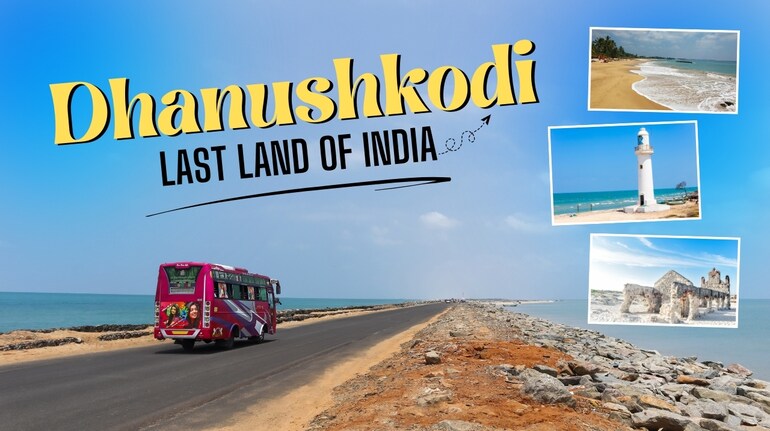

There are very few places in India where the road simply ends—and Dhanushkodi is one of them. Perched at the southeastern tip of Tamil Nadu, this haunting coastal town feels like the final whisper of civilisation before the sea takes over completely.
A visit to Dhanushkodi places you at one of the country’s most dramatic geographical points—where the Bay of Bengal meets the Indian Ocean, and where myth, history, and raw natural beauty converge. Wind-swept, silent, and spellbinding, Dhanushkodi isn’t just a destination; it’s an experience that lingers long after you leave.
So what makes travellers, photographers, pilgrims, and history lovers journey to this remote edge of India? The answer lies in its tragic past, mythological roots, and unforgettable landscape.
Why Is Dhanushkodi Called a Ghost Town?
Dhanushkodi’s ghost-town status isn’t the result of legend—it was shaped by one of the most devastating natural disasters in India’s coastal history.
On December 22, 1964, a powerful cyclone struck the once-bustling port town with catastrophic force. Towering waves destroyed homes, roads, a church, schools, and the railway station. A passenger train approaching Dhanushkodi was swept away, and by morning, nearly 1,800 lives were lost. The town was left in ruins.
In the cyclone’s aftermath, the then Madras government declared Dhanushkodi unfit for human habitation, citing extreme vulnerability to future storms. Survivors were relocated, rail lines were dismantled, and the town was permanently abandoned.
What remains today is a stark, windswept landscape—broken walls, roofless buildings, and silence broken only by the sound of crashing waves.
What You’ll See in Dhanushkodi Today
Walking through Dhanushkodi feels like stepping into a world paused in time. The ruins quietly narrate the town’s tragic story:
These skeletal remains stand against pristine beaches and turquoise waters, creating a haunting contrast that makes Dhanushkodi one of the most emotionally powerful places to visit in India.
Is Dhanushkodi Completely Abandoned?
Not entirely.
While the main ruins remain uninhabited, a small community of fishermen and vendors lives on the outskirts of Dhanushkodi. Their modest huts and temporary stalls serve visiting travellers with snacks, seafood, and basic essentials. Life here is simple, resilient, and deeply connected to the sea.
Despite its abandonment, Dhanushkodi continues to draw visitors from across India and beyond—proof that its story still resonates.
More Than a Ghost Town: Where Myth, History, and Geography Meet
Dhanushkodi’s allure goes beyond its tragic past. It holds deep mythological and geographical significance.
According to the Ramayana, this is the starting point of Rama Setu (Adam’s Bridge)—the legendary bridge built by Lord Rama and his army to reach Lanka. Scientifically, it appears as a chain of limestone shoals stretching towards Sri Lanka, visible from the Dhanushkodi shoreline on clear days.
Add to this its rare location at the meeting point of the Bay of Bengal and the Indian Ocean, and Dhanushkodi becomes unlike any other destination in India.
You don’t just visit Dhanushkodi—you feel it. The silence, the ruins, the endless horizon leave a lasting impression.
Dhanushkodi Beach: Where Two Seas Converge
Located at the southern tip of Rameswaram Island, Dhanushkodi Beach, locally known as Arichal Munai, is where two vast water bodies collide. Watching waves from different seas meet is a mesmerising sight.
The beach stretches for nearly 15 kilometres, marked by soft white sand, strong currents, and uninterrupted ocean views. Swimming is restricted due to high tides, but beach walks, photography, and quiet reflection are deeply rewarding.
The beach is also rich in biodiversity. During winter, migratory birds such as flamingos, seagulls, and terns can be spotted, making it a favourite among birdwatchers and nature lovers.
Places to Visit in and Around Dhanushkodi
Gulf of Mannar Marine National Park: One of India’s richest marine ecosystems, the Gulf of Mannar Marine National Park comprises 21 islands with coral reefs, seagrass meadows, mangroves, and mudflats. Glass-bottom boat rides offer stunning views of marine life beneath the surface.
Adam’s Bridge (Rama Setu): Stretching nearly 50 kilometres, Adam’s Bridge separates the Gulf of Mannar from the Palk Strait. Whether viewed through mythology or geology, the formation remains one of India’s most fascinating natural wonders.
Pamban Island (Rameswaram Island): Connected to the mainland by the iconic Pamban Bridge, India’s first sea bridge, Pamban Island is known for its beaches and spiritual significance. The Ramanathaswamy Temple is a major pilgrimage site, while the surrounding waters attract snorkelling and diving enthusiasts.
Ram Patham Temple: This small yet sacred shrine marks the spot where Lord Rama is believed to have stood before building Rama Setu. The temple offers sweeping sea views and a deep sense of spiritual calm.
Church and Railway Station Ruins: Among the most haunting landmarks in Dhanushkodi are the ruins of the old church and railway station—solemn reminders of the 1964 cyclone. Roofless and weather-beaten, these structures feel frozen in time.
Things to Do in Dhanushkodi
Watching the sunset over the Indian Ocean is one of the simplest yet most memorable experiences in Dhanushkodi, as the sky slowly changes colour against the endless sea.
Exploring and photographing the abandoned ruins of the old town offers a haunting glimpse into its past, with crumbling buildings and silent streets telling powerful stories.
During migratory seasons, the coastline turns into a paradise for birdwatching, with gulls, terns, and flamingos frequently spotted along the shore.
If sea conditions allow, visitors can try sea surfing or take a boat ride, where lucky travellers may even spot dolphins in the surrounding waters.
For a truly immersive experience, beach camping under a starlit sky lets you spend the night surrounded by the sound of waves and complete solitude.
How to Reach Dhanushkodi
To reach Dhanushkodi, you must first travel to Rameswaram.
By Air: Madurai Airport (approx. 163 km away).
By Rail: Rameswaram Railway Station connects to Chennai and Madurai.
By Road: Well-connected roads from major Tamil Nadu cities.
Private vehicles are restricted beyond a point; shared jeeps and tempos operate till the final stretch.
Best Time to Visit Dhanushkodi
The best time to visit Dhanushkodi is October to March, when the weather is pleasant.
Winter (October–February): Ideal for sightseeing and photography.
Spring (March–May): Warm and suitable for coastal exploration.
Monsoon (June–September): Dramatic scenery but limited access.
Why Dhanushkodi Leaves a Lasting Impression
Dhanushkodi isn’t just a place on the map—it’s an emotion. It’s where legends breathe, history whispers, and nature stands unchallenged. Few destinations in India offer such a powerful blend of mythology, tragedy, beauty, and solitude.
If you’re drawn to places with stories etched into their soil, Dhanushkodi awaits—at the very end of the road, and at the beginning of an unforgettable journey.

Discover the latest Business News, Sensex, and Nifty updates. Obtain Personal Finance insights, tax queries, and expert opinions on Moneycontrol or download the Moneycontrol App to stay updated!
Find the best of Al News in one place, specially curated for you every weekend.
Stay on top of the latest tech trends and biggest startup news.





