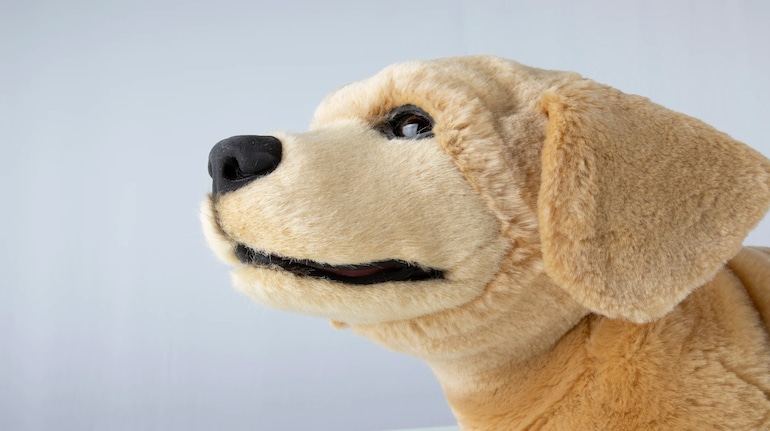

At CES 2026 in Las Vegas, a very different kind of puppy stole the show. It wasn’t fluffy or furry, but it did wag its tail, turn its head, and respond to a gentle touch or voice just like a real dog. The star of the moment was Jennie, a lifelike robotic puppy created by Tombot, a company that builds companion robots designed to help people feel less alone.
Jennie is not just a gadget. Tombot says she is meant to be an emotional support companion, especially for seniors who struggle with conditions like dementia and Alzheimer’s. But her reach goes beyond older adults. People with anxiety, PTSD, autism or anyone who can’t have a live pet at home may also benefit from her presence.
What makes Jennie special is how real she feels. Designed to resemble a Labrador puppy, Jennie moves her ears, mouth, tail, and body in ways that make you forget she is a machine. She can listen to your voice and respond. She reacts when you pet her, using sensors under her soft skin to notice touch and interaction. And instead of just playing preset sounds, her voice and movement patterns mimic the unpredictable, joyful behavior of a live dog.
The realism was no accident. Tombot worked with Jim Henson’s Creature Shop, the creative minds behind some of the world’s most famous puppets and animatronics, to give Jennie her lifelike presence. The result is a robot that doesn’t just look cute, but also feels alive in a way many people at CES said surprised them.
Jennie runs on onboard AI and sensors that help her interact in a personal way. She can hear your voice, learn your name, and respond to commands you set through a smartphone app. The app lets caregivers or family members rename her, customize commands, track engagement, and receive software updates that can make Jennie even better over time. Her battery life is long enough to last through most of the day, keeping her by a person’s side without frequent charging.
The idea for Jennie came from a deeply personal place. Tombot’s founder and CEO, Tom Stevens, has talked about how caring for his mother, who had Alzheimer’s, showed him the profound impact a companion animal could have. Live pets can be comforting, but they also demand care, feeding, vet visits and supervision. Not everyone can handle that, especially seniors with memory or mobility challenges. With Jennie, Stevens hopes to offer companionship without the challenges of a live animal.
The company says Jennie isn’t meant to replace human interaction, but to supplement it, offering emotional connection that might help reduce stress, loneliness, anxiety and even the need for some medications. Tombot is aiming for Jennie to be the first FDA-approved robotic medical device for behavioral health.
Interest in Jennie has been strong. By early 2025, thousands of people were already on a waitlist with pre-orders lined up, mostly from families and healthcare facilities. Jennie is expected to retail around $1,500, and after nine years of research and development, Tombot now plans to begin shipping the robot this summer.
At CES, many visitors stopped by the Tombot booth not just to see the technology, but to feel it. For caregivers who watch loved ones struggle with memory loss or isolation, Jennie offers a gentle promise of warmth, comfort and connection in a form that is safe, responsive and always present.



Discover the latest Business News, Sensex, and Nifty updates. Obtain Personal Finance insights, tax queries, and expert opinions on Moneycontrol or download the Moneycontrol App to stay updated!
Find the best of Al News in one place, specially curated for you every weekend.
Stay on top of the latest tech trends and biggest startup news.