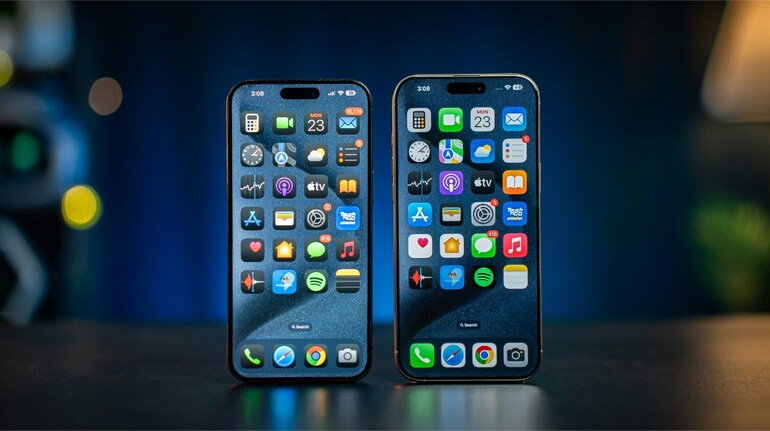

Apple is said to be gearing up for the next phase of development of its iPhone 18 lineup, with trial production expected to begin shortly after the Chinese New Year. According to a China-based industry source, small-scale manufacturing runs will start once factories resume normal operations following the Lunar New Year shutdown, which typically wraps up in the second half of February.
Trial production is a critical stage in Apple’s hardware pipeline. It allows the company and its manufacturing partners to validate production processes, identify yield issues, and fine-tune assembly lines before moving to mass production later in the cycle. The timing suggested by the report fits Apple’s usual cadence for flagship devices that are still more than a year away from public release.
The same source claims that production lines for the iPhone 18 Pro models have already been set up, which strongly suggests that the core hardware design for the Pro variants has been finalised. When Apple reaches this stage, major external changes are typically locked in, with only minor refinements made in the months that follow. As a result, expectations are growing that the overall design of the iPhone 18 Pro will not differ dramatically from the iPhone 17 Pro.
This aligns with earlier reports suggesting that Apple will retain the triple-lens rear camera layout housed within the new camera plateau design. Any changes to the exterior are expected to be evolutionary rather than radical, with Apple focusing its efforts on internal upgrades and new component technologies instead.
The reported production timeline also supports growing speculation that Apple is moving towards a split iPhone launch strategy. Under this approach, the iPhone 18 Pro models would launch first, likely in September 2026, potentially alongside Apple’s first foldable iPhone. The standard iPhone 18 and a lower-cost iPhone 18e would then follow several months later, targeting a spring 2027 release window. This staggered strategy would allow Apple to better manage manufacturing capacity while keeping consumer interest spread across the year.
On the hardware front, early details point to a mix of performance and cost-driven changes across the lineup. The standard iPhone 18 is said to be in line for a memory upgrade to 12GB of RAM, closing the gap with Pro models. It is also expected to adopt Apple’s next-generation A20 chip built on TSMC’s 2nm process, which should deliver gains in performance and efficiency. To offset rising component costs, Apple may simplify the Camera Control button by removing its capacitive sensor, while still retaining pressure-sensitive input for its core functions.
The iPhone 18 Pro models are expected to showcase more ambitious technology. These devices are tipped to debut the A20 Pro chip and could introduce under-screen Face ID, a long-rumoured feature that would further reduce visible display cutouts. Camera upgrades may include a variable aperture lens system and a new three-layer stacked image sensor supplied by Samsung, aimed at improving low-light performance and dynamic range. Apple is also expected to use the Pro models to introduce its custom C2 modem, continuing its push to reduce reliance on third-party connectivity components.
While many of these details remain unconfirmed, the start of trial production suggests Apple’s plans for the iPhone 18 are beginning to solidify. If the timeline holds, more concrete information is likely to emerge over the next year as the devices move closer to mass production.


Discover the latest Business News, Sensex, and Nifty updates. Obtain Personal Finance insights, tax queries, and expert opinions on Moneycontrol or download the Moneycontrol App to stay updated!
Find the best of Al News in one place, specially curated for you every weekend.
Stay on top of the latest tech trends and biggest startup news.