






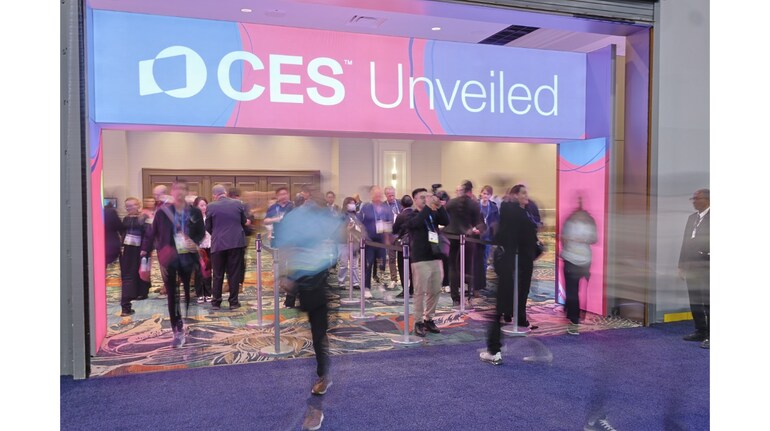

One of Elon Musk’s biggest strategic concerns about China was hard to ignore at this year’s Consumer Electronics Show in Las Vegas. The exhibition floor was packed with Chinese-made humanoid robots performing everything from table tennis and floor cleaning to martial arts demonstrations, offering a striking snapshot of how quickly China is advancing in the field.
The presence of these machines echoed warnings Musk made earlier this year. In April 2025, during a conference call, the Tesla chief said that while he believes Tesla’s Optimus robot currently leads in performance, China could still end up dominating the sector. Musk cautioned that although Tesla might sit at the top, positions two through ten on the leaderboard could be filled entirely by Chinese companies, according to reporting from Bloomberg.
At CES, that concern felt tangible. Chinese robotics firms, both large and small, occupied prominent booths and showcased increasingly capable humanoid machines. Analysts described the display as China delivering its latest robotics innovations straight into the heart of America’s most influential technology showcase, underlining the intensifying competition between the world’s two largest economies.
One of the most notable exhibitors was Tencent-backed Agibot, which used CES as its US debut. The company unveiled Genie Sim 3.0, a next-generation simulation platform built on Nvidia’s Isaac Sim technology. According to Agibot, the system creates more realistic virtual environments for training and testing robots, helping to reduce training time and costs while improving the transfer of skills from simulation to real-world deployment. Company representatives said Agibot plans to expand overseas this year, targeting markets such as Japan, where labour shortages are acute, as well as the US, where robots could also be used for promotional and entertainment purposes.
Agibot is far from alone. Chinese startups such as EngineAI, Unitree and Galbot are increasingly using artificial intelligence to enable robots to learn new tasks independently. According to research from Omdia, Chinese humanoid robot makers accounted for the vast majority of the roughly 13,000 units shipped globally last year, comfortably outpacing US players such as Tesla and Figure AI in terms of volume.
Cost is another major factor working in China’s favour. Unitree reportedly offers an entry-level humanoid robot for around $6,000, while Agibot prices a scaled-down model at roughly $14,000. By contrast, Musk has previously suggested that Tesla’s Optimus robot could cost between $20,000 and $30,000 once it reaches mass production, which has yet to happen.
Omdia believes China’s current lead in manufacturing scale could pay off significantly over time. The research firm projects that global humanoid robot shipments will reach 2.6 million units by 2035, driven by advances in AI models, dexterous hands and self-reinforcement learning. Looking further ahead, Citigroup estimates that the global robot population could swell to 648 million units by 2050.
China’s ambitions are also being reinforced by policy. Reports indicate that humanoid robots have been prioritised by the government as disruptive products, with the domestic market alone expected to reach $43 billion by 2035. Seen through that lens, CES was not just a tech show, but a glimpse into a future where Musk’s concerns may prove well founded.


Discover the latest Business News, Sensex, and Nifty updates. Obtain Personal Finance insights, tax queries, and expert opinions on Moneycontrol or download the Moneycontrol App to stay updated!
Find the best of Al News in one place, specially curated for you every weekend.
Stay on top of the latest tech trends and biggest startup news.







