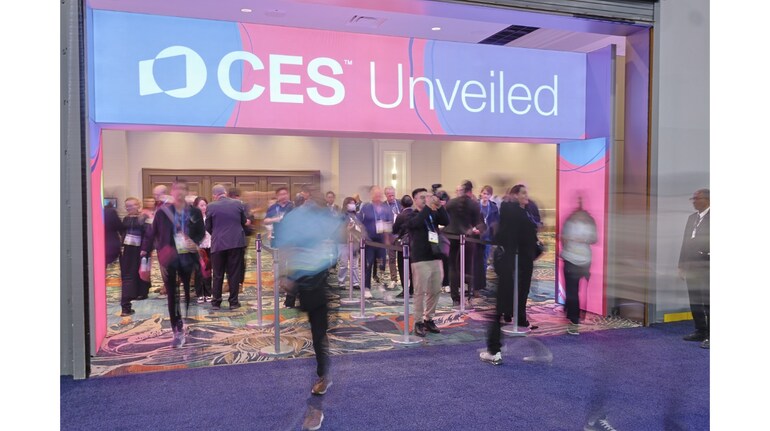

CES 2026 has wrapped up in Las Vegas, as the consumer technology industry begins its annual migration back home. Over the past few days, the show floor and press events were packed with announcements from industry heavyweights such as Nvidia, AMD and Sony, alongside smaller companies and startups looking to stand out during the Unveiled showcase and across the sprawling exhibition halls.
As in recent years, artificial intelligence dominated much of the messaging. However, CES 2026 marked a subtle shift in focus. Instead of agentic AI tools grabbing attention, the spotlight moved decisively towards physical AI. Robotics, autonomous systems and AI-powered machines were everywhere, signalling a growing push to bring intelligence out of the cloud and into the real world.
Nvidia leans into physical AI and next-generation computing
Nvidia CEO Jensen Huang delivered one of the most anticipated presentations of the show. His keynote blended a retrospective on Nvidia’s AI-fuelled rise with a look ahead to what the company sees as the next phase of computing.
A central reveal was Nvidia’s Rubin computing architecture, which is expected to begin replacing the Blackwell platform in the second half of the year. Rubin is designed to meet the soaring computational demands created by widespread AI adoption, offering major improvements in performance and storage. While much of the technical detail will matter most to data centre operators, the broader message was clear. Nvidia intends to remain the backbone of the AI economy.
The company also doubled down on autonomous systems, showcasing its Alpamayo family of open-source AI models and tools for self-driving vehicles. This push mirrors Nvidia’s broader ambition to make its infrastructure the default platform for general-purpose robots, much as Android became foundational for smartphones.
AMD focuses on AI-powered PCs and partnerships
AMD kicked off CES 2026 with the first keynote, led by chair and CEO Lisa Su. The presentation leaned heavily on partnerships, with appearances from figures including Greg Brockman, AI researcher Fei-Fei Li and Amit Jain.
Beyond the guest list, AMD used the stage to outline its strategy for pushing AI deeper into personal computing. The company highlighted its Ryzen AI 400 Series processors, positioning them as a way to bring on-device AI capabilities to a wider range of PCs. The pitch was less about raw spectacle and more about making AI practical and accessible for everyday users.
The strange, the experimental, and the unexpected
As always, CES was not just about polished products and roadmaps. Once the major announcements settled, attention turned to the show’s oddities. From unusual form factors to ambitious concepts, the event once again reminded attendees that CES is as much about experimentation as it is about commercial readiness.
Among the buzziest reveals was the debut phone from Clicks Technology, which channels BlackBerry-era nostalgia with a physical keyboard. LG also showcased its home robot CLOiD, although early impressions suggested that the robot’s real-world performance lagged behind its polished promotional videos.
Razer, long known for its outlandish CES concepts, leaned into AI this year. The company introduced Project Motoko, a glasses-free smart display concept, and Project AVA, which places an AI companion avatar on a user’s desk. Both drew attention more for their ambition than their immediate practicality.
AI moves into cars, construction and homes
Beyond gadgets, CES 2026 highlighted how AI is spreading into traditionally physical industries. Ford unveiled an AI assistant that will launch in its mobile app before gradually making its way into vehicles, with infrastructure support from Google Cloud.
In construction, Caterpillar announced a pilot programme with Nvidia to bring AI assistants and simulation tools to heavy machinery. The goal is to improve planning, efficiency and automation on construction sites.
Robotics partnerships also took centre stage. Boston Dynamics revealed deeper collaboration with Google’s AI research teams to train and operate its Atlas robots, signalling continued investment in humanoid and industrial robotics.
A show defined by momentum rather than surprises
CES 2026 may not have delivered a single, defining breakthrough, but it did offer a clear sense of direction. AI is no longer confined to chatbots and software demos. It is steadily embedding itself into vehicles, machines, tools and homes. At the same time, traditional hardware innovation remains very much alive, often serving as the vehicle through which AI ambitions are realised.
As the industry heads home, the takeaway from CES 2026 is less about any one product and more about acceleration. The future promised in previous years is now being assembled, piece by piece, on the show floor.


Discover the latest Business News, Sensex, and Nifty updates. Obtain Personal Finance insights, tax queries, and expert opinions on Moneycontrol or download the Moneycontrol App to stay updated!
Find the best of Al News in one place, specially curated for you every weekend.
Stay on top of the latest tech trends and biggest startup news.