






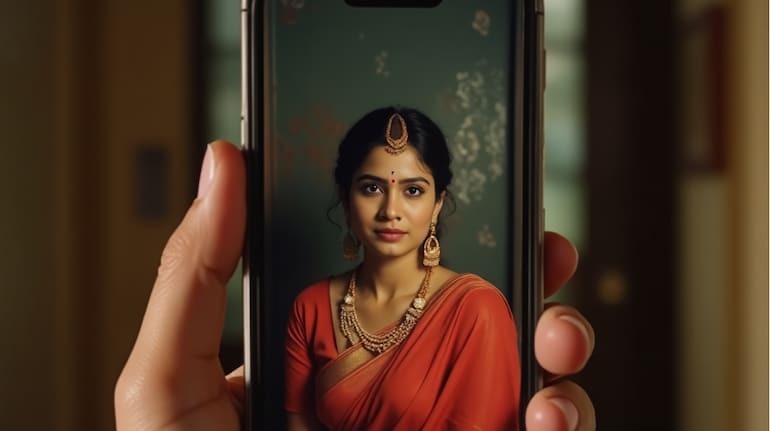

It's not just the audience but many brands are also taking to micro dramas, as they keep viewers hooked on to ads along with their billionaire and damsel-in-distress storylines.
From legacy names like Amul to new-age players such as Zomato, they are all spending their ad dollars on micro-dramas, said Azim Lalani, co-founder & chief business officer, Bullet, a micro-drama platform which was acquired by Zee Entertainment in 2025.
Why do brands like micro-dramas?
Higher completion rates and more interactivity are some of the reasons why ads on bingeable stories are clicking with brands.
Viewers can unlock new episodes of a micro-drama by watching ads, resulting in higher completion rates.
Bullet, for instance, has a cliffhanger sensitivity score. "It could be at 5 or 7 minutes of the series and that's where we integrate ads using artificial intelligence (AI), which is not just a buzzword. We won't give more than five ads to a user in one day. If he/she wants to watch a series further, they will have to buy coins or use existing ones," Lalani said.
When it comes to trying micro-dramas for marketing, Tata Motors launched its Independence Day campaign on Bullet, Lalani said. Badshah Masala and couple of other FMCG brands have also done month-long campaigns on the short-form content.
"Badshah Masala, Tata Motors have already done longer campaigns of around two months with us. We are overbooked as far as inventory is concerned," he added.
The short turnaround time to produce micro dramas is one big factor drawing brands to this form of content.
"There are campaigns for a particular launch, which cannot be done on a bigger screen or a mini-series because of the short notice. But for micro dramas, the turnaround time is around three weeks. If I am able to crack the brief, I'll be able to catch that three-month campaign with proper integration in a series," he said.
Lalani is also experimenting with adding branded products in existing series.
"There is technology via which we can do on-the-fly replacement of products even after the micro drama is released. Like a cup in a series can be replaced with a Starbucks mug. These kinds of integrations are seamless wherein we can create inventory out of our in-movie branding," he said
But such integration is easy only in short-form content like micro-dramas and not the long-form movies or series, he said. "Plus, the cost is higher when it comes to movies or series. In fact, brands are willing to take the chance of advertising on micro-dramas because it is not that expensive," Lalani said.
Interactive ads
They are not the plain vanilla ads like on TV or streaming platforms, Lalani said.
"We are discussing with Zomato a deal wherein, the Zomato Gold members might be able to get a discount on our platform and our platform will offer some giveaways to our users on Zomato," he added.
The platform is also experimenting with interactive ads such as a quiz game integrated in a brand campaign.
"Such ads give value to an advertiser because the time spent on them is something that a brand wants. Plus, they get feedback, attention, and the recall value gets set in the consumer's mind," he said.
No ad fatigue
According to media consulting firm Ormax, India’s OTT universe reached 601.2 million in 2025, a 9.9 percent increase over the previous year. While the overall growth trajectory of the category has stabilised, one category, micro-dramas, stands out.
It added that micro-dramas lean heavily on the free-video economy, with 75 percent of viewers coming from advertising video on-demand (AVOD) segments.
But advertising remains under pressure for mediums such as TV. For instance, advertising revenue remained under pressure for Zee in the first half of FY26 at Rs 1,564.8 crore, down 14 percent from Rs 1,813 crore in the same period last fiscal.
"TV allows limited interaction. On the other hand, micro-drama platforms are gamifying their content by letting viewers watch ads to unlock new episodes. Sometimes the performance of ads is much better than plain simple TV ads or even those streamed on Over The Top (OTT) platforms," Lalani said.
He added that advertising on linear TV is under stress but on digital, especially where performance is measurable or innovative, there is good growth.
Ad company WPP Media said recently that television faces continued structural challenges, with total TV ad revenue projected to decline 1.5 percent in 2025 to Rs 47,740 crore ($5.4 billion), before returning to growth in 2026.
Whereas social media, the largest growth driver, is projected to reach Rs 17,090 crore in 2026, up 11.1 percent over 2025 with short-form video content, particularly micro-dramas, gaining popularity.
Zee which is betting big on micro dramas expects the short-form content segment to scale rapidly and boost monetisation.
"We further strengthened our content approach by entering the high-potential short-form segment through Bullet. The innovative storytelling approach of Bullet is further sharpening the content creation capabilities of the company, and enabling us to engage with a new consumer cohort," said Zee's deputy CEO and CFO, Mukund Galgali.
While the broadcaster said micro-dramas have the potential to become one of the fastest-growing digital verticals for them, it is still too early.
"We are a baby right now. So, expecting that the baby will manage the entire house expenses is not possible right now. But if micro-dramas reach Rs 1,000 crore business in the first year, it will be a very good sign, unheard of for a new industry," Lalani said. He expects advertising will account for 10 percent of total revenue from the micro-drama segment.


Discover the latest Business News, Sensex, and Nifty updates. Obtain Personal Finance insights, tax queries, and expert opinions on Moneycontrol or download the Moneycontrol App to stay updated!
Find the best of Al News in one place, specially curated for you every weekend.
Stay on top of the latest tech trends and biggest startup news.












