






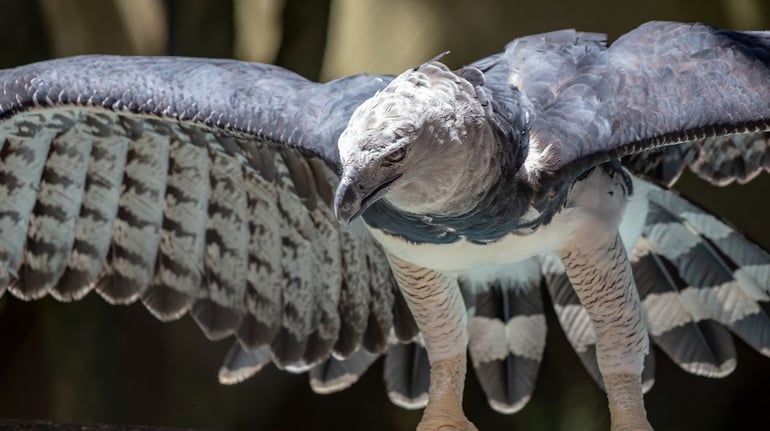

Researchers in Brazil have confirmed the birth of a rare harpy eagle chick in early January 2026, marking the first verified active nest in years within the Pantanal wetlands of Mato Grosso do Sul.
Harpy eagle chick confirmed in Pantanal stronghold
The chick was recorded near Corumbá after extended monitoring efforts. Researchers had tracked adult harpy eagles in the region. Their breeding site remained unknown for several years. The confirmed nest sits within the Urucum massif landscape. This area combines forests, mining zones, and remote ridges.
The nest overlooks the Paraguay River basin below. Scientists say this is the only active nest known locally. That makes the site a major conservation priority. Biologist Gabriel Oliveira led the monitoring project. He documented the adult female sheltering the chick. Observations were conducted under strict field protocols.
Researchers located an earlier nest structure in July 2025. That nest appeared unused for active breeding. In November 2025, a second nest was identified. This second structure now holds the chick. Scientists believe the first nest serves as backup. The discovery ended years of uncertainty about breeding.
Slow reproduction shapes harpy eagle survival
Harpy eagles are among the world’s largest raptors. Their wingspan can reach about 2.2 metres. Their talons are roughly the size of hands. Despite size, their reproduction rate is extremely slow. During the first two months, the female stays. She protects the chick from predators and weather. She also regulates body temperature continuously. This period represents the highest survival risk. After two months, behaviour gradually changes.
The female begins leaving briefly to hunt. The male provides increasing food support. These absences lengthen as the chick matures. This strategy only works under stable conditions. Food availability and minimal disturbance are essential. Female chicks may remain dependent for years. Male chicks often become independent slightly earlier. Each breeding attempt demands long parental investment. This limits population recovery after losses.
Conservation pressure and controlled tourism risks
In Brazil, harpy eagles are listed as near threatened. Mato Grosso do Sul classifies them as threatened. Habitat loss remains the primary danger. Illegal shooting also affects local populations. Large raptors disappear quickly from fragmented landscapes. Researchers say one chick changes conservation urgency. It provides a clear focus for protection measures.
The nest was documented during guided wildlife tourism. Icterus Ecoturismo operated visits alongside Planeta Aves. Images confirmed the chick’s health and care. Scientists warn nests remain highly sensitive sites. Disturbance can disrupt feeding and vigilance routines. Drones and close approaches increase stress risks. Visits are now tightly managed by specialists. Tourism is being shaped as conservation support.
Researchers have sought Pantanal breeding evidence for decades. The first formal regional record dates to 2012. Most sightings since were brief and scattered. Confirming breeding changes scientific understanding significantly. Ongoing monitoring will track chick development closely. Results will guide habitat protection decisions.
For scientists and communities, the chick represents hope. Its future depends on land management choices. It also tests coexistence between wildlife and development.
Discover the latest Business News, Sensex, and Nifty updates. Obtain Personal Finance insights, tax queries, and expert opinions on Moneycontrol or download the Moneycontrol App to stay updated!
Find the best of Al News in one place, specially curated for you every weekend.
Stay on top of the latest tech trends and biggest startup news.





