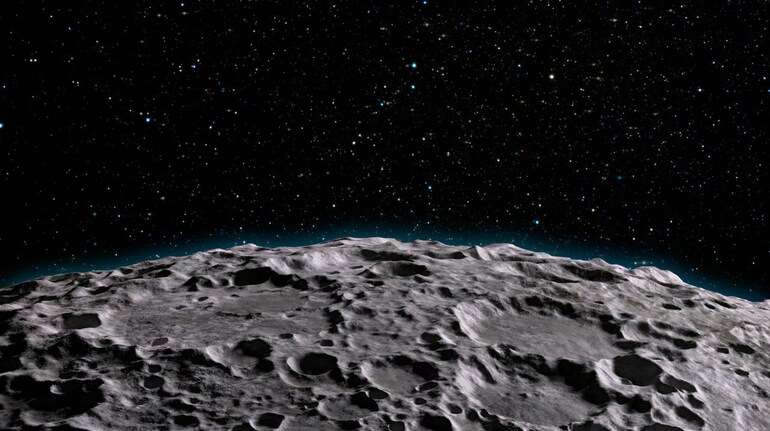
There's always been something strange about our Moon's two faces. One gazes at Earth with glassy dark plains; the other conceals a rough, craggy one. Now, NASA researchers believe they've discovered why.
GRAIL data unveils deep lunar secrets
NASA's Gravity Recovery and Interior Laboratory (GRAIL) mission uncovered a previously unknown difference under the Moon's surface. Measurements made by the Ebb and Flow spacecraft indicate the Moon's nearside and farside have distinct interiors. Scientists say the difference impacts the way the Moon bends as it orbits Earth.
The nearside curves more than the farside. This tidal deformation implies that the mantle under the two sides is different. The mantle is the Moon's dense inner layer between the core and crust.
Nearside hotter because of early volcanic activity
Researchers discovered that the nearside mantle is hotter and more active. They think massive volcanic eruptions long ago warmed this side. These eruptions also produced enormous smooth plains on the nearside, termed mare. The far side, on the other hand, remained cold and rough.
The nearside mantle is some 100–200°C warmer than the farside, according to the research. The source of the heat is probably radioactive material such as thorium and titanium. These have seemingly concentrated on the nearside following early eruptions.
Surface patterns correlate with deep interior structure
The research, conducted by Ryan Park of the Jet Propulsion Laboratory at NASA, connects the surface of the Moon to the interior. "The interior isn't uniform," Park said. "The nearside is warmer and more geologically active.
The GRAIL data indicates the mantle's heat pattern is reflected in the differences on the surface. That includes the nearside's high concentration of ancient volcanic rock. This connection indicates the processes that formed the Moon's surface long ago can continue to affect it today.
Mapping the Moon for future missions
The research produced the most accurate lunar gravity map yet. This map could help future missions navigate the Moon safely. “This detailed gravity map helps build better navigation systems,” said Park. “It will support future lunar exploration efforts.”
The research also points out how data on gravity could be used to study other moons. Such studies could unveil the insides of Jupiter's moon Ganymede or Saturn's Enceladus. Both are prime targets in the hunt for life outside Earth.
With scientists learning more about the Moon, its significance remains evident. It serves to stabilise Earth's rotation and regulate ocean tides. Though it's near in space, the Moon still has secrets buried deep within its interior.
Discover the latest Business News, Sensex, and Nifty updates. Obtain Personal Finance insights, tax queries, and expert opinions on Moneycontrol or download the Moneycontrol App to stay updated!
Find the best of Al News in one place, specially curated for you every weekend.
Stay on top of the latest tech trends and biggest startup news.