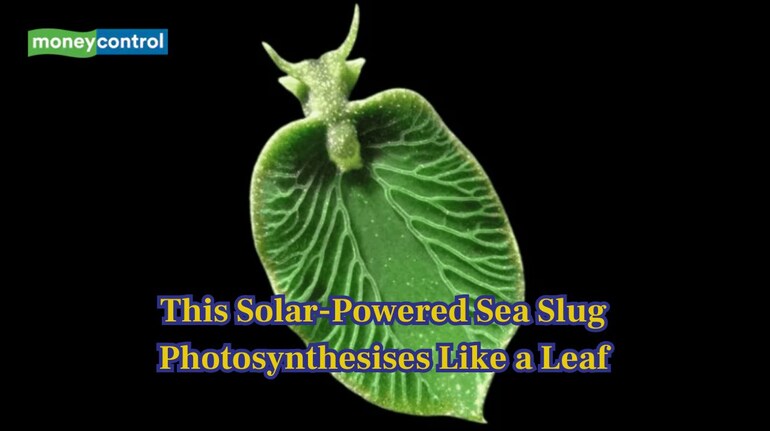

In a quiet tidal pool along the United States East Coast, a biological rule quietly breaks. An animal feeds on sunlight, and it does so without eating for months. Meet Elysia chlorotica, a bright green sea slug that blurs the line between plant and animal.
It looks like a leaf drifting underwater. Yet it crawls, senses and survives like an animal. Biology struggles to decide where it truly belongs. Nature, it seems, enjoys bending its own rules.
Who is this animal that feeds on sunlight?
Unlike most creatures, this sea slug does something extraordinary. It steals parts of plants and makes them work. When Elysia chlorotica eats algae, it does not digest everything. Instead, it keeps the algae’s chloroplasts.
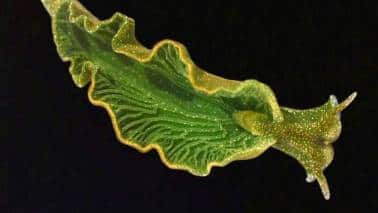 When Elysia chlorotica eats algae, it does not digest everything. (Image: Canva)
Chloroplasts are the tiny engines plants use to turn sunlight into energy. Once inside the slug’s cells, they keep working. The result is startling. The slug can photosynthesise like a leaf.
Where Is This Solar Animal Found?
This sea slug lives along the eastern coast of the United States. It prefers sunlit tidal pools and salt marshes. These shallow waters provide abundant algae and constant sunlight. Perfect conditions for a solar-powered lifestyle. The slug remains close to the surface, where sunlight can fuel its stolen chloroplasts.
They can survive without food for a year
With sunlight as fuel, the sea slug can stop eating entirely. Scientists have observed individuals surviving for months, even a full year, without consuming food. Energy flows directly from the Sun, through stolen chloroplasts, into an animal body. Few organisms on Earth can do this. No other animal does it so completely.
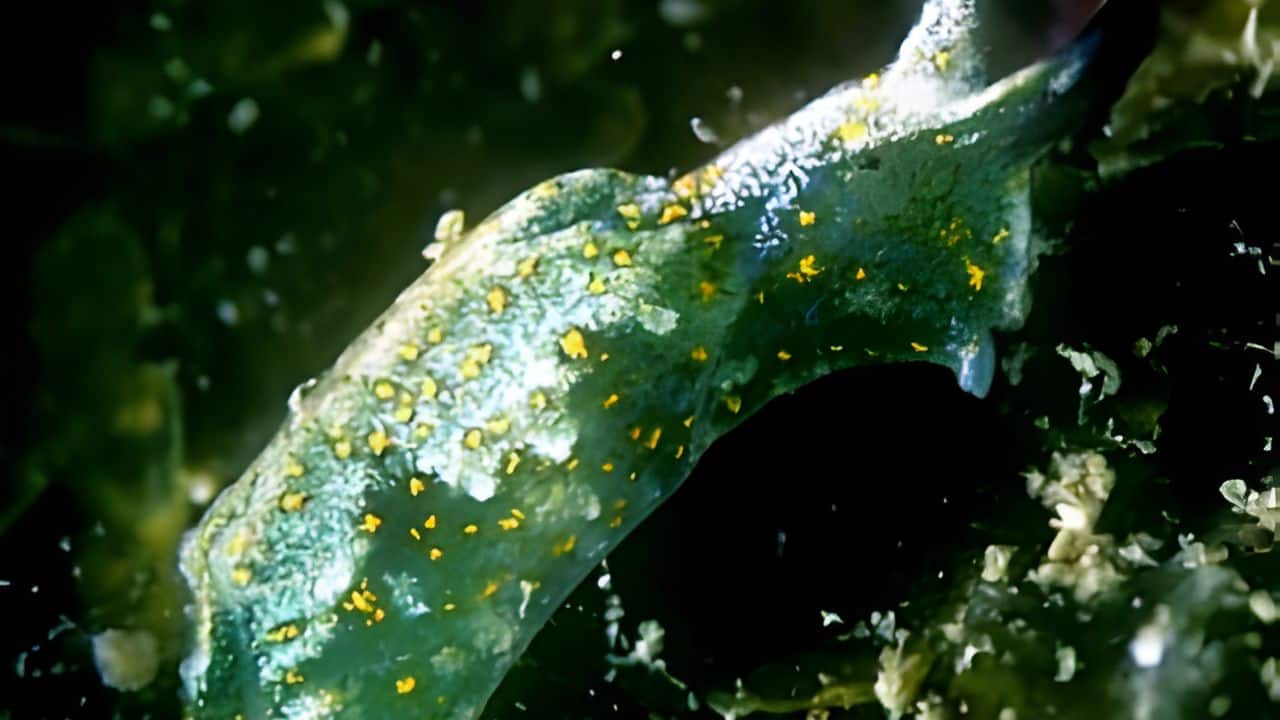 Elysia chlorotica lives in sunlit waters, including salt marshes and tidal pools. (Image: Canva)
How Does an Animal Perform Photosynthesis?
The science sounds impossible at first. Yet it is real. When the slug eats algae, it steals intact chloroplasts, not nutrients. These chloroplasts are stored inside the slug’s cells. There, they continue converting sunlight into energy. Genes borrowed from algae help keep them functioning. This rare process sustains photosynthesis inside an animal body.
How Do Scientists See This Animal?
Researchers see Elysia chlorotica as a biological bridge. This is neither a fully plant, nor a fully animal. It challenges long-standing evolutionary boundaries. It forces scientists to rethink how life adapts. Some call it a living experiment. Others see it as inspiration for future energy research. In this sea slug, nature reveals its most creative side.
Discover the latest Business News, Sensex, and Nifty updates. Obtain Personal Finance insights, tax queries, and expert opinions on Moneycontrol or download the Moneycontrol App to stay updated!
Find the best of Al News in one place, specially curated for you every weekend.
Stay on top of the latest tech trends and biggest startup news.