






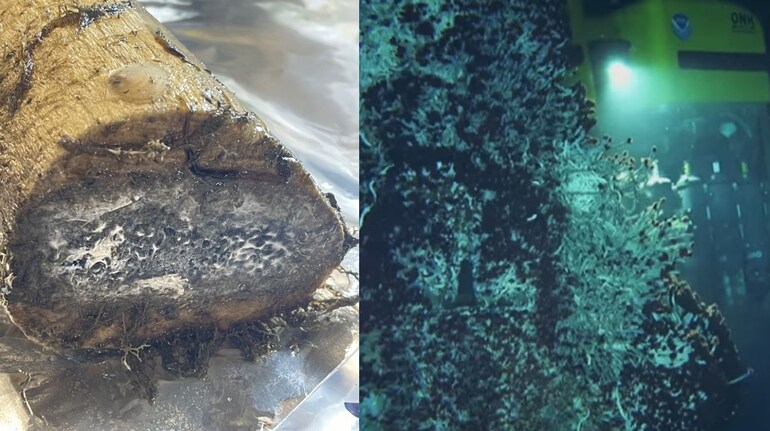

Deep-sea zombie worms have disappeared from whale bones unexpectedly. Scientists monitored Pacific bones for ten long years continuously. Normally, these worms colonise whale remains quickly after falls. Their sudden absence raises urgent concerns about ocean health.
What Are Zombie Worms?
Zombie worms, or Osedax, survive on whale bones at seafloor. They have no mouths but digest nutrients using acidic roots. Bacteria in their roots break down bone, releasing vital nutrients. Dead whales provide a feast that supports deep-sea ecosystems naturally.
The Strange Disappearance
Scientists placed whale bones nearly 900 metres deep. They monitored these bones over a decade for worm arrival. Surprisingly, no zombie worms appeared at all, shocking marine biologists. Such absence is highly unusual in this normally colonised habitat.
Are Zombie Worms Vanishing?
The experiment was led by Fabio De Leo, benthic ecologist. He is with Ocean Networks Canada and University of Victoria. He co‑authored the research with University of Hawaiʻi oceanographer Craig Smith. Together they monitored seafloor bones for signs of life. De Leo calls the absence “a remarkable observation”. “We’re talking about potential species loss,” he says.
Where Was This Study Conducted?
The bones were placed in Barkley Canyon, Pacific Ocean. This site lies about 900 metres below sea level. Barkley Canyon is a naturally low‑oxygen zone in Canadian waters. Known as an oxygen minimum zone (OMZ), it may stifle life. Researchers used underwater cameras and sensors for observation. They watched humpback whale bones for over ten years.
Why Scientists Are Worried?
Zombie worms play a vital role in deep-sea nutrient cycles. Without worms, bones cannot decompose, affecting microbial and scavenger communities. Their disappearance may indicate deep-sea ecosystems face wider unknown threats. Researchers fear other species may decline if this trend continues.
The Role of Oxygen
Oxygen minimum zones, or OMZs, are expanding in oceans now. Zombie worms cannot survive in waters below oxygen survival thresholds. Climate change warms oceans and reduces oxygen, worsening deep-sea conditions. Scientists suspect low oxygen is the key reason worms vanished.
Broader Ecological Implications
Whale bones may accumulate, disrupting microbial and scavenger community balance. Biodiversity loss could result, affecting multiple deep-sea food chains directly. Nutrient recycling may decline, harming ecosystem health over decades globally. This disappearance hints at climate change impacts even in deepest oceans.
Next Steps for Researchers
Scientists plan more whale-fall studies in different global regions. They aim to measure oxygen thresholds for worm survival accurately. Understanding disappearance may help predict and prevent deep-sea biodiversity loss. The findings could serve as early warning for oceanic ecosystems.
Discover the latest Business News, Sensex, and Nifty updates. Obtain Personal Finance insights, tax queries, and expert opinions on Moneycontrol or download the Moneycontrol App to stay updated!
Find the best of Al News in one place, specially curated for you every weekend.
Stay on top of the latest tech trends and biggest startup news.





