







For more than a decade, the Russian Sleep Experiment has haunted the internet, often described as the world’s darkest experiment and shared as a suppressed Soviet secret rather than fiction. First appearing online in August 2010, the story blended Cold War fear, scientific curiosity and psychological terror so convincingly that many readers believed it was real.
How the Russian sleep experiment story spread
The viral story describes a secret Soviet experiment carried out inside a sealed research chamber, where five political prisoners were allegedly exposed to an experimental gas designed to eliminate sleep completely. According to the tale, the subjects were promised their freedom if they remained awake for fifteen consecutive days. The chamber was airtight, with no windows, and researchers monitored the prisoners through microphones and reinforced observation ports. During the first days, the subjects reportedly behaved normally, speaking calmly and cooperating.
After several days without sleep, their mental state supposedly began to deteriorate, marked by paranoia, distrust and whispered accusations. As time passed, the prisoners were said to scream continuously for hours, damaging their vocal cords, before falling into complete silence. When researchers attempted to end the experiment, one subject allegedly declared they no longer wanted freedom. Upon reopening the chamber, most prisoners were found dead, mutilated or having turned on one another. Survivors were described as psychologically broken, refusing sleep and violently resisting rescue. The story claims the experiment ended in total failure, with every participant eventually dying and all evidence supposedly erased by Soviet authorities.
Why the myth felt disturbingly believable
Part of the story’s power lies in its careful balance between reality and horror. The Soviet Union’s documented secrecy and real historical experiments created a believable backdrop. Cognitive researchers say such stories succeed because they activate emotional thinking before critical reasoning. Dr Neil Dagnall of Manchester Metropolitan University explained to IFL Science that humans process frightening stories instinctively first, allowing fear to override scepticism. The Russian Sleep Experiment used just enough scientific language and historical framing to remain within this credibility threshold.
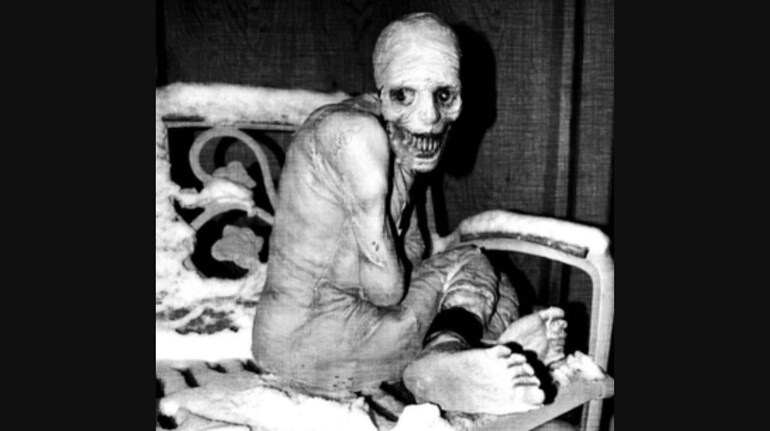
Images circulating alongside the story worsened confusion. One widely shared photograph implied to show a test subject was later identified as an animatronic Halloween prop called “Spazm”. Yet by then, belief had already taken root across forums, videos and social media.
From internet fiction to modern folklore
Over time, the story evolved beyond its original post, becoming a modern urban legend similar to Slender Man. Scholars have since analysed its cultural impact, with writers noting it reflects lingering political anxieties about secret state power. Its popularity inspired novels, stage productions and several films, including a psychological thriller released in November 2022. Each adaptation further blurred lines between fiction and reality.
Despite its reputation, the Russian Sleep Experiment was never real. It remains a fictional horror story designed to sound plausible. Yet its endurance reveals how easily fear, history and storytelling can merge, turning internet fiction into something that feels disturbingly true.

Discover the latest Business News, Sensex, and Nifty updates. Obtain Personal Finance insights, tax queries, and expert opinions on Moneycontrol or download the Moneycontrol App to stay updated!
Find the best of Al News in one place, specially curated for you every weekend.
Stay on top of the latest tech trends and biggest startup news.





