






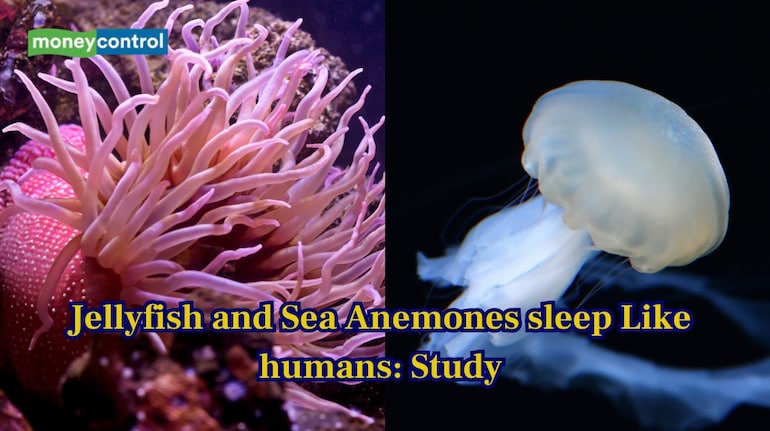

Sleep might seem like a brain-only business. After all, we dream, think and recharge our minds in slumber. But new research shows that even brainless creatures like jellyfish and sea anemones may enter sleep-like states proving that sleep is far older and stranger than we ever imagined.
How Can Brainless Creatures Sleep?
Researchers after studying jellyfish and sea anemones observed periods of reduced activity and responsiveness. This is almost identical to the sleep cycles of humans and other animals.
During these restful phases, the creatures slow down, retract tentacles and respond less to stimuli. In other words, they “sleep” without a brain, challenging centuries of assumptions that sleep is strictly tied to neural activity.
If no brain is required, what could sleep be for?
If brains are not required, what purpose does sleep serve? Experts suggest that sleep may have evolved for cellular repair, DNA protection or energy conservation, rather than cognitive functions alone. Essentially, sleep could be a deeply ancient mechanism built into life itself, long before brains or conscious thought existed.
Could Sleep Be Older Than Brains?
Scientists now ask whether sleep predates nervous systems entirely. It raises questions about how life conserved energy over millennia. Jellyfish rest may represent the earliest example of biological sleep. Sleep is no longer just a human necessity or luxury. It is a biological rhythm embedded deep in life itself.
Do Other Animals Sleep Like This?
Yes, sleep-like states are surprisingly widespread. From fruit flies and worms to dolphins and birds, almost all animals studied exhibit some form of rest. What makes jellyfish and anemones extraordinary is that they do it without a brain, hinting that sleep is a universal biological rhythm rather than a purely neurological phenomenon.
Why are Scientists studying the sleeping pattern?
Researchers study brainless animals to understand sleep’s fundamental purpose. They want to know why rest exists across all living creatures. Sleep may protect DNA, conserve energy, and aid cellular repair. Studying jellyfish and anemones reveals sleep’s origins before brains evolved. These patterns help scientists trace the evolution of animal behaviour.
Discover the latest Business News, Sensex, and Nifty updates. Obtain Personal Finance insights, tax queries, and expert opinions on Moneycontrol or download the Moneycontrol App to stay updated!
Find the best of Al News in one place, specially curated for you every weekend.
Stay on top of the latest tech trends and biggest startup news.





