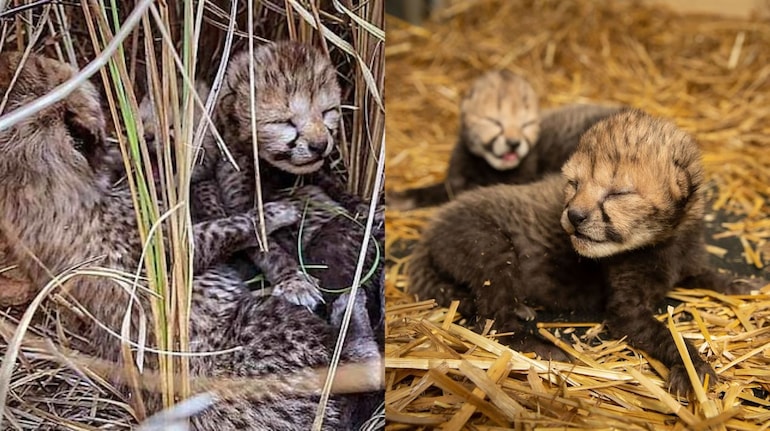

India’s rarest big cat has delivered hopeful new life. Five tiny cheetah cubs were born at Kuno National Park. Their mother, Aasha, arrived from Namibia years ago. February 7th, her family marks a major conservation milestone. India’s cheetah story is entering a promising new chapter.
A Birth That Changed the Numbers
Aasha gave birth to five healthy cubs recently. Forest officials confirmed the news after careful monitoring. The cubs were born inside a protected enclosure. They are being closely watched by wildlife experts. Their survival has lifted national cheetah numbers to 35.
Who Is Aasha?
Aasha is one of the first Namibian cheetahs brought to India. She arrived under the ambitious Project Cheetah programme. Her journey spanned thousands of kilometres across continents. Since arrival, she has adapted remarkably well. This is her second successful litter in two years.
Kuno Welcomes the Birth of FIVE Cubs 🐆✨Aasha’s legacy leaps forward—India welcomes her five adorable cubs! A moment of immense pride and joy for Project Cheetah as Aasha, the Namibian cheetah and a proud second-time mother, gave birth to five cubs on 7th February 2026 at… pic.twitter.com/vTXFkZJoso — Bhupender Yadav (@byadavbjp) February 7, 2026
Project Cheetah: Rebuilding a Lost Species
Cheetahs vanished from India more than seventy years ago. Hunting and habitat loss caused their complete extinction. Project Cheetah began to reverse this historic loss. African cheetahs were relocated to suitable Indian reserves. Kuno National Park became the project’s main testing ground.
How the Cubs Are Being Protected?
The newborn cubs remain inside secure forest enclosures. Veterinarians conduct regular health checks and observations. Camera traps track their movements day and night. Human contact is kept to an absolute minimum. Natural behaviour is encouraged for long-term survival.
What Experts and Officials Called this?
Environment officials praised forest staff and veterinarians. They credited years of careful planning and training. Wildlife scientists called it a “critical turning point”. Conservationists say patience remains essential. Not all cubs survive in early stages.
Why These Cubs Matter for Conservation?
Each birth strengthens India’s fragile cheetah population. More cubs mean better genetic diversity over time. It reduces dependence on imported animals. Local breeding shows improving habitat conditions. Scientists see this as a positive ecological signal.
Discover the latest Business News, Sensex, and Nifty updates. Obtain Personal Finance insights, tax queries, and expert opinions on Moneycontrol or download the Moneycontrol App to stay updated!
Find the best of Al News in one place, specially curated for you every weekend.
Stay on top of the latest tech trends and biggest startup news.