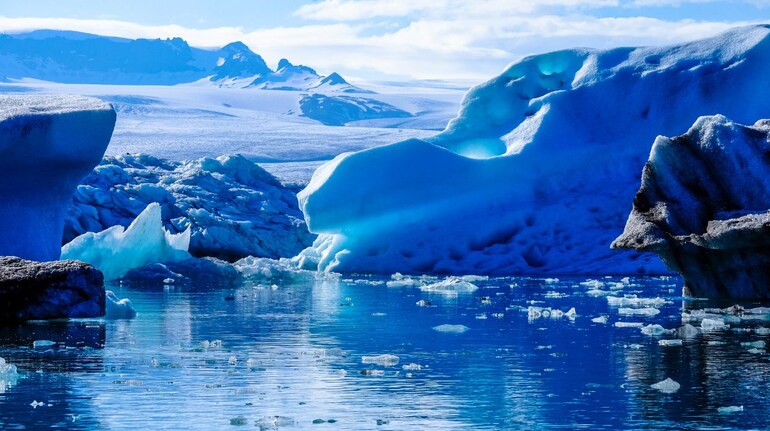
A new study released this month reports fast Antarctic melting. Researchers found underwater storms intensifying ice loss beneath two glaciers. The analysis highlights urgent concerns for future sea level change. The study appears in Nature Geosciences and uses new data.
How Underwater Storms Are Melting Antarctic Ice Shelves
Pine Island Glacier lies near Antarctica’s narrow western point. Thwaites Glacier sits nearby and holds vast water volumes. The glacier is often called the Doomsday Glacier globally. Both glaciers have melted quickly during recent decades of warming. Warm ocean water reaches the ice shelf base easily. This zone lifts from the seabed and becomes vulnerable.
Researchers examined short weather-like changes in ocean conditions. They studied rapid events across hours and days only. Yoshihiro Nakayama from Dartmouth College described this timescale shift. He explained that such short studies are uncommon in Antarctica.
The storms observed are swirling underwater eddies forming naturally. These events move like fast twirls inside ocean layers. Mattia Poinelli from UC Irvine explained their behaviour simply. He compared their motion to swirls inside stirred coffee. These eddies sometimes reach nearly six miles across. They form when warm water meets colder water masses.
The eddies travel under the ice shelf structure rapidly. They move between the rough shelf base and seafloor. This motion lifts warmer deep water upward effectively. The warmer flow increases melting at weak ice zones. The team used computer models with real ocean measurements. Their findings show storms caused major melting episodes. Over nine months they caused nearly twenty percent melt. Poinelli noted that precise estimates remain challenging. CNN reported these remarks after reviewing the study details.
What the Findings Mean for Future Sea Level Risks
The scientists also warned about a clear feedback loop. Fresh cold meltwater mixes with warmer salty layers below. This mixing increases turbulence under the ice shelves. The turbulence then speeds up melting even further. Lia Siegelman from UC San Diego raised this concern. She suggested rising temperatures may strengthen these loops.
The ice shelves help hold back the large glaciers. Their collapse increases ice flow into the ocean quickly. Thwaites Glacier contains water raising sea level significantly. A full collapse could increase global seas nearly ten feet.
Experts unaffiliated with the study reacted with concern today. Tiago Dotto from the UK called the melt astonishing. He said the role of small ocean features is important. David Holland from NYU urged caution with model-based studies. He said more real data is needed from the region.
Scientists say Antarctica remains difficult to study directly. Many places are among Earth’s most remote locations. Ted Scambos from Colorado noted several melt drivers exist. He said many factors hold similar importance overall. He explained that ocean behaviour near ice is poorly understood. The study states that current data remains insufficient for certainty.
What Researchers Expect Next in Polar Climate Science
The authors say more observations are urgently required. They emphasise studying seasonal and yearly storm patterns soon. Short processes are proving far from negligible today. Poinelli said these rapid events deserve stronger attention. Siegelman said fine-scale ocean research is essential going forward. She described this work as the next major frontier. Scientists believe better data may clarify long-term glacier trends. Many warn that rising ocean temperatures remain a central threat.
Discover the latest Business News, Sensex, and Nifty updates. Obtain Personal Finance insights, tax queries, and expert opinions on Moneycontrol or download the Moneycontrol App to stay updated!
Find the best of Al News in one place, specially curated for you every weekend.
Stay on top of the latest tech trends and biggest startup news.