







Scientists have developed a water filter that tackles toxic “forever chemicals” at unprecedented speed. The technology removes harmful compounds up to 100 times faster than current carbon filters.
Researchers hope it could revolutionise the way contaminated water is treated. Early tests show promise for use in rivers, taps and wastewater systems. This could represent a major step in protecting human health and the environment.
What Are “Forever Chemicals”?
“Forever chemicals” refers to PFAS (per- and polyfluoroalkyl substances). They have been used in products since the 1940s for water, fire and grease resistance. They are found in non-stick pans, raincoats and firefighting foams.
The strong carbon-fluorine bonds make them resistant to breakdown. PFAS persist in water, soil, air and even our bodies. Some like PFOA and PFOS who are linked to cancer and fertility problems.
Who's Behind This Breakthrough?
The research is led by engineers at Rice University in Texas. This filter is 100 times faster than commercial carbon filters. This claim is from lead author and engineer Youngkun Chung from Rice University. An international team of scientists collaborated on this project. They specialise in materials science and environmental engineering. Their goal is to develop faster, safer ways to clean polluted water.
What is the role of This New Water Filter?
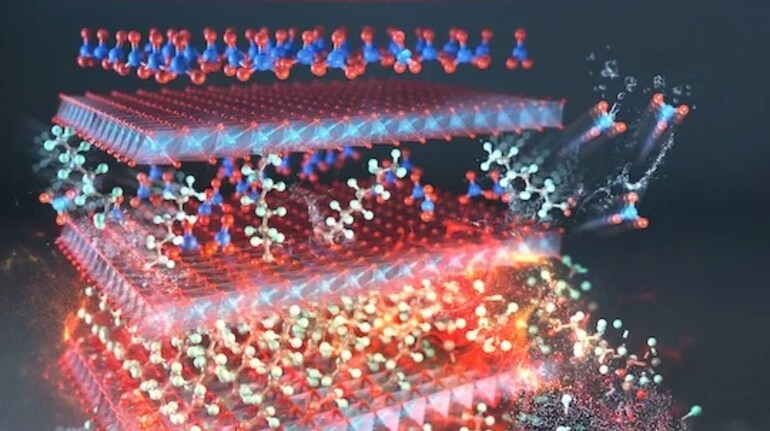
The filter uses a layered double hydroxide (LDH) material. It captures PFAS, the dangerous “forever chemicals” from water rapidly. It can remove high concentrations in minutes rather than hours. Once saturated, it can be regenerated and reused safely. PFAS molecules are destroyed, not just trapped, making it revolutionary.
How Does the New Filter Work?
Rice University engineers and collaborators created a special layered double hydroxide (LDH) material. This material uses copper and aluminium layers to capture PFAS quickly. Its unique structure pulls PFAS out of water in minutes which is much faster than carbon filters.
Is This Tested or Not?
The filter has been tested with lab water samples and real environmental water. Tests included water from rivers, taps and wastewater facilities. In all cases, PFAS were removed effectively within minutes. Further work is ongoing to scale the technology for industrial and municipal use.
How Scientists See This Discovery?
Researchers call it a potentially game-changing advancement for water safety. They are excited about its speed, efficiency, and sustainability. It could help municipalities, industries, and researchers manage PFAS contamination. Experts say it is one of the most effective PFAS removal methods developed so far.
Discover the latest Business News, Sensex, and Nifty updates. Obtain Personal Finance insights, tax queries, and expert opinions on Moneycontrol or download the Moneycontrol App to stay updated!
Find the best of Al News in one place, specially curated for you every weekend.
Stay on top of the latest tech trends and biggest startup news.





