






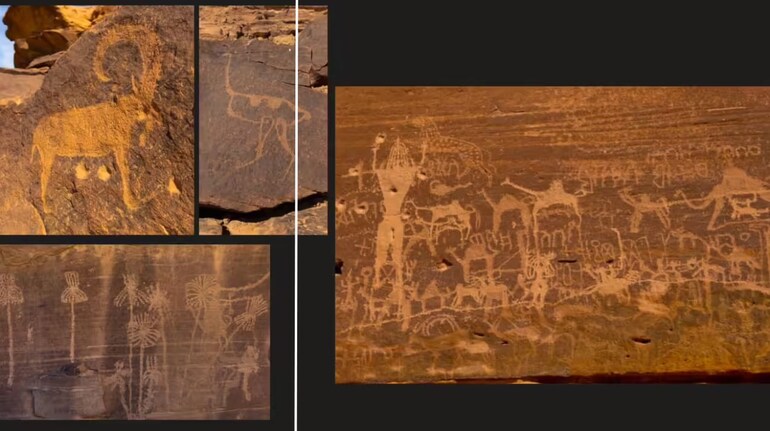

What is now one of the world’s largest deserts was once lush and fertile. New studies reveal that Saudi Arabia’s deserts once had rivers, lakes and grasslands. These greener landscapes supported animals, plants and even early humans.
Geologists and climate scientists have pieced together this ancient ecosystem. Evidence comes from sediment layers, fossil remains and satellite imaging.
Clues Buried in Sand and Stone
Sediments, ancient riverbeds and lake deposits tell a hidden story. The Rub’ al‑Khali, now endless sand, was once a massive lake. Grasslands spanned thousands of square kilometres, dotted with water sources. These traces reveal Arabia’s dramatic climate swings over millions of years. Even fossils of hippos and crocodiles hint at a wetter past.
When Rain Turned Deserts Green
Earth’s orbit and monsoon patterns caused Arabia’s wet and dry cycles. During humid phases, rainfall filled rivers and lakes. Deserts transformed into fertile plains teeming with life. When climate shifted, waters vanished and sands reclaimed the land. These cycles explain how today’s desert was once a thriving paradise.
Ancient Life Thrived in Arabia
Green Arabia was not just lush, it was alive. Early humans used rivers and grasslands to migrate across the peninsula. Archaeologists discovered stone tools and artefacts along ancient riverbeds. Animals such as hippos, crocodiles and gazelles roamed freely across fertile plains. This biodiversity created complex ecosystems, supporting life in ways the desert now hides.
Footprints of Ancient Life
Humans and animals once flourished here. Archaeologists found stone tools along dried riverbeds, marking early migration paths. Hippos, crocodiles and other water-loving species thrived during wet periods. Rivers and grasslands created corridors connecting Africa to Eurasia. This green era made Arabia a hub of life and movement.
How Science Explains Arabia’s Green Past
Scientists use geology, palaeoclimatology, and satellite imagery to study ancient Arabia. Recent research combines satellite data with field surveys, creating a detailed map of Arabia’s “green phases.”
By studying these cycles, scientists predict how arid landscapes respond to climate change today. This knowledge guides reforestation, conservation and water management projects across the Arabian Peninsula.
Discover the latest Business News, Sensex, and Nifty updates. Obtain Personal Finance insights, tax queries, and expert opinions on Moneycontrol or download the Moneycontrol App to stay updated!
Find the best of Al News in one place, specially curated for you every weekend.
Stay on top of the latest tech trends and biggest startup news.





