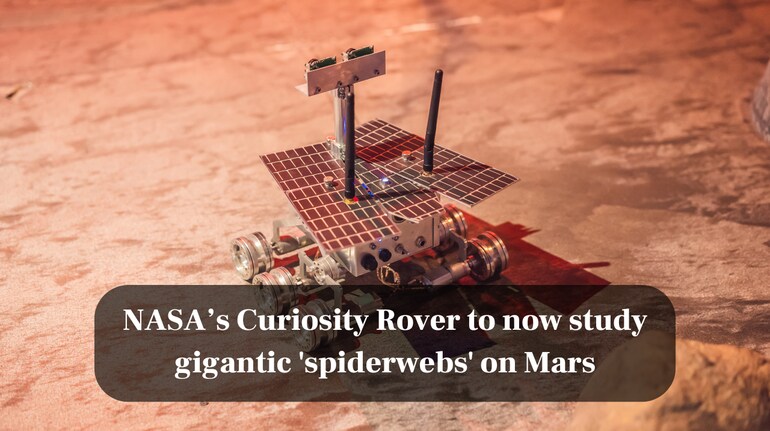
NASA’s Curiosity rover, a decade-long veteran of Martian exploration, is gearing up for its next groundbreaking mission: studying massive “spiderweb” formations on Mars. These intricate patterns, spanning 6 to 12 miles across, could hold vital clues to the planet’s watery history.
After a fruitful year in Gediz Vallis—a channel etched into the slopes of Mount Sharp in Gale Crater—Curiosity is wrapping up its current exploration. During this phase, the rover unearthed significant findings, such as pure sulfur crystals and wavy rock patterns shaped by ancient lakes. However, the journey wasn’t without challenges; a sizable hole was discovered in one of its wheels as it traversed steep terrains.
On November 18, NASA’s Jet Propulsion Laboratory (JPL) shared a stunning 360-degree “selfie” from Curiosity, marking the end of its Gediz Vallis mission. Next, the rover will set its sights on an extraordinary geological feature called "the boxwork," a network of zig-zagging ridges that has intrigued scientists for decades but has never been studied up close.
Unlike Mars' infamous “spiders”—formed by the sublimation of carbon dioxide ice—the boxwork deposits bear a closer resemblance to terrestrial features found in Earth’s caves. These formations, created by mineral-rich water seeping into rock crevices and hardening, are commonly seen in places like Wind Cave National Park in South Dakota. On Mars, however, these formations likely originated from ancient lakes and oceans that left behind mineral veins as the water receded.
Scientists are particularly eager to examine the minerals within the boxwork formations, as they may offer insights into Mars’ habitability. According to Kirsten Siebach, a Curiosity mission scientist from Rice University, these minerals formed in warm, salty environments—conditions that could have supported microbial life on early Earth.
Curiosity is expected to reach the boxwork region by early 2025.
Discover the latest Business News, Sensex, and Nifty updates. Obtain Personal Finance insights, tax queries, and expert opinions on Moneycontrol or download the Moneycontrol App to stay updated!
Find the best of Al News in one place, specially curated for you every weekend.
Stay on top of the latest tech trends and biggest startup news.