






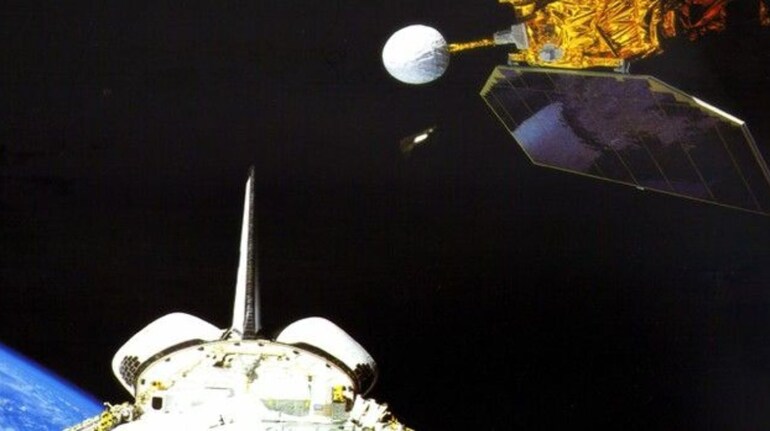

NASA has been observing Earth’s energy balance for 48 years. These satellites measure how much sunlight Earth absorbs and reflects. They also track energy emitted as heat back into space. This helps scientists to study how the planet warms or cools.
Understanding these energy flows is critical for predicting climate patterns. Even small changes can have major impacts on weather and ecosystems. Long-term data is essential to spot trends and anomalies over decades.
From Cold War Satellites to Climate Truths
It started with Explorer 1 in 1958, a spy-era satellite that revealed the Van Allen belts. Later missions like ERBE and CERES focused on Earth’s energy. The TSIS‑1 sensor is the newest and it measures solar radiation with unmatched precision. Modern satellites expose hidden drivers of climate change previously underestimated.
The Experiment That Changed Climate Science
In 1984, NASA launched the Earth Radiation Budget Experiment (ERBE). It was the first mission designed to measure Earth’s radiation balance continuously. ERBE laid the foundation for the longest climate data record from space.
Without ERBE, today’s climate comparisons would be impossible. More than 90% of excess trapped energy is absorbed by oceans. This hidden heat drives sea-level rise and marine warming.
The Sun, Clouds and Climate
Clouds play a major role in Earth’s energy balance. They reflect sunlight and trap heat in complex ways. NASA's CERES instruments map cloud patterns and their energy effects. This data allows scientists to refine climate models for the future.
Ozone, aerosols and atmospheric processes also influence energy flows. Tracking these helps predict phenomena like warming, storms, and seasonal changes.
Why studying Earth matters so much?
The energy balance controls Earth’s temperature stability. It determines how fast the planet warms or cools. Long-term energy records show tiny shifts can trigger big climate impacts.
Solar variability, aerosols and human activity interact in unpredictable ways. Models relying on old assumptions may misjudge warming or cooling trends. Continuous satellite observation is critical to avoid being blindsided.
Can Satellites Save Climate Science?
NASA’s decades-long record shows the Sun-Earth connection in remarkable detail. From Explorer 1 to TSIS‑1, observation has evolved with precision and purpose. It helps scientists measure the effect of clouds, oceans and the atmosphere.
It is a cornerstone for understanding climate change on a global scale. The world depends on this data to guide climate policies.
Discover the latest Business News, Sensex, and Nifty updates. Obtain Personal Finance insights, tax queries, and expert opinions on Moneycontrol or download the Moneycontrol App to stay updated!
Find the best of Al News in one place, specially curated for you every weekend.
Stay on top of the latest tech trends and biggest startup news.





