






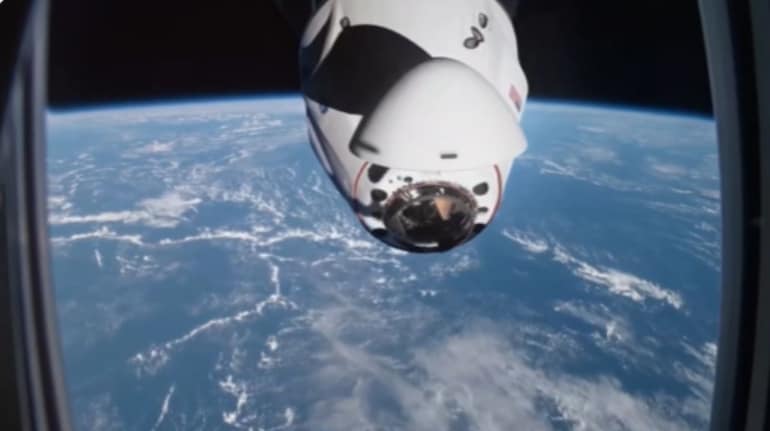

Four astronauts departed the International Space Station early Wednesday after a medical concern prompted NASA to shorten their mission, marking the agency’s first medical evacuation in human spaceflight history.
Early return from the International Space Station
NASA confirmed the SpaceX Dragon capsule undocked at 22:20 GMT, carrying American astronauts Mike Fincke and Zena Cardman, Japanese astronaut Kimiya Yui, and Russian cosmonaut Oleg Platonov. The crew had spent nearly five months aboard the orbiting laboratory. Their return was brought forward by about one month following the identification of a medical issue affecting one crewmember. NASA stressed the decision was precautionary rather than urgent. Officials said the affected astronaut remained stable throughout preparations for departure.
Zena Cardman described the return as unexpected but praised crew unity. She said the astronauts supported one another closely during the decision process. Mike Fincke, serving as pilot for Crew-11, reassured the public that all astronauts were safe. He explained the return allowed comprehensive medical assessments on Earth. NASA declined to identify the affected crewmember or provide diagnosis details.
LIVE: @zenanaut, @AstroIronMike, and their fellow Crew-11 members have said their goodbyes, and the SpaceX Dragon hatch is closed. Now, watch as they undock from the @Space_Station. https://t.co/FVnNDMIlrZ— NASA (@NASA) January 14, 2026
Medical decision and agency response
NASA spokesman Rob Navias said the medical condition remained stable throughout. He emphasised the return was not classified as an emergency evacuation. James Polk, NASA’s chief health and medical officer, said unresolved diagnostic risks influenced the decision. He explained space-based medical tools remain limited compared with Earth facilities. The Dragon capsule is scheduled to splash down off California around 0840 GMT Thursday.
Computer models previously suggested medical evacuations could occur every three years. Despite this, NASA had never conducted one during 65 years. Soviet and Russian programmes experienced earlier health-related mission curtailments. In 1985, cosmonaut Vladimir Vasyutin returned early from Salyut 7.
Impact on station operations and cooperation
Crew-11 arrived at the station in early August. Their mission was initially planned through mid-February. Remaining aboard the ISS are American astronaut Chris Williams and cosmonauts Sergey Kud-Sverchkov and Sergei Mikaev. They arrived in November aboard a Russian Soyuz spacecraft.
NASA confirmed routine and emergency spacewalks will pause temporarily. Spacewalks require internal crew support, now limited onboard. Roscosmos continues cooperative operations with NASA despite wider geopolitical tensions. The ISS has remained continuously inhabited since the year 2000. It stands as a symbol of cooperation among the United States, Russia, Europe, and Japan.
Senior NASA official Amit Kshatriya praised the crew’s training and response. He said astronauts are prepared extensively for unexpected medical scenarios. The episode highlights both human vulnerability and operational caution in orbit.
Discover the latest Business News, Sensex, and Nifty updates. Obtain Personal Finance insights, tax queries, and expert opinions on Moneycontrol or download the Moneycontrol App to stay updated!
Find the best of Al News in one place, specially curated for you every weekend.
Stay on top of the latest tech trends and biggest startup news.





