






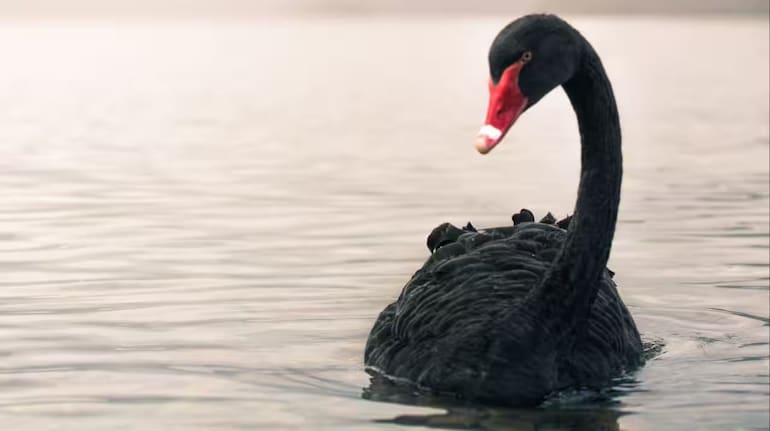

Australia’s black swan continues to draw attention as a distinctive waterbird whose appearance, behaviour, and history have shaped both ecological understanding and cultural symbolism across the continent.
What makes the Black Swan distinctive
The Black Swan, known scientifically as Cygnus atratus, is native to Australia. It is recognised for its glossy black feathers. A long, curved neck gives it a graceful profile. The bird carries a bright red bill. A pale tip marks the end clearly. Dark red eyes contrast sharply against black plumage. In flight, hidden white wing feathers appear suddenly. These flashes surprise observers expecting complete darkness.
The species is among the largest waterbirds. It also has the longest neck of any swan. Black swans often gather in large colonies. They are frequently seen gliding across still waters. Their movements appear calm and deliberate. When airborne, they often fly in wedge formations. This behaviour supports efficient long-distance travel. Their striking appearance has made them instantly recognisable worldwide.
Where Black Swans live and move
Black swans inhabit wetlands across much of Australia. They favour rivers, lakes, and flooded plains. Permanent water sources attract large populations. However, they are known for nomadic movement. Climate conditions strongly influence their travel patterns. Droughts may force sudden mass migrations.
Heavy rains can bring unexpected population surges. Unlike many birds, movements remain unpredictable. Their diet is entirely plant-based. They feed on aquatic vegetation and algae. On land, they graze short grasses nearby. Feeding often occurs in shallow waters. Their presence indicates healthy wetland ecosystems. Changes in water availability affect breeding success. Environmental shifts therefore influence long-term population stability.
Why Black Swans matter culturally
Black swans form strong monogamous breeding pairs. Both parents build nests from surrounding plants. Egg incubation duties are shared equally. Chicks remain close to parents after hatching. This cooperative behaviour supports high survival rates. Historically, black swans changed European scientific thinking. Their discovery challenged assumptions about natural uniformity.
They became symbols of rarity and surprise. Today, the bird represents Australian identity. It appears in art, emblems, and public spaces. The species reflects adaptation to changing landscapes. Its elegance continues to fascinate observers worldwide. The black swan remains a reminder of nature’s capacity to surprise.
Discover the latest Business News, Sensex, and Nifty updates. Obtain Personal Finance insights, tax queries, and expert opinions on Moneycontrol or download the Moneycontrol App to stay updated!
Find the best of Al News in one place, specially curated for you every weekend.
Stay on top of the latest tech trends and biggest startup news.





