






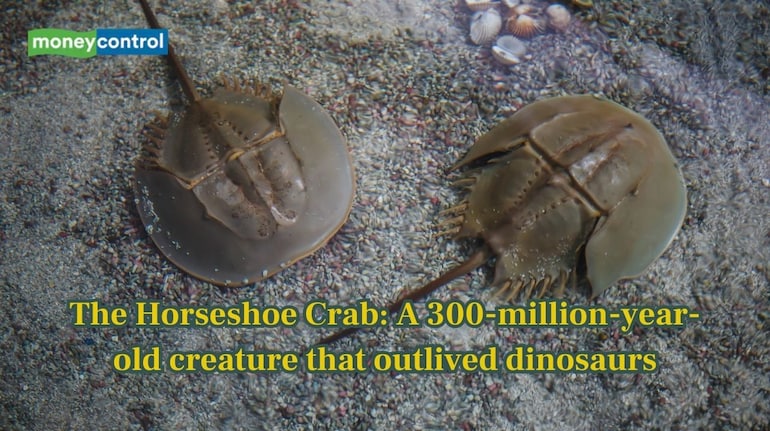

Millions of years ago, a creature emerged that barely changed. Even today, it survives virtually unchanged in modern coastal waters. Known as the horseshoe crab, this “living fossil” fascinates scientists. Its ancient design has endured mass extinctions and shifting climates.
The Living Fossil That Defies Time
For over 300 million years, the "horseshoe crab" barely changed. It survived mass extinctions while most species vanished completely. Modern horseshoe crabs resemble fossils from the Carboniferous period.
Scientists call them “living fossils” for their enduring design. Its hard shell, long tail and legs remain largely identical. Evolution favoured stability, proving simplicity can be a survival strategy.
Where Does This Living Fossil Live?
Horseshoe crabs inhabit shallow coastal waters around the world. They are common along North America’s Atlantic and Gulf coasts. Some species live in Southeast Asia’s tropical shores. These animals burrow in sand and mud near beaches. They often emerge at high tides to mate successfully. Coastal habitats provide ideal conditions for feeding and survival.
Ancient Design That Still Works
Stabilising selection preserved the horseshoe crab’s body plan. Its exoskeleton protects it from predators and harsh environments. Being “unchanged” is itself an evolutionary triumph, experts note. Subtle internal evolution occurs, despite external consistency. Nature proves efficiency can last millions of years. This creature is a masterclass in survival engineering.
Why Its Blue Blood Matters?
Horseshoe crabs have copper-based, blue-coloured blood instead of iron. Special cells, amebocytes, detect dangerous bacterial toxins instantly. This discovery powers the life-saving Limulus Amebocyte Lysate test.
Vaccines and medical devices are safer because of this. No other animal reacts as fast or accurately to endotoxins. Ancient biology meets modern medicine in an extraordinary partnership.
Science sees this animal as "Ancient Survivor"
Scientists study horseshoe crabs as a window into evolution itself. Genetic studies reveal subtle internal changes despite an unchanged appearance. Researchers value them for insights into how species endure over time. Their unique blood cells make them vital for biomedical testing. Science sees them as both living fossils and modern lifesavers.
A Window into Evolution
The horseshoe crab proves that evolution can favour stability over change. It demonstrates that survival doesn’t always require dramatic adaptation. Millions of years of success highlight nature’s engineering brilliance. Ancient designs can remain effective in modern ecosystems.
Discover the latest Business News, Sensex, and Nifty updates. Obtain Personal Finance insights, tax queries, and expert opinions on Moneycontrol or download the Moneycontrol App to stay updated!
Find the best of Al News in one place, specially curated for you every weekend.
Stay on top of the latest tech trends and biggest startup news.





