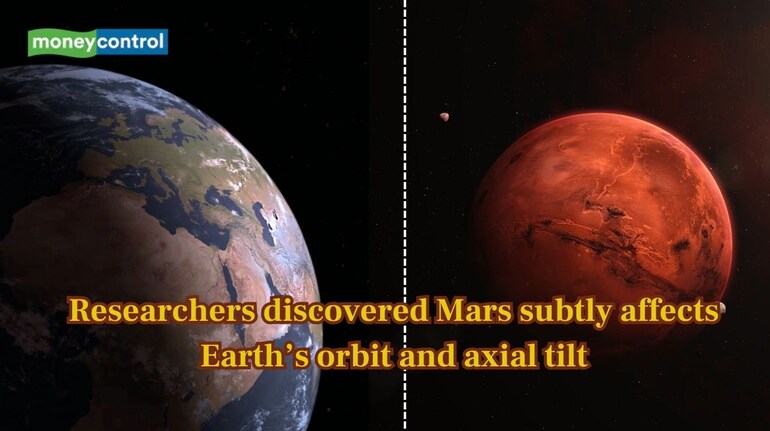

Scientists discovered Mars influences Earth’s climate over long-term cycles. The red planet’s gravity affects Earth’s orbit and axial tilt. Ice ages may partly result from this distant planetary pull. Researchers at University of California modelled Earth without Mars presence. Simulations revealed major orbital cycles disappeared without Mars’ gravity influence.
What did researchers find?
Researchers have found Mars significantly influences Earth’s long-term climate cycles. The red planet’s gravity subtly nudges Earth’s orbit and axial tilt. These changes may help trigger ice ages over thousands of years. Mars is only half the size of our home planet. Its gravitational pull subtly nudges Earth over thousands of years. Milankovitch cycles control sunlight distribution across the planet’s surface.
Who and Where Conducted This Research?
The study was led by scientists at University of California, Riverside. They used advanced computer simulations to model Earth without Mars’ presence. The team analysed Earth’s orbital eccentricity, tilt and precession patterns. Simulations combined data from thousands of years of orbital modelling results. Their findings highlight how Mars’ presence influences Earth in subtle ways.
How Mars Shapes Earth’s Orbit and Tilt?
Mars’ gravitational pull changes Earth’s orbit shape slightly every year. The planet also adjusts axial tilt and precession over millennia. These variations alter sunlight distribution across regions and seasons globally. Glacial cycles and climate patterns respond directly to these orbital shifts. Without Mars, Earth’s climate rhythms would differ drastically from current observations.
Does This Change Science?
Yes, the finding challenges traditional assumptions about minor planet's importance.
Previously, scientists considered small planets insignificant in Earth’s long-term climate.
Now researchers recognise even Mars can significantly affect planetary orbital dynamics. It opens new questions about interactions in other star system planets. Science must consider subtle gravitational influences in modelling Earth-like planetary climates.
Why Study on Mars Matters?
The study on Mars improves models that are predicting Earth’s future climate precisely. It reveals planetary interaction and impact on habitability in distant systems. The research provides insights into Earth’s evolutionary history and ecosystems. Even small planets can influence long-term climate and ice age cycles.
Discover the latest Business News, Sensex, and Nifty updates. Obtain Personal Finance insights, tax queries, and expert opinions on Moneycontrol or download the Moneycontrol App to stay updated!
Find the best of Al News in one place, specially curated for you every weekend.
Stay on top of the latest tech trends and biggest startup news.