






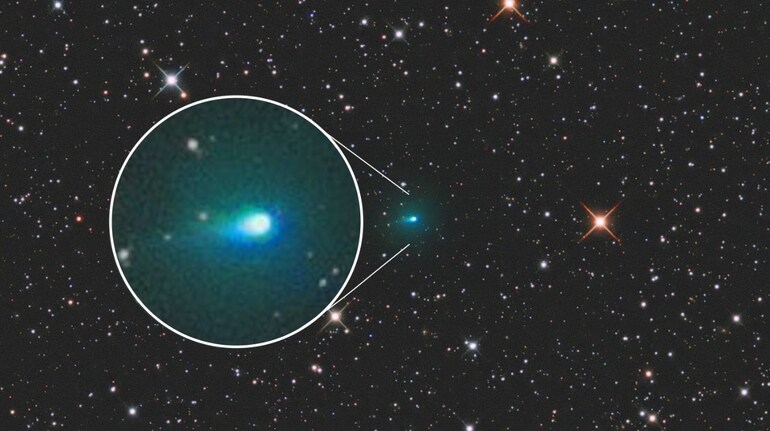
3I/ATLAS, interstellar comet will approach Earth on 19th December. It is only the third confirmed object from another star. Scientists are closely monitoring its path as it nears our planet. The flyby provides a unique chance to study distant material.
What Scientists Have Discovered About 3I/ATLAS?
3I/ATLAS was discovered in mid‑2025 by the ATLAS survey. Observations show it has a bright coma and visible tail. It passed closest to the Sun in October this year. The comet displays activity typical of objects from interstellar space. Its composition may reveal clues about other star systems’ chemistry.
When and How Close Will It Come?
The comet will make its closest approach on December 19. It will be around 167 million miles from our planet. This distance is scientifically close but poses no risk to Earth. NASA's telescopes will provide the best views of this unique visitor. Observers can track it before it continues out toward Jupiter.
Why This Comet Excites Astronomers?
Interstellar objects are extremely rare, with only two before confirmed. They carry material not formed in the Solar System. Studying them improves understanding of galactic formation and chemical processes. 3I/ATLAS offers scientists a once-in-a-lifetime observation opportunity nearby. It could reveal new insights into distant planetary systems.
Who is Conducting the Research?
The astronomers worldwide are tracking the comet using professional observatories. European and American space agencies are gathering data on its behaviour. They analyse light, tail structure and orbital trajectory closely. Citizen scientists are also encouraged to contribute telescope observations. The combined effort will improve knowledge of interstellar visitors.
How Can Observers See 3I/ATLAS From Earth?
Although 3I/ATLAS is not visible to the naked eye, telescopes can track it. Astronomers with mid-sized telescopes may capture its bright coma and tail. The comet is best observed during local night hours away from city lights. Astrophotography enthusiasts can image the comet’s dust and gas features clearly. Charts and ephemeris data from astronomy websites help point telescopes accurately.
What Happens Next?
After Earth’s flyby, 3I/ATLAS will move away toward Jupiter. It will become fainter and harder to observe over time. Scientists hope to study its material composition from collected data. Future interstellar visitors will be compared with this rare example. This flyby underscores humanity’s growing ability to track cosmic wanderers.
Discover the latest Business News, Sensex, and Nifty updates. Obtain Personal Finance insights, tax queries, and expert opinions on Moneycontrol or download the Moneycontrol App to stay updated!
Find the best of Al News in one place, specially curated for you every weekend.
Stay on top of the latest tech trends and biggest startup news.




