






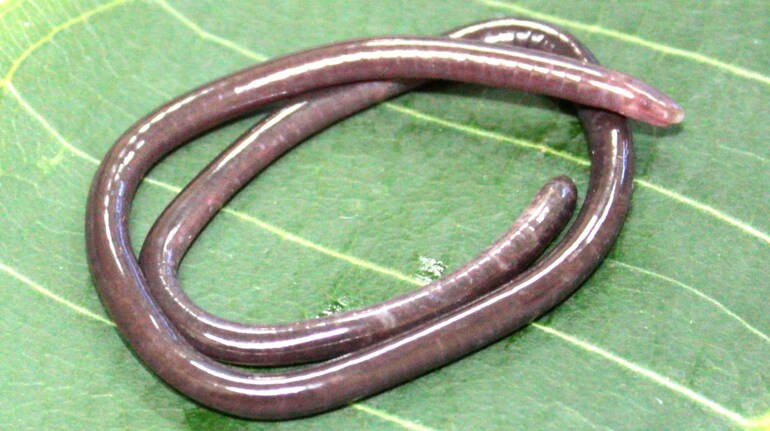

A worm-like amphibian was discovered in northern Western Ghats. It lives mostly underground and rarely surfaces for humans to see. The species, Gegeneophis valmiki, is named after sage Valmiki and nearby landmark. It is the first addition to its genus in over a decade. This discovery highlights how much of India’s wildlife remains hidden today.
The Elusive Life of Caecilians
Caecilians are limbless, blind amphibians resembling earthworms in appearance. They burrow through soil, rarely vocalizing or emerging above ground. Their eyes are covered with bone and skin, making them nearly invisible. Caecilians play vital roles in soil ecosystems as silent engineers. Despite global distribution, they are among the least studied amphibians worldwide.
The Discovery Team Behind the Breakthrough
The team was led by Dr. K.P. Dinesh of Zoological Survey of India. Collaborators included Savitribai Phule Pune University and Balasaheb Desai College. The Mhadei Research Centre also contributed to fieldwork and specimen collection. Their combined efforts spanned several years of research and exploration. The formal description of the species appeared in a leading journal.
How Science Spotted the Unseen?
Scientists used a combination of morphology and genetic analysis. Fieldwork began with careful excavation in the Valmiki Plateau region. Precise measurements confirmed the specimen’s unique structure and distinct species traits. Genetic testing validated it as a new addition to the genus. This method proves careful science can reveal life hidden for decades.
Ecological Role of These Underground Engineers
Caecilians improve soil aeration and nutrient cycling through constant burrowing. They help regulate soil invertebrate populations in tropical ecosystems. Their presence supports birds, reptiles, and small mammals as prey. These silent engineers maintain ecological balance in the Western Ghats. Protecting them safeguards both soil health and broader biodiversity networks.
Preserving Hidden Species Before They Disappear
India is home to 42 known caecilian species, many endemic. The Western Ghats alone host 26 species, including 11 Gegeneophis. Amphibians globally face extinction, with nearly 41% of species threatened. Documenting and conserving these hidden species is a scientific priority. Protecting habitats ensures discoveries like Gegeneophis valmiki endure for future generations.
Discover the latest Business News, Sensex, and Nifty updates. Obtain Personal Finance insights, tax queries, and expert opinions on Moneycontrol or download the Moneycontrol App to stay updated!
Find the best of Al News in one place, specially curated for you every weekend.
Stay on top of the latest tech trends and biggest startup news.





