






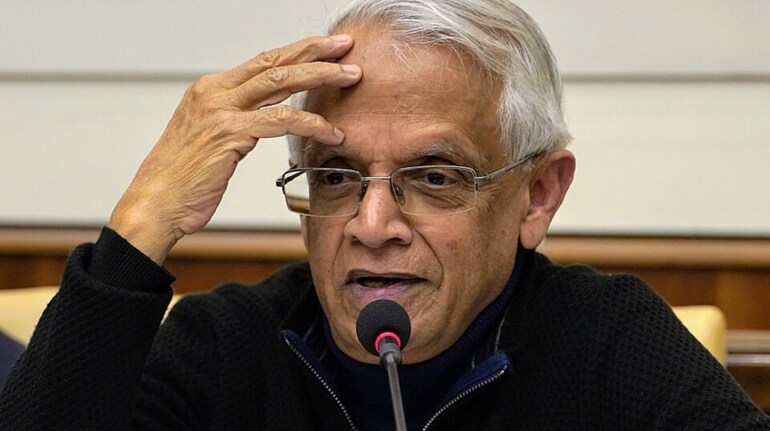

A major honour has gone to a climate scientist with Indian roots. Veerabhadran Ramanathan has been awarded the 2026 Crafoord Prize in Geosciences. This prize is often called the “Nobel of Geosciences.” The award recognises decades of research on climate change. Ramanathan’s work changed how scientists view global warming. His findings have influenced climate policy worldwide.
Who Is Veerabhadran Ramanathan?
Veerabhadran Ramanathan was born in Tamil Nadu, India. He later moved to the United States to pursue research. He is a world-renowned climate scientist at the Scripps Institution of Oceanography.
For more than four decades, he has studied how human activities affect the atmosphere. His work focuses on the tiny particles and gases that trap heat. These influence Earth’s energy balance and drive global warming.
When is the "Nobel of Geosciences" awarded?
The Crafoord Prize is awarded by the Royal Swedish Academy of Sciences. It honours scientists in fields not covered by the Nobel Prize. Geosciences is one of its rotating disciplines. Often described as the “Nobel of Geosciences,” the prize carries international prestige. Ramanathan is among a select group of scientists to receive this award.
From a refrigerator factory in Secunderabad to the “Nobel of Geosciences.” 🏅🇮🇳 Indian-origin scientist Veerabhadran Ramanathan wins 2026 Crafoord Prize. His 1975 NASA discovery showed CFCs trap heat up to 10,000× more than CO₂, reshaping climate science. Details #Crafoord 👇🏻 pic.twitter.com/QvgS4cwoFW— Seema Hakhu Kachru (@Seemahkachru) February 3, 2026
What did Veerabhadran Ramanathan discovered?
Ramanathan’s research has reshaped how scientists understand climate change. He showed that super-pollutants are not just carbon dioxide. They are methane, black carbon and Chlorofluorocarbons (CFCs).
His work revealed that these pollutants absorb heat in the atmosphere. They can warm the planet more intensely in the short term. Reducing them could slow warming faster than cutting CO₂ alone.
The Indian Ocean Experiment and ‘Brown Clouds’
Veerabhadran Ramanathan led the Indian Ocean Experiment (INDOEX) in the late 1990s. This large project mapped air pollution over South Asia and the Indian Ocean. The team found vast layers of airborne pollution called atmospheric brown clouds.
These dark haze layers affect climate, rainfall and the monsoon. They also accelerate glacier melting in the Himalayas. This discovery showed that human-caused air pollution can influence regional and global climate.
Global Recognition and Impact
The Crafoord Prize places Ramanathan among leading Earth scientists. It highlights that climate science is central to understanding planetary change. Scientists say the award brings focus to super-pollutants. It emphasises that solving climate change requires a broad approach.
Discover the latest Business News, Sensex, and Nifty updates. Obtain Personal Finance insights, tax queries, and expert opinions on Moneycontrol or download the Moneycontrol App to stay updated!
Find the best of Al News in one place, specially curated for you every weekend.
Stay on top of the latest tech trends and biggest startup news.





