



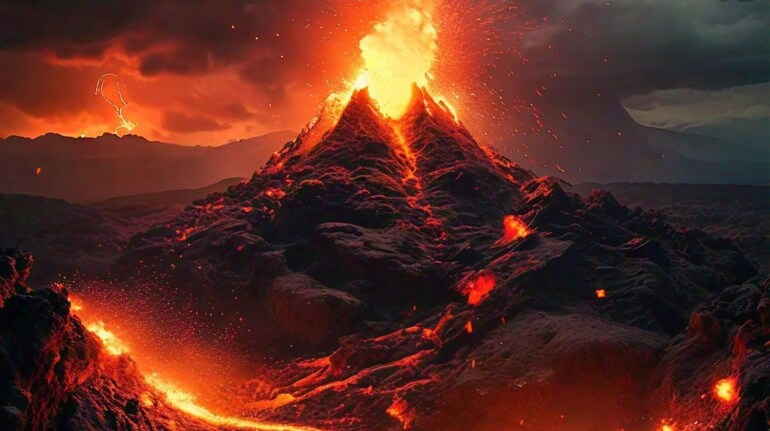
In Iceland's rugged landscape, a volcano in the southwestern region erupted again on Thursday, marking the sixth eruption since December. The night sky lit up with streams of red-hot lava and smoke, according to the Icelandic Meteorological Office.
According to the Met Office, the fissure’s total length reached approximately 3.9 kilometres (2.42 miles) and extended by 1.5 kilometres in just 40 minutes. Livestream footage from the Reykjanes peninsula captured the breathtaking sight of molten lava shooting into the air, its brilliant yellow and orange hues starkly contrasting against the darkness.
"The impact is limited to a localized area near the eruption site. It does not present a threat to life, and the surrounding area has been evacuated," stated Iceland's Ministry for Foreign Affairs on social media platform X. Thankfully, the lava flow posed no immediate danger to the nearby fishing town of Grindavik, where most of the 4,000 residents have been evacuated since November, as reported by the Met Office.
The earth burst open last night here in Iceland. Here are few clips that I captured at the eruption site #iceland#Volcano#eruptionpic.twitter.com/Wfe5y4bQVeIsak Finnbogason (@icelandfpv) August 23, 2024
The eruption occurred along the Sundhnukar crater row, east of Mount Sylingafell, partially overlapping with previous outbreaks in the Reykjanes peninsula. This volcanic system lacks a central crater and instead erupts by creating giant fissures in the ground. Prior studies had indicated magma accumulation underground, leading to warnings of possible new activity in this area, located just south of Iceland's capital, Reykjavik. The most recent eruption on the Reykjanes peninsula concluded on June 22, following 24 days of continuous lava flow.
These frequent eruptions underscore the ongoing challenge facing Iceland, a nation of nearly 400,000 people, as scientists caution that the Reykjanes peninsula could be subject to repeated volcanic activity for decades, if not centuries. Since 2021, nine eruptions have occurred in this region, marking the reawakening of geological systems that had remained dormant for 800 years.
In response to the renewed volcanic activity, authorities have constructed artificial barriers to divert lava flows away from critical infrastructure, such as the Svartsengi power plant, the Blue Lagoon geothermal spa, and the town of Grindavik.
Reykjavik's Keflavik Airport reported no disruptions to flights, but the nearby Blue Lagoon luxury spa and hotel temporarily closed and evacuated its guests as a precaution. The Reykjanes peninsula's fissure eruptions, characterised by their lack of explosive force and minimal ash dispersal, generally do not affect air traffic.
Iceland, comparable in size to the U.S. state of Kentucky, is home to over 30 active volcanoes, making it a hotspot for volcano tourism—a niche that attracts adventurers from around the globe.
Discover the latest Business News, Sensex, and Nifty updates. Obtain Personal Finance insights, tax queries, and expert opinions on Moneycontrol or download the Moneycontrol App to stay updated!
Find the best of Al News in one place, specially curated for you every weekend.
Stay on top of the latest tech trends and biggest startup news.