






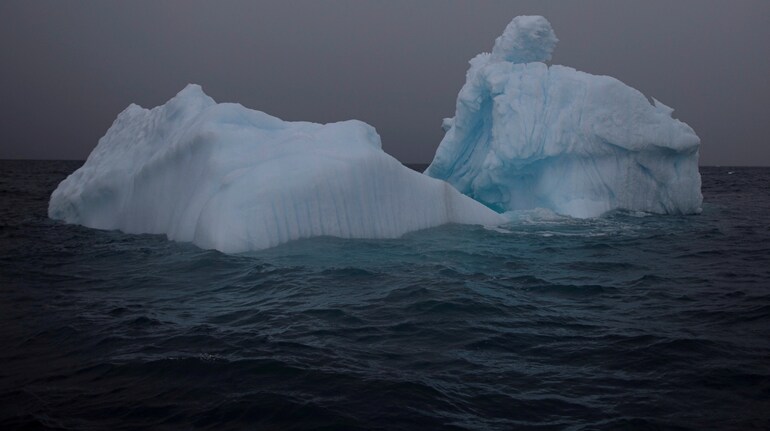

Scientists studying Antarctica’s Thwaites Glacier have identified a clear weakening pattern shaping its future. The findings were recently published in the Journal of Geophysical Research Earth Surface. The study explains how a critical ice shelf has weakened over time. Researchers analysed satellite imagery, GPS records, and ice speed measurements. The work forms part of the International Thwaites Glacier Collaboration. This is a major joint research programme between the United States and Britain. The analysis focused on changes observed between 2002 and 2022.
The research was led by Debangshu Banerjee, a recent graduate. He studied at the Centre for Earth Observation Sciences. This centre is based at the University of Manitoba. Dr. Karen Alley from the same centre contributed. Dr. David Lilien from Indiana University Bloomington also participated. Several partner institutions supported the broader research effort.
What Is Happening At Thwaites Ice Shelf
The study focused on the Thwaites Eastern Ice Shelf in Antarctica. This floating shelf extends from West Antarctica’s Thwaites Glacier. Thwaites holds enough ice to raise seas 65 centimetres. Its rapid changes earned it the Doomsday Glacier nickname. However, the study shows the weakening followed an organised sequence. Scientists found no evidence of sudden random collapse.
For decades a rocky ridge stabilised the eastern shelf. This underwater feature is known as a pinning point. It acted as a brake on ice movement. The ridge resisted flow and stabilised upstream glacier ice. Over the past 20 years this role weakened steadily. Thinning ice reduced contact with the seabed feature.
How Cracks And Ice Motion Are Linked
To understand the change, researchers tracked growing fractures. These cracks formed within a narrow shear zone. The zone sits just upstream of the pinning point. Ice there moves at different speeds. This makes the area vulnerable to stress damage.
The data revealed fractures grew in a predictable manner. Total crack length doubled during the study period. It rose from 165 kilometres to over 330 kilometres. Meanwhile, the average crack length fell sharply. This showed many small cracks replaced fewer large ones.
From 2002 to 2006 western ice accelerated rapidly. This movement dragged the eastern shelf forward. Ice stretched upstream while compressing near the ridge. Large cracks aligned with ice flow developed.
Between 2007 and 2011 a shear margin collapsed. This break separated eastern and western ice shelves. The eastern shelf slowed noticeably after disconnection. Stress then focused around existing fractures near the ridge.
From 2012 to 2016 long cracks crept eastward. Ice speeds remained mostly steady during this stage. However the link between ice and ridge weakened further. By 2017 cracks cut across most shelf width. Ice upstream then began accelerating again.
What It Means For Future Sea Levels
Researchers identified a feedback between cracking and ice motion. As cracks grow they concentrate stress locally. This stress speeds up ice flow across the shelf. Faster flow then creates additional fractures.
GPS stations recorded this acceleration during winter 2020. Satellite images confirmed a new speed boundary forming. That boundary migrated upstream as a major rift widened. Damage near the pinning point spread inland. These changes travelled at nearly 1 kilometre per year. Surface melting was not required for this acceleration.
Cracks formed in two clear stages. Long cracks first aligned with ice flow direction. Later dense fields of shorter cracks appeared across flow. This marked a shift from compression to stretching. The strongest acceleration followed this transition.
Early in the record the pinning point stabilised the shelf. Over time it split into smaller grounded ice features. Ice then flowed between these features. The ridge became a focus for damage instead.
Scientists note similar behaviour before other shelf collapses. Thwaites rests on a seabed sloping inland. This configuration favours unstable retreat once begun. The findings help improve sea level rise models. Many current models focus mainly on melting processes.
The researchers say fracture feedbacks deserve equal attention. Even small increases in ice flow raise sea levels. The study offers warning signs for other Antarctic shelves. The full findings are available online in JGR Earth Surface.
Discover the latest Business News, Sensex, and Nifty updates. Obtain Personal Finance insights, tax queries, and expert opinions on Moneycontrol or download the Moneycontrol App to stay updated!
Find the best of Al News in one place, specially curated for you every weekend.
Stay on top of the latest tech trends and biggest startup news.





