






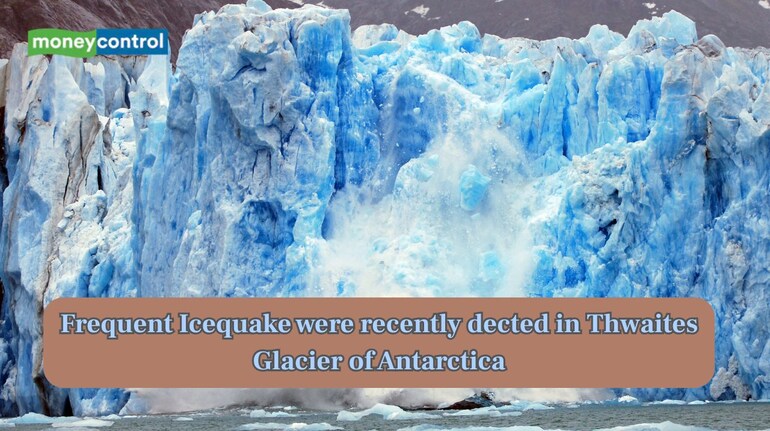
Hundreds of subtle earthquakes have been detected beneath Antarctica’s Thwaites Glacier, revealing hidden ice movement. Scientists say these tremors offer fresh insight into how the vulnerable glacier is breaking apart.
What Was Discovered?
Researchers detected hundreds of previously hidden earthquakes beneath the glacier. These were not tectonic earthquakes caused by shifting Earth’s crust. Instead, they were glacial earthquakes, linked to iceberg activity. More than 360 events were recorded over a thirteen-year period. The findings reveal unexpected and frequent seismic activity beneath Antarctic ice.
Who Detected These Earthquakes?
Scientists studying Antarctic ice dynamics made the discovery. The research team analysed seismic data collected across Antarctica. They focused on signals near Thwaites Glacier, often called the Doomsday Glacier. The study involved international glaciologists and seismologists. Their work relied on instruments placed directly on the Antarctic continent.
Where Did It Happen?
Most earthquakes occurred near the marine edge of Thwaites Glacier. This is where the glacier meets the ocean and large icebergs form. A second cluster of events was detected near Pine Island Glacier. Both regions are among Antarctica’s fastest-changing ice systems.
How Do These Icequakes Happen?
Tall, narrow icebergs calve from the glacier’s front. When they capsize, they slam into the main ice mass. This sudden movement generates seismic waves through the ice and bedrock. Sensitive instruments detect these vibrations as earthquakes. The signals help scientists track glacier behaviour in real time.
What role does Thwaites Glacier plays?
The events occurred between 2010 and 2023. The most active period was observed between 2018 and 2020. This phase coincided with a speed-up in glacier flow towards the sea. Thwaites Glacier plays a critical role in future sea-level rise.
If it collapses fully, global sea levels could rise significantly. The earthquakes provide clues about how ice breaks, shifts and weakens. They also reveal how glaciers interact with warming ocean waters.
What Comes Next For Research?
Scientists plan to deploy more seismic sensors near Thwaites Glacier. Denser instrument networks will capture smaller, previously undetected icequakes. The researchers aim to link seismic signals with satellite and drone observations. This combined approach may reveal exactly how iceberg calving evolves. Future studies will examine how warming ocean water influences seismic activity.
Discover the latest Business News, Sensex, and Nifty updates. Obtain Personal Finance insights, tax queries, and expert opinions on Moneycontrol or download the Moneycontrol App to stay updated!
Find the best of Al News in one place, specially curated for you every weekend.
Stay on top of the latest tech trends and biggest startup news.




