






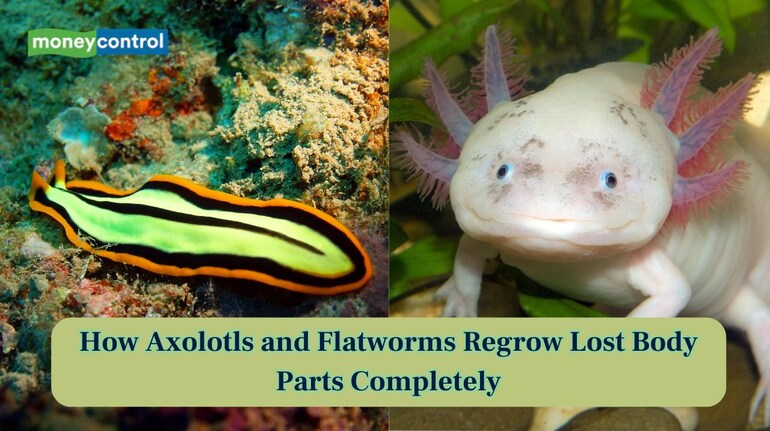
What if losing a limb was not the end of the story? In the animal kingdom, it often is not. New research shows that creatures like axolotls and flatworms do not just heal injuries, they also orchestrate full-body regeneration in ways that are astonishing scientists. This discovery is reshaping how researchers understand healing, growth and biological repair.
Regeneration Is Not Just Local Repair
For years, scientists believed regeneration worked like patchwork. Cells near the wound would rebuild what was lost. But studies now reveal something far more complex. In animals capable of regeneration, the entire body gets involved. Signals travel across tissues, organs and nerves. The body responds as a coordinated system, not isolated parts.
Axolotls: The Masters of Limb Regrowth
Axolotls, a salamander species native to Mexico, are regeneration legends. They can regrow limbs, tails, spinal tissue, and even parts of their heart. But the new insight is how they do it.
When an axolotl loses a limb, the injury triggers body-wide communication. The nervous system sends signals that prepare cells far from the wound. Stem cells across the body shift into regeneration mode.
Flatworms: Rebuilding an Entire Body from Fragments
Flatworms take regeneration to another level altogether. Cut one into pieces, and each fragment can grow into a new worm. This is possible because of powerful stem cells called neoblasts. These cells receive detailed positional instructions. They know where to build a head, tail, or internal organs. The process relies on long-distance chemical signals, not guesswork.
A Biological Choreography in Action
Scientists now describe regeneration as a biological choreography. Cells of these animals do not act independently. They follow timing, direction and coordination cues. Signals from nerves, the gut and surrounding tissues guide regeneration. The body ensures everything regrows in the right place and proportion. This precision prevents chaos and malformed structures.
Why This Matters Beyond Curious Creatures?
Humans cannot regenerate limbs like axolotls. Understanding how these animals coordinate healing matters deeply. The findings could transform regenerative medicine.
They may help scientists improve wound healing, tissue repair and organ recovery.
These animals could guide therapies for spinal injuries or degenerative diseases.
A New Way to Think About Healing
This research challenges old ideas about biology. Healing is not just local damage control. It is a system-wide response, carefully organised and controlled. By studying nature’s greatest healers, scientists are learning that regeneration is not magic, it is communication, coordination and timing.
Discover the latest Business News, Sensex, and Nifty updates. Obtain Personal Finance insights, tax queries, and expert opinions on Moneycontrol or download the Moneycontrol App to stay updated!
Find the best of Al News in one place, specially curated for you every weekend.
Stay on top of the latest tech trends and biggest startup news.




