






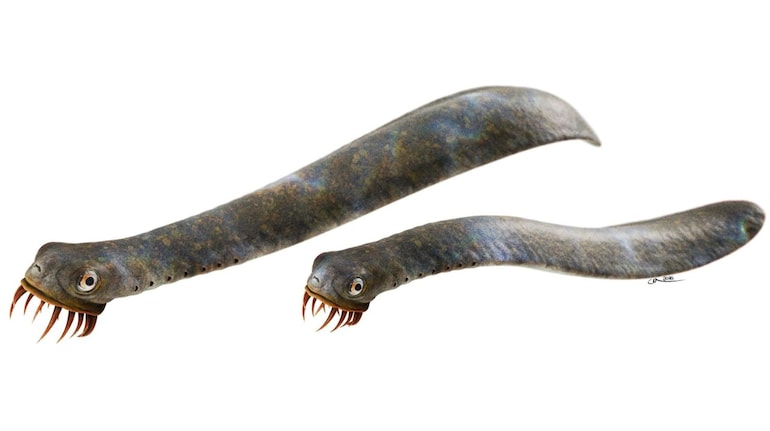

For decades, sharks defined extreme sharpness in animal teeth. New fossil research now challenges that long held assumption. Scientists examined microscopic tooth elements from extinct conodonts. The study focuses on animals living hundreds of millions ago. Findings published by The Royal Society Publishing reshape thinking. Conodonts were small eel shaped marine vertebrates without jaws. They lived from the Cambrian through the Triassic period. Their mouths contained mineralised elements rather than traditional teeth. These elements formed complex feeding tools inside soft tissue. Researchers studied Late Carboniferous specimens showing diverse element shapes.
How Scientists Measured Extreme Tooth Sharpness
Sharpness was measured using radius curvature at tips. Smaller curvature radii indicate sharper cutting edges. Scientists used scanning electron microscopes for precise measurements. Digital profiles helped calculate curvature using mathematical modelling. The method avoided worn edges to preserve original sharpness. The same technique measured shark teeth and mammal teeth. Steel blades were also included for mechanical comparison. This allowed cross comparison between biological and manufactured tools. Sharpness was treated as a physical property, not appearance.
What Fossil Measurements Revealed About Conodont Teeth
Conodont elements showed extremely small curvature radii values. Some were sharper than any living vertebrate teeth measured. Several matched or exceeded sharpness of steel blades. Wear patterns showed flattened tips from repeated feeding contact. This confirmed the teeth functioned as active cutting tools. Even worn conodont tips remained sharper than modern animal teeth. Their calcium phosphate composition matches vertebrate enamel structure. Frequent replacement allowed sharp yet fragile tooth elements. Their design pushed material limits without constant durability needs.
How Conodonts Compare With Sharks and Mammals
Shark teeth are larger and supported by cartilaginous jaws. They showed greater curvature radii than conodont elements. This difference reflects size and long term durability demands. Mammal teeth appeared comparatively blunt at microscopic scales. Conodonts achieved sharpness by minimising tooth size. Material strength limits were nearly reached by their design. Researchers say this represents biological optimisation under physical constraints. The findings extend beyond palaeontology into engineering research. Fossils preserve extreme shapes difficult to replicate today. Scientists say natural selection achieved remarkable mechanical precision. Conodonts now represent early benchmarks in biological engineering.
Discover the latest Business News, Sensex, and Nifty updates. Obtain Personal Finance insights, tax queries, and expert opinions on Moneycontrol or download the Moneycontrol App to stay updated!
Find the best of Al News in one place, specially curated for you every weekend.
Stay on top of the latest tech trends and biggest startup news.





