






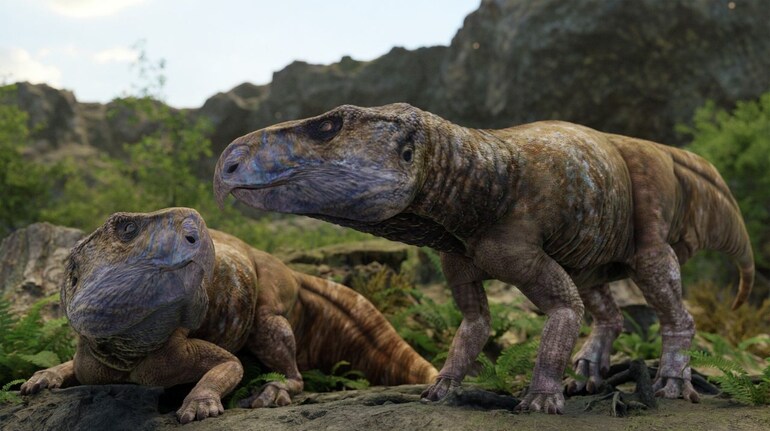

A new study reports Europe hosted horned dinosaurs. Research published this week revises dinosaur distribution history. Scientists analysed European fossils using advanced imaging methods. Findings show ceratopsians lived across ancient European landscapes. The work appears in the journal Nature.
Ceratopsians and Europe’s fossil mystery
Horned, beaked ceratopsians thrived during the Late Cretaceous. They lived around 80 million years ago. Fossils from North America and Asia dominate records. Those continents were linked through island chains. Europe sat between these ancient landmasses.
Scientists long expected ceratopsians there. Yet convincing European fossils remained scarce. Fragmentary bones caused decades of debate. Many specimens lacked clear identifying features. Some researchers suggested ceratopsians never reached Europe.
Skull scans reveal mistaken identity
The new study challenges that long assumption directly. Researchers reanalysed fossils using CT scanning. Detailed three dimensional skull models were produced. Focus centred on Ajkaceratops from Hungary. The dinosaur was known from limited remains. Earlier studies questioned its true classification.
Some experts linked it with iguanodontians. Their skulls appear similar externally. New scans revealed crucial internal differences. Ajkaceratops showed a sharp hooked beak. Its palate roof appeared deeply vaulted. These traits match early Asian ceratopsians. Iguanodontians lack such anatomical features. The evidence confirmed European ceratopsians existed.
Rewriting Europe’s dinosaur record
This confirmation led to further fossil reassessment. A Romanian specimen drew renewed scientific attention. It had been reclassified repeatedly over decades. Researchers identified ceratopsian characteristics within its skull. The dinosaur was renamed Ferenceratops. It was formally placed among horned dinosaurs. Scientists believe many European fossils remain misidentified.
Collections across the continent require careful review. The study urges renewed examination of museum specimens. Authors say dinosaur evolution models need revision. European ecosystems were more diverse than believed. Ceratopsians likely spread via ancient island routes. Their presence reshapes understanding of Late Cretaceous Europe. The findings suggest hidden histories remain undiscovered. Further research may reveal additional horned dinosaurs.
Discover the latest Business News, Sensex, and Nifty updates. Obtain Personal Finance insights, tax queries, and expert opinions on Moneycontrol or download the Moneycontrol App to stay updated!
Find the best of Al News in one place, specially curated for you every weekend.
Stay on top of the latest tech trends and biggest startup news.





