






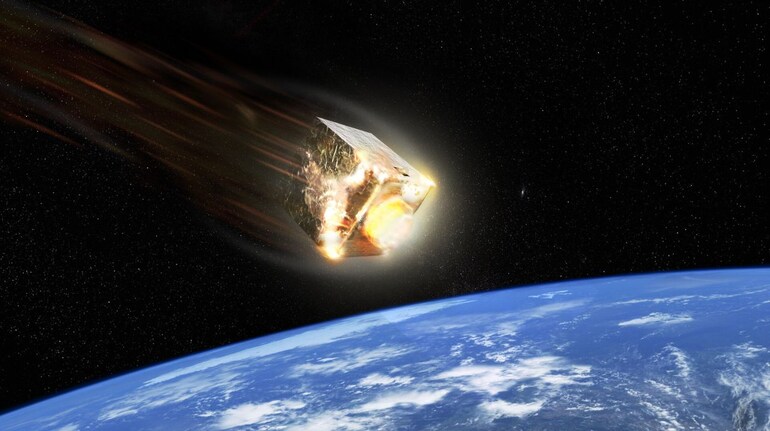

In 2027, ESA plans crashing a satellite intentionally. The mission targets Draco, a small spacecraft called. It will study reentry during a brief 12-hour descent.
Draco weighs 150-200 kg and resembles washing machines. It launches for a suicide mission lasting 12 hours. ESA seeks data amid rising orbital debris concerns.
Crashing a satellite for science
After 70 years, reentries remain poorly understood globally. Nearly 10,000 intact objects have returned uncontrolled already. Draco was built by Deimos under €3 million. An indestructible 40 cm capsule carries 200 sensors. Four cameras record heat strain pressure during destruction. Holger Krag says reentry science guides safer designs.
Why ESA plans intentional reentry
The aim is understanding destruction from inside atmosphere. Models predicting burn-up need validation from real data. Draco mimics uncontrolled reentries common across Earth orbit. Hypersonic drag tears spacecraft apart during descent phases. ESA targets Zero Debris by the year 2030. Satellites must de-orbit quickly or fully demise safely. Draco expands earlier efforts like the 2013 ATV.
What happens during Draco’s final hours
Launched to 1,000 km orbit, Draco spirals downward. The breakup occurs above an uninhabited ocean region. A capsule survives tethered to sensors like octopus. It stores data as materials ablate violently inside. A parachute deploys regardless of spin orientation conditions. The capsule links satellites for 20-minute data transmission. It splashes down after completing the final broadcast.
Scientists also study environmental effects of reentry vapours. Vaporised metals may alter upper atmospheric chemistry globally. Launch rates rising increase concern over aluminium oxides. Stijn Lemmens says models require calibration from reality. He says Draco resolves a long testing loop. Tim Flohrer calls results vital for zero-debris technologies.
ESA labels Draco a fast-track Space Safety mission. Officials see cleaner orbits through informed spacecraft design. A controlled crash becomes stewardship for planetary environments. Data will be shared across agencies designing future satellites. Engineers expect insights improving materials choices and structures. The mission reflects Europe’s push toward responsible spaceflight.
Discover the latest Business News, Sensex, and Nifty updates. Obtain Personal Finance insights, tax queries, and expert opinions on Moneycontrol or download the Moneycontrol App to stay updated!
Find the best of Al News in one place, specially curated for you every weekend.
Stay on top of the latest tech trends and biggest startup news.





