




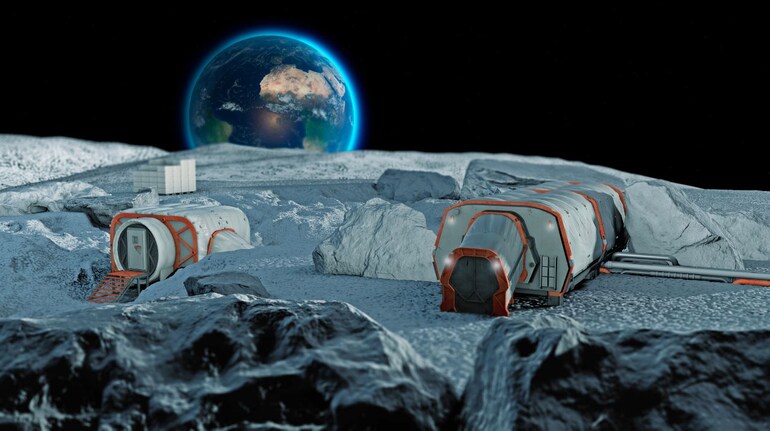
China revealed an ambitious plan on Tuesday to expand its space program over the coming decades, with goals that include launching a manned lunar mission, constructing a lunar space station, and exploring potentially habitable planets. The strategy, which extends to 2050, was unveiled by China's top space agencies.
What’s in the Plan?
The programme, presented by the China Academy of Sciences (CAS), the China National Space Administration, and the China Manned Space Agency, details a national mid- and long-term roadmap for space science development. It sets 17 priority areas under five key scientific themes and outlines a three-phase roadmap, which begins in 2024 and runs through 2050.
By 2027, China aims to focus on operating its space station, conduct manned lunar missions, and continue planetary exploration. The programme highlights the search for extraterrestrial life and habitable planets in the solar system as a major goal.
Building a Lunar Space Station
Between 2028 and 2035, China plans to build an international lunar research station. Ding Chibiao, vice president of CAS, confirmed that the station will be a key project in the second phase of the programme. The station is expected to further China’s lunar exploration capabilities and bolster scientific research on the Moon.
Looking ahead to 2050, China’s space programme aims to delve into understanding the origin of the universe and the solar system. Research priorities include gravitational waves, dark matter, and space-time studies. The plan also includes a comprehensive approach to observing Earth-Moon cycles and solar exploration, making China's space ambitions a significant player in future cosmic exploration.
Discover the latest Business News, Sensex, and Nifty updates. Obtain Personal Finance insights, tax queries, and expert opinions on Moneycontrol or download the Moneycontrol App to stay updated!
Find the best of Al News in one place, specially curated for you every weekend.
Stay on top of the latest tech trends and biggest startup news.




