






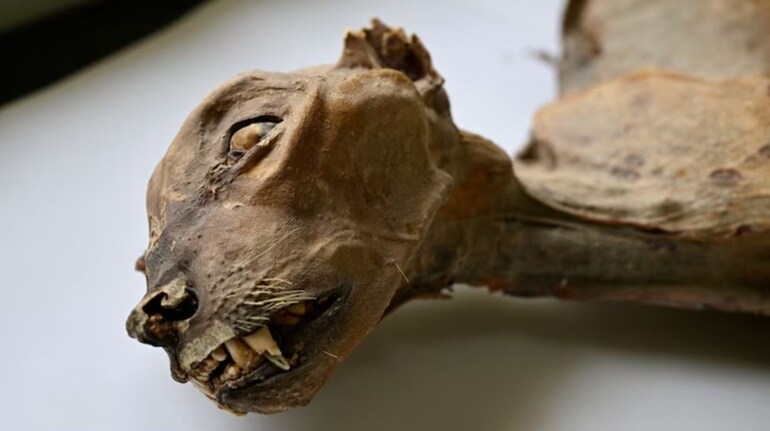

Scientists in Saudi Arabia have discovered centuries-old cheetah mummies inside northern caves, offering unprecedented insight into the region’s vanished wildlife and how large animals can survive harsh desert conditions over time. The discovery near the city of Arar includes both naturally preserved cheetahs and skeletal remains, shedding light on species once widespread across the Arabian Peninsula.
Cheetah mummies and preservation
Researchers excavated seven mummified cheetahs along with bones of at least 54 others, according to a study published in Communications Earth and Environment. The remains range in age from about 130 years to more than 1,800 years old.
Mummification slowed tissue decay, preserving the animals’ features in remarkable detail. Unlike human mummies of Egypt, these animals were naturally preserved in dry desert caves. Scientists believe the caves’ stable temperatures and dry air created ideal conditions. The cheetahs’ cloudy eyes and shrivelled limbs give them the appearance of dried husks. “It’s something that I’ve never seen before,” said Joan Madurell-Malapeira of the University of Florence, who was not involved in the study.
Why cheetahs ended up in caves
Researchers are still exploring why so many cheetahs gathered in these caves. One possibility is that the caves served as dens for mothers and cubs. Another is that sick or injured animals sought shelter there. Discovering large mammals preserved so completely is rare, as carcasses must avoid scavengers such as birds and hyenas. Study author Ahmed Boug of the National Center for Wildlife said, “To find such intact evidence of cheetahs that lived long ago in this part of the world is entirely without precedent.”
Implications for conservation and genetics
Cheetahs once ranged across Africa and parts of Asia, including Arabia, but today occupy only about 9% of their historical range. The species has not been seen in Arabia for decades due to overhunting, habitat loss, and declining prey. For the first time, researchers successfully extracted genetic material from naturally mummified large cats. DNA analysis showed the cheetahs were closely related to modern Asian and northwest African populations. These findings could guide future conservation measures or possible reintroduction programmes.
The discovery provides a rare glimpse into Arabia’s historical wildlife and demonstrates how extreme environments can preserve large species over centuries.
Discover the latest Business News, Sensex, and Nifty updates. Obtain Personal Finance insights, tax queries, and expert opinions on Moneycontrol or download the Moneycontrol App to stay updated!
Find the best of Al News in one place, specially curated for you every weekend.
Stay on top of the latest tech trends and biggest startup news.





