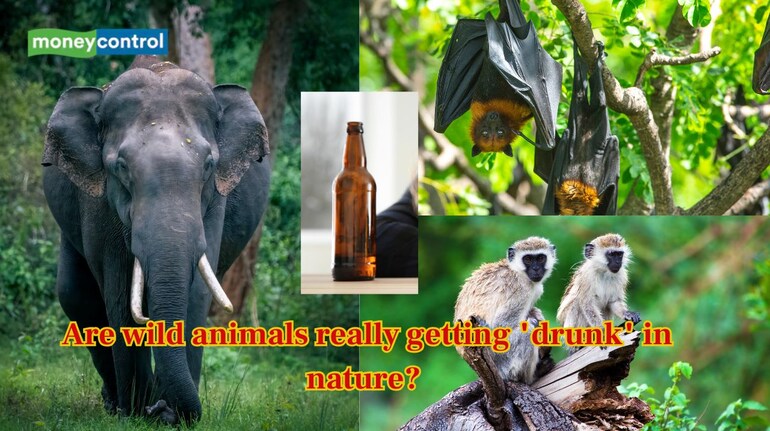

Wild animals may be consuming alcohol naturally, scientists now confirm. This surprising behaviour occurs across forests, savannas and tropical ecosystems worldwide. Researchers say fermentation happens naturally in overripe fruits and plant sap.
Animals encounter ethanol without human involvement or intentional consumption. This is not a modern problem caused by human interference. Alcohol has existed in ecosystems for millions of years.
Where Does Natural Alcohol Come from in the Wild?
Alcohol forms when yeast ferments sugars inside fallen or ripening fruit. Warm temperatures accelerate fermentation in tropical and subtropical environments. Fruit on forest ground often contains measurable ethanol levels.
Tree sap and flower nectar can ferment naturally too. This process occurs continuously across Earth’s ecosystems. Animals feeding on such sources ingest small alcohol amounts. The exposure is unintentional but frequent in many species.
Who is studying about Alcohol Consumption in Animals?
Evolutionary biologist Professor Robert Dudley studied alcohol in nature extensively. His research examined fruit-eating animals across tropical ecosystems. Studies were published in peer-reviewed scientific journals. Researchers used field observations and chemical food analysis.
They measured ethanol levels in fruits, nectar and sap. Animal feeding behaviour was carefully documented over years. The findings confirm alcohol exposure predates human civilisation. Scientists say animals evolved alongside natural fermentation processes.
Which Animals Are Consuming Alcohol Naturally?
Scientists have observed ethanol exposure across numerous wild animals. Fruit bats consume fermented fruit nightly during feeding. Elephants occasionally eat overripe marula fruits. Waxwing birds binge on fermented berries seasonally. Vervet monkeys show preference for fermented palm sap.
Treeshrews regularly consume alcohol-rich nectar sources. Researchers stress these animals are not seeking intoxication. They are simply following natural food availability patterns.
Do Animals Actually Get Drunk Like Humans?
Occasional disorientation may happen after unusually high consumption. Such events are rare and usually exaggerated in folklore. Animals evolved alongside fermented foods for millennia. Scientists believe ethanol scent even helps animals locate ripe fruit. Alcohol signals high sugar and energy availability.
Why This Discovery Matters to Science?
The findings reshape understanding of animal evolution and diet. Alcohol exposure may have influenced metabolism development. Some researchers link ethanol tolerance to survival advantages. This research also challenges human assumptions about substance use. Alcohol is not purely a human invention. It is a natural chemical in Earth’s ecosystems.
Discover the latest Business News, Sensex, and Nifty updates. Obtain Personal Finance insights, tax queries, and expert opinions on Moneycontrol or download the Moneycontrol App to stay updated!
Find the best of Al News in one place, specially curated for you every weekend.
Stay on top of the latest tech trends and biggest startup news.