






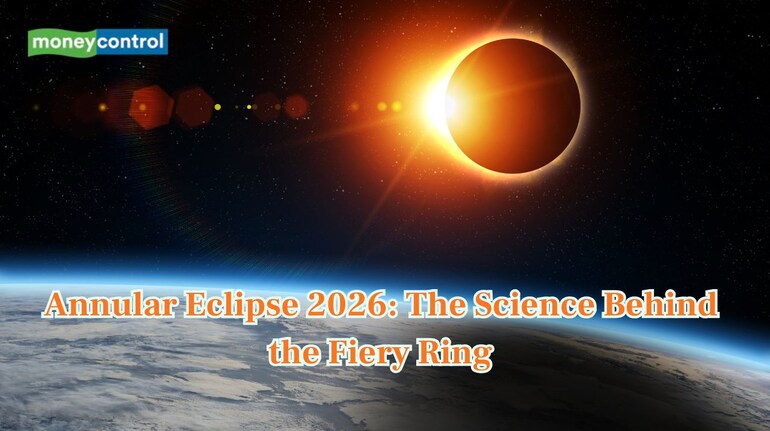

A rare annular solar eclipse will appear across Earth on February 17th, 2026. The dramatic celestial event is widely known as the spectacular “Ring of Fire” eclipse. It happens when the Moon passes in front of the Sun.
However, the Moon does not completely block sunlight during this unique phenomenon. Instead, a glowing ring remains visible around the Moon’s dark silhouette. Astronomers confirm this event will be visible from limited global locations.
The main eclipse will take place on 17th February. The clearest “Ring of Fire” view will appear over parts of Antarctica. Surrounding regions may witness partial phases of the solar eclipse. Some areas of southern Africa and South America could observe limited visibility. Large ocean regions will also fall within the eclipse’s viewing path.
However, India will not witness any phase of this eclipse. Viewers there must rely on online streams and space agency coverage.
You need to take some precaution if you want to watch the eclipse. Never look directly at the Sun without proper eye protection equipment. Special eclipse glasses or certified solar filters must always be used. Direct viewing without protection can permanently damage human eyesight.
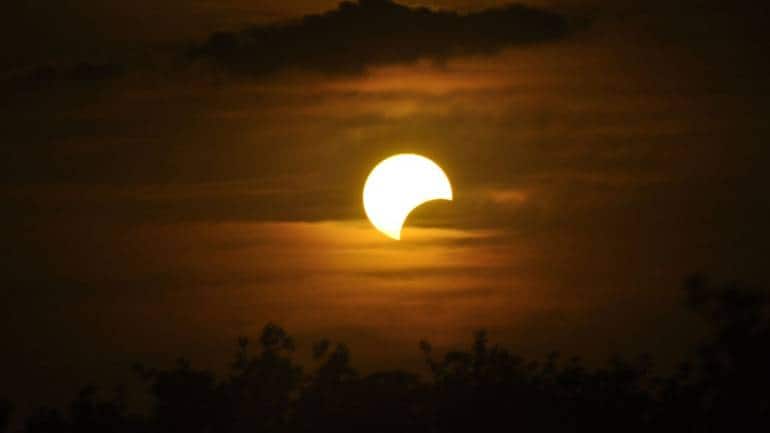 Special eclipse glasses or certified solar filters must always be used. (Image: Canva)
Pinhole projectors offer a safe way to observe eclipse shadows. Many space agencies will provide live high-definition broadcasts online. These streams allow safe viewing from anywhere on Earth.
An annular eclipse occurs when the Moon appears slightly smaller than the Sun. This happens because the Moon is farther from Earth during its orbit. As a result, sunlight escapes around the Moon’s edges. The Sun then looks like a bright burning ring in the sky.
This rare visual effect fascinates scientists and skywatchers alike. Unlike total eclipses, daylight never fully disappears during annular eclipses. The sky darkens slightly, creating an eerie but beautiful atmosphere.
Solar eclipses provide valuable opportunities for scientific research and discovery. They help scientists study the Sun’s atmosphere and solar radiation patterns. Temperature changes during eclipses reveal atmospheric behaviour and cooling effects.
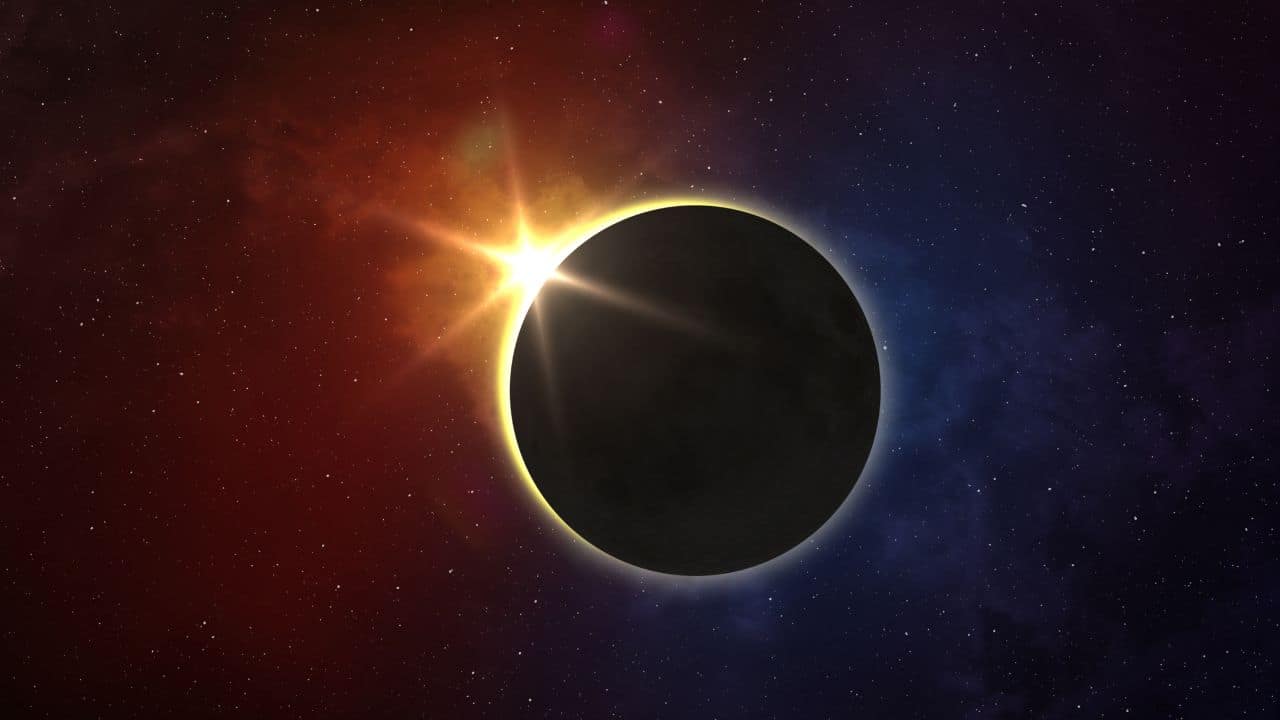 Eclipses allow testing of advanced telescopes and imaging technology. (Image: Canva)
Animal activity also shifts, offering insights into biological responses to darkness. Eclipses allow testing of advanced telescopes and imaging technology. Data collected improves understanding of space weather and solar storms.
Discover the latest Business News, Sensex, and Nifty updates. Obtain Personal Finance insights, tax queries, and expert opinions on Moneycontrol or download the Moneycontrol App to stay updated!
Find the best of Al News in one place, specially curated for you every weekend.
Stay on top of the latest tech trends and biggest startup news.





