






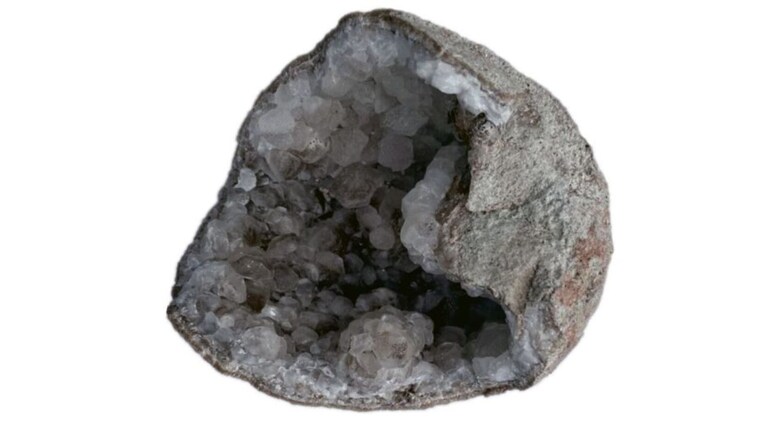
A rare fossil discovery in eastern China has surprised palaeontologists, after researchers found a dinosaur egg filled with glittering crystals instead of an embryo. The grapefruit-sized egg was recovered from the Upper Cretaceous Chishan Formation and dates back about 70 million years, offering an unusual glimpse into how ancient life can be preserved.
The fossil egg, discovered in the Qianshan Basin, was found lined internally with calcite crystals, turning it into what scientists describe as a natural dinosaur geode. Rather than containing sediment or embryonic remains, the hollow shell was filled with mineral growth formed long after the egg was buried. The discovery was detailed in a 2022 study led by palaeontologist Qing He of Anhui University, who identified the egg as a previously unknown oospecies named Shixingoolithus qianshanensis.
Rare dinosaur egg from China surprises scientists
Researchers say the egg is among the first dinosaur-related finds from the Chishan Formation, a region better known for fossils of turtles, mammals and birds from later periods. Two eggs belonging to the same oogenus were discovered, although neither contained preserved embryos. Despite this, scientists confirmed their dinosaur origin by analysing the microstructure of the shells, which closely matches known dinosaur eggs rather than those of birds or modern reptiles.
What crystal growth reveals about ancient environments
According to researchers, the crystal formation occurred after the original embryo decayed, leaving the shell empty. Over time, groundwater seeped into the egg through tiny pores and cracks, depositing dissolved minerals that gradually formed calcite crystals. This process provides valuable insight into the environmental and chemical conditions present long after the dinosaur nest was buried.
Why dinosaur geodes matter for science
Scientists note that calcite crystals can retain information about groundwater chemistry and fossil bed conditions, helping reconstruct ancient landscapes. In recent years, similar crystal-filled eggs have even been used to directly date fossils, marking an important step in palaeontological research. While visually striking, the geode egg also highlights how Earth preserves biological history in unexpected ways, from crystal-lined fossils to bones replaced by minerals over millions of years.
Discover the latest Business News, Sensex, and Nifty updates. Obtain Personal Finance insights, tax queries, and expert opinions on Moneycontrol or download the Moneycontrol App to stay updated!
Find the best of Al News in one place, specially curated for you every weekend.
Stay on top of the latest tech trends and biggest startup news.




