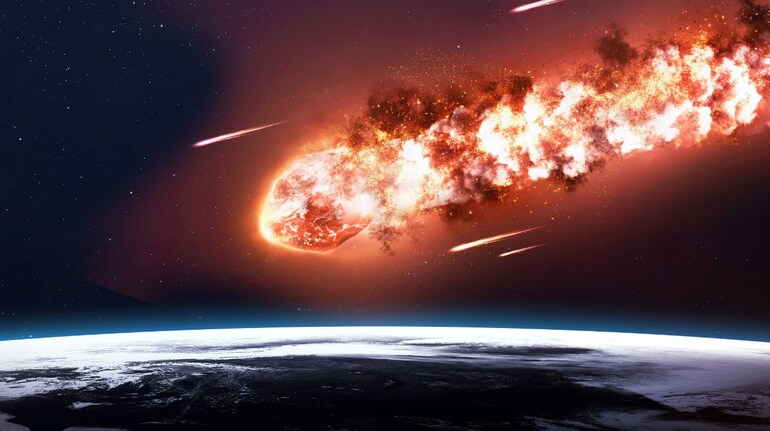
On September 2, Earth is set to witness a cosmic event as two asteroids make their closest approaches to our planet. While there is no threat to Earth, these encounters present a valuable opportunity for scientific observation and exploration.
The first of these space travellers, known as Asteroid 2007 RX8, is approximately 140 feet in diameter. It will pass Earth at a safe distance of about 4.4 million kilometres, providing scientists with an ideal opportunity to study its composition and trajectory. This close encounter allows researchers to gather crucial data that could enhance our understanding of such near-Earth objects.
Following closely is Asteroid 2021 RB16, which is slightly smaller, measuring around 47 feet in diameter. It will come within approximately 2.93 million kilometres of Earth. This too, while a safe distance, offers another key opportunity for astronomers to observe and analyse an asteroid's behaviour during a near-Earth flyby.
NASA’s Jet Propulsion Laboratory (JPL) is diligently monitoring these asteroids as they pass by Earth. Although neither poses any risk, their proximity serves as a reminder of the dynamic nature of our solar system and the importance of ongoing space surveillance. These cosmic events not only contribute to our understanding of near-Earth objects but also underscore the necessity of vigilant observation to ensure planetary safety.
Discover the latest Business News, Sensex, and Nifty updates. Obtain Personal Finance insights, tax queries, and expert opinions on Moneycontrol or download the Moneycontrol App to stay updated!
Find the best of Al News in one place, specially curated for you every weekend.
Stay on top of the latest tech trends and biggest startup news.