






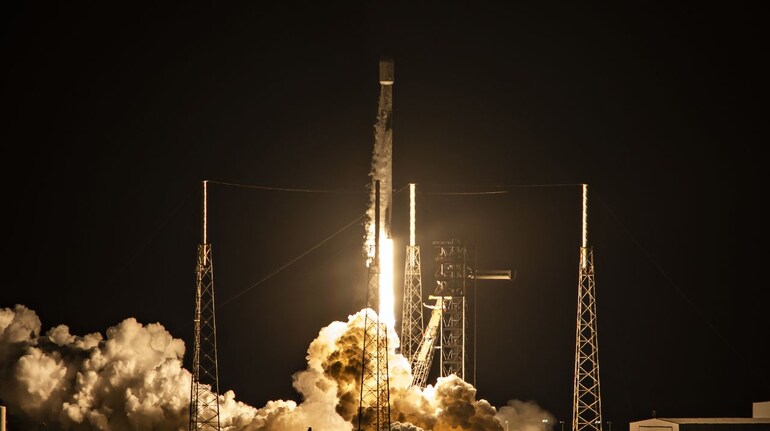

A strange metal plume appeared high above Earth. It shimmered nearly 100 kilometres above the surface. Scientists soon realised it was not natural. The source was a returning Falcon 9 rocket stage. The hardware had re-entered over the Atlantic Ocean.
As it burned, it left a chemical fingerprint. This was not a meteor or cosmic dust. It was debris from our own space ambitions. This revealed something scientists had never measured before.
What Did Scientists Observe?
Researchers detected a sudden spike in lithium atoms. The surge appeared nearly 100 kilometres above Earth. This region lies in the upper mesosphere. It is thin, cold and rarely sampled directly.
Lithium concentrations rose to ten times normal levels. Such levels are extremely unusual at that altitude. The plume drifted across the night sky. Its timing matched a known rocket re-entry. This was not a coincidence.
Whose part this metal plume is of?
The lithium cloud came from burning rocket debris. Specifically, a returning upper stage of Space X's Falcon 9. After completing its mission, the stage re-entered atmosphere. It disintegrated during descent over the Atlantic.
As it burned, metals vaporised into surrounding air. Lithium became part of that chemical trail. For the first time, scientists tracked this fingerprint precisely.
How Did Scientists Detect It?
The discovery came from ground-based lidar instruments. Powerful lasers were fired into the night sky. Reflected signals revealed atmospheric composition changes. The lithium signal stood out clearly and sharply.
Researchers then analysed wind models and trajectories. They traced the plume back to the rocket’s path. This marked the first direct chemical link between a specific rocket and atmospheric metals.
What Was the SpaceX Rocket Doing in Space?
The Falcon 9 had completed a satellite mission. Its primary payload had already reached orbit safely. After deployment, the upper stage was no longer needed. Like many rocket stages, it was left to re-enter.
Such re-entries are routine in modern spaceflight. They are designed to burn up harmlessly. But “harmless” may now need closer inspection.
Why Does Lithium Matter Here?
Lithium is rare in the upper atmosphere naturally. Its sudden spike signals artificial contamination. The mesosphere influences ozone chemistry and radio waves. Even small chemical shifts may alter reactions there.
Scientists do not yet know long-term impacts. Repeated re-entries could accumulate metallic residues. As satellite launches increase, so will debris return, which makes this discovery particularly important.
What Does This Mean for Science?
The findings were published in Communications Earth & Environment. For SpaceX, this was not a mission failure. The rocket successfully delivered its payload. The re-entry performed as designed. Neither any crash nor any malfunction was observed.
Scientifically, however, it was groundbreaking. Researchers measured pollution in real time. This turns space debris into measurable atmospheric science. It opens questions about regulation and monitoring.
Discover the latest Business News, Sensex, and Nifty updates. Obtain Personal Finance insights, tax queries, and expert opinions on Moneycontrol or download the Moneycontrol App to stay updated!
Find the best of Al News in one place, specially curated for you every weekend.
Stay on top of the latest tech trends and biggest startup news.





