




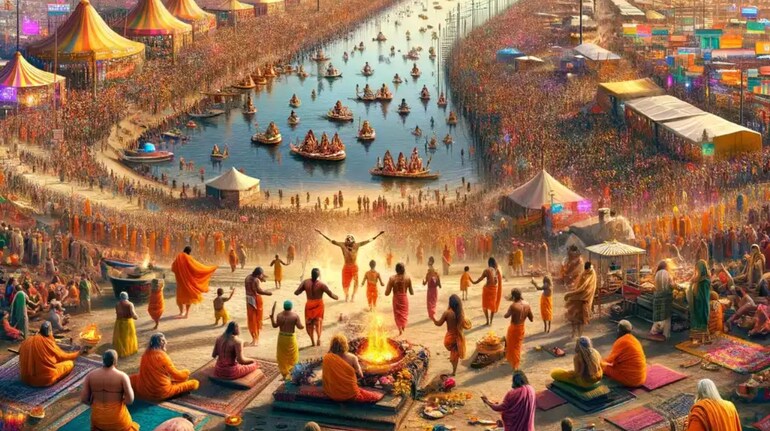
The Maha Kumbh Mela is more than a spiritual gathering; it is a living embodiment of ancient Pauranic kathas, faith, and celestial significance. Held at four sacred locations—Haridwar, Nashik, Ujjain, and Prayagraj—the festival attracts millions of devotees seeking spiritual awakening and divine blessings. It is believed to be the largest spiritual congregation on Earth.
But what makes it so divine and unique? The answer lies in the story of Samudra Manthan and the secrets of the Amrit Kalash (pot of nectar).
Here are the 5 biggest secrets of the Maha Kumbh Mela that reveal its ancient origins and timeless significance.
1. The Origin of Kumbh: The Story of Samudra Manthan
The word ‘Kumbh’ comes from the sacred Amrit Kalash (Pitcher of Immortality). According to ancient texts, the gods (Devas) and demons (Asuras) agreed to churn the cosmic ocean (Samudra Manthan) to obtain Amrit, the nectar of immortality.
During this divine process, 14 treasures emerged, the most precious being the Amrit Kalash.
A fierce struggle ensued when the Asuras seized the nectar. Lord Vishnu, in the guise of Mohini, intervened and handed the Amrit Kalash to Indra’s son, Jayant, to safeguard it.
As Jayant fled, drops of the nectar fell at four locations:
These places, blessed by the divine nectar, became the sites of the Kumbh Mela, where pilgrims bathe to attain moksha (liberation).
2. The 12-Year Cycle: The Celestial Connection
The Maha Kumbh Mela occurs once every 12 years due to unique planetary alignments. According to astrology, the positions of Jupiter (Brihaspati), the Sun, and the Moon determine the timing and location of the Kumbh.
This celestial alignment is believed to charge the rivers with spiritual energy, making the waters divine and purifying.
3. The Role of Sri Shankaracharya in Organizing the Kumbh
While the origins of Kumbh Mela are tied to mythology, the formal organization of the festival is attributed to the great philosopher Adi Shankaracharya in the 8th century. He established the practice of assembling saints, ascetics, and scholars to debate and discuss scriptures during the Kumbh.
This tradition strengthened spiritual discourse, bringing together various sects and Akharas to uphold Sanatan Dharma. To this day, the Akharas—groups of saints, including the Naga Sadhus—lead the Shahi Snan (royal bath), a significant event during the Kumbh.
4. The Sacred Drops of Amrit and the Bathing Ritual
It is believed that the drops of Amrit that fell during Samudra Manthan sanctified the waters of the rivers at the four Kumbh sites. Pilgrims believe that bathing in these rivers during the auspicious period washes away sins and leads to spiritual purity and immortality.
Each Kumbh Mela is marked by specific Shahi Snans, where millions of devotees gather to take a dip in the sacred rivers. The belief in the divine nectar’s presence in these waters continues to draw seekers from across the globe.
5. The Historical Recognition: King Harshavardhan and the Kumbh Mela
While the Kumbh’s roots are mythological, historical accounts trace its widespread recognition to King Harshavardhan (590–647 AD). The Chinese traveler Hiuen Tsang documented King Harsha’s grand gatherings at Prayagraj, where he organized massive conventions every five years.
During these gatherings, King Harsha generously distributed wealth among the poor and saints, reinforcing the Kumbh’s status as a festival of spiritual and social harmony. This tradition of large-scale gatherings and charity continues to define the Kumbh Mela.
Discover the latest Business News, Sensex, and Nifty updates. Obtain Personal Finance insights, tax queries, and expert opinions on Moneycontrol or download the Moneycontrol App to stay updated!
Find the best of Al News in one place, specially curated for you every weekend.
Stay on top of the latest tech trends and biggest startup news.