India posts slowest mcap rise in three years amid global surge in 2025
Foreign outflows, rich valuations and softer earnings keep India at the bottom of global rankings

India’s markets clock tenth straight gain in 2025 even as smallcaps underperformed: HDFC AMC's Navneet Munot
Relative valuations, competitive rupee, steady macro and earnings revival set a better pitch now, says Munot
Global stocks set for biggest annual advance in six years
Asian equities are also set for a third annual gain, and the best since 2017. A number of markets are already shut for the year, including Japan and South Korea.
Wall Street declines for third day as 2025 nears end
The S&P 500 fell 0.1% — down for a third consecutive session — after barely budging for most of the day. Treasury yields climbed, with US 10-year rate around 4.12%. The Bloomberg dollar spot index rose.
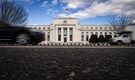
Fed minutes show most officials expect additional rate cuts
Minutes of the Dec. 9-10 Federal Open Market Committee meeting continued to point to divisions among US central bankers and to the difficulty of their most recent decision.
‘You had to be brave’: Wall Street remembers a wild 2025
The twists and turns of the US economy and the artificial-intelligence boom both played a role. But much of it could be traced to the White House.
After historic 2025 gains, which precious metals still have room to run?
The precious metals rally of 2025 demonstrates that despite being grouped together, each metal follows its own narrative
Asian stocks poised for weak start after US losses
Equity futures in Australia and Japan pointed to a weak start for their markets. That’s after the S&P 500 Index fell 0.3%, with shares of Tesla Inc., Nvidia Corp. and Meta Platforms among the Big Tech decliners. The Nasdaq 100 slid 0.5%.
BSE SmallCap turns one of 2025’s weakest global assets; Gold, Silver stand out
Apart from small-caps, the Philippine's PSEi index and Bitcoin were among the biggest global losers in 2025, declining more than 9 percent and 5 percent, respectively. Other laggards included the BSE MidCap and Jakarta Composite Index, which slipped 4 percent and 0.4 percent.
Markets Soar, Fortunes Follow: World’s Richest Gain Sharply in 2025
The study tracks only those whose wealth exceeds $100 billion. Globally, 18 people now hold fortunes above that level, and all but one gained during the year
Chart of the Day: The currency crumble
The rupee has depreciated by roughly 5.22 percent against the US dollar this year, making it Asia’s worst-performing currency in 2025
Big year for old school Wall Street trades gets lost in AI hype
Capital has continued to migrate toward concentrated Big Tech exposure, thematic trades from nuclear power to quant computing, and blunt hedges such as gold.
Stock bulls have a worryingly long list of 2026 risks to ponder
The long list of things that could go wrong suggests that drawdowns and volatility spikes are likely during 2026, especially given an investor base that is so determined to chase the market higher. Here’s a closer look at the challenges to the upbeat outlook.
India's share in global m-cap hits 29-month low
The combined m-cap of all BSE-listed companies was around $5.19 trillion as of December 17. This was up about 0.5 percent from $5.18 trillion at the end of December 2024
A case for restoring derivatives trading in Indian agricultural commodities
The practice of banning commodities trading damages more than just immediate stakeholders—it undermines the credibility and trustworthiness of Indian exchanges and markets
Wall Street sees AI bubble coming and is betting on what pops it
The queasiness about the AI trade involves its uses, the enormous cost of developing it, and whether consumers ultimately will pay for the services. Those answers will have major implications for the stock market’s future.
Big Tech vanished from Wall Street’s 'overbought' list, who replaced it?
Data show no tech stocks among Wall Street’s overbought names this week as investors rotate into banks, industrials and capital markets plays.
Asia’s rich drive $200 billion revival in complex equity notes
Issuance of structured products linked to Hong Kong and Singapore equities has surged 80% this year to a record of more than $200 billion
Deutsche Bank, Goldman see Fed cuts rekindling dollar’s drop
Strategists expect the greenback to weaken again in 2026 as the US central bank continues to ease monetary policy just as others hold steady or move closer toward raising rates.
China set to deliver another lackluster economic report card
Numbers to be released by the National Bureau of Statistics Monday are expected to show retail sales rose 2.9% in November from a year before, the median forecast of economists surveyed by Bloomberg shows.
Following Fed rate cut, attention moves to how the new Fed chair will navigate monetary policy
The new chair’s policy leanings, communication style and appetite for risk management will shape expectations for years to come.
India’s 1% controls 40% of wealth, rivaling inequality levels in South Africa, Russia
In India, a study finds that inequality has barely shifted over the past decade despite strong economic growth
Ghost Malls: An opportunity hiding in plain sight
From the United States to China and India, once-thriving shopping centres now stand empty—but these "ghost malls" may represent billions in untapped redevelopment potential
How the AI boom could trigger an energy crisis
AI's explosive growth is driving an unprecedented energy crisis, with data centres projected to consume up to 20% of global electricity by 2035 as tech giants scramble for nuclear solutions.
US Fed's rate cut this week may be last for a while
A new set of economic projections will likely show continued division among policymakers