




During the high-octane presidential debate on September 10, Vice President Kamala Harris tore into former President Donald Trump for his claim of bipartisan support for overturning Roe v. Wade, calling out his "Trump abortion bans" that often exclude exceptions for rape and incest. She accused the Republican candidate of planning to impose a national abortion ban if re-elected, a charge Trump has denied, insisting such decisions should be left to the states.
Moneycontrol details an explainer of why the right to abortion is a pivotal issue in the elections this year and where it emerged from:On January 22, 1973, the US Supreme Court delivered a landmark judgement in Roe v. Wade, ruling that the constitutional right to privacy extended to a woman's choice to have an abortion. The case was brought by Norma McCorvey, known by the pseudonym "Jane Roe," who had sued Dallas attorney Henry Wade over Texas laws that criminalised most abortions except in cases of rape, incest, or when the mother's life was in danger.
Joining McCorvey in the lawsuit were Texas doctor James Hallford, who argued that the state’s vague abortion laws created uncertainty for physicians, and a childless couple, the Does, who wanted legal clarity on abortion access in the event of future medical risks. Together, their complaints reached the Supreme Court, which delivered its historic ruling in 1973 after hearing the case twice.
Justice Harry Blackmun, writing for the majority, acknowledged the deep convictions surrounding abortion but asserted that a woman's right to privacy encompassed her pregnancy decision. He, nonetheless, also noted that this right was not absolute and that states could regulate abortions, particularly in the later stages of pregnancy. The decision effectively legalised abortion nationwide, leading to additional rulings such as Doe v. Bolton on the same day, which allowed states to impose restrictions on late-term abortions.
However, nearly five decades later, on June 24, 2022, the Supreme Court overturned Roe v. Wade with its ruling in Dobbs v. Jackson Women’s Health Organisation. In a 6-3 decision led by Justice Samuel Alito, the court upheld a Mississippi law banning abortions after 15 weeks of pregnancy and returned the authority to regulate abortion to individual states. Alito argued that the Constitution does not grant a right to abortion, effectively reversing 50 years of federal protection for abortion rights.
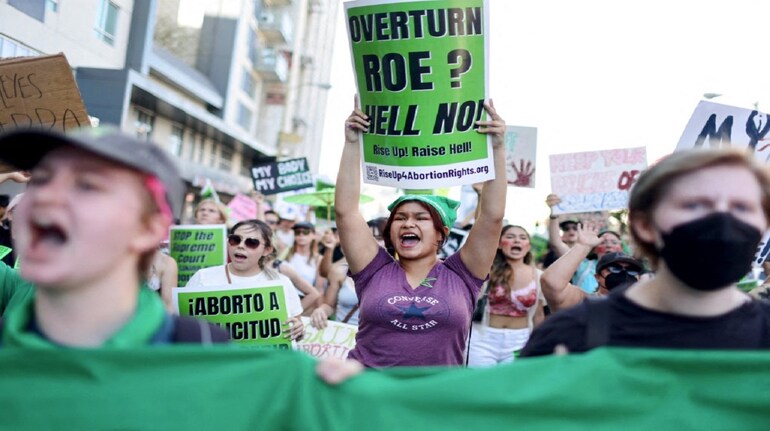
The Dobbs ruling had an immediate impact, with abortion bans swiftly taking effect in at least eight states. Soon after, protests erupted across the US, with abortion rights supporters voicing their anger and anti-abortion activists celebrating the ruling. Demonstrations filled the streets of major cities like Los Angeles and Chicago, and even smaller towns saw protests. President Joe Biden had called the decision “the realisation of extreme ideology”.
The ruling drastically altered the US legal and political landscape, creating widespread restrictions in many states and sparking debates over reproductive rights, especially as the 2024 election approaches.
Harris has emerged as a prominent advocate for protecting abortion access, sharply contrasting her views with those of Trump, who appointed three of the justices responsible for overturning Roe. Trump has since clarified his position, supporting exceptions for rape, incest, and threats to a mother’s life, while Harris, during their first Presidential debate, slammed his stance, calling it "insulting" to women and emphasising the challenges women face under stricter abortion laws.

Discover the latest Business News, Sensex, and Nifty updates. Obtain Personal Finance insights, tax queries, and expert opinions on Moneycontrol or download the Moneycontrol App to stay updated!
Find the best of Al News in one place, specially curated for you every weekend.
Stay on top of the latest tech trends and biggest startup news.




