




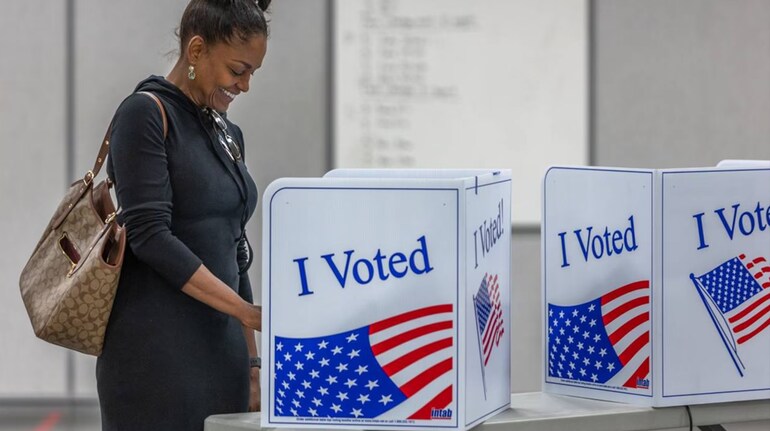
As Americans prepare to cast their ballots in November, the world will be closely watching the election of the next US president. This crucial vote not only determines the country's leadership but also includes elections for members of Congress, who play a significant role in shaping laws that impact American life.
The US presidential election process is a complex and multi-faceted journey, stretching over more than a year from the initial campaign stages to the inauguration. Designed to ensure democratic representation and choice, this elaborate system encompasses every step, from early primaries to the swearing-in ceremony. While the process is intricate and sometimes contentious, it reflects the core democratic principles and constitutional values of the United States. Here is a detailed breakdown of each stage:
1. Pre-Election Preparation
A. Understanding the Constitution
The US Constitution outlines the basic structure of the presidential election process. The president is elected through the Electoral College, a system established by Article II, Section 1 of the Constitution. Each state is allocated several electors based on its Congressional representation, and the candidate who wins the majority of electoral votes becomes president.
B. Setting the Election Date
US presidential elections are held every four years on the first Tuesday after the first Monday in November. This date is set by law and is consistent across elections.
C. Requirements For Presidential Candidates
To run for US president, candidates must be natural-born citizens, at least 35 years old, and have lived in the US for 14 years. Once a candidate raises or spends more than $5,000 for their campaign, they must register with the Federal Election Commission (FEC). This registration includes forming a principal campaign committee to manage and report campaign funds. These requirements ensure transparency and regulation of presidential campaigns.
2. Primary and Caucus Season
A. Primaries
Primaries are state-level elections where party members vote for their preferred candidate. Primaries can be open (allowing any registered voter to participate) or closed (restricting voting to registered party members). The primary season begins in January and typically runs through June. The results determine how many delegates each candidate will receive at the party's national convention.
B. Caucuses
Caucuses are meetings where party members gather to discuss and vote for candidates. Unlike primaries, caucuses are not held on a single day; instead, they occur over several hours and require attendees to publicly declare their support for candidates. Caucuses also play a crucial role in selecting delegates.
3. Delegates and Superdelegates
A. Delegate Allocation
In both primaries and caucuses, delegates are awarded to candidates based on the vote results. These delegates represent their state's vote at the national party conventions. Most states use a proportional allocation system, meaning delegates are awarded based on the percentage of votes a candidate receives.
B. Superdelegates
In addition to pledged delegates, each party has unpledged delegates, known as superdelegates, who are party leaders and elected officials. Superdelegates are free to support any candidate, regardless of primary or caucus results. Their role is more significant in the Democratic Party, where they can influence the outcome if no candidate secures a majority of pledged delegates.
4. National Conventions
A. Republican and Democratic Conventions
Each major party holds a national convention in the summer of an election year. Delegates from across the country gather to officially nominate their party’s candidate for president and vice president. The conventions serve as a platform for candidates to present their policies, unify the party, and generate media coverage.
B. Acceptance Speeches
During the conventions, the nominated candidates deliver acceptance speeches outlining their vision for the country. These speeches are pivotal in setting the tone for the general election campaign and rallying party supporters.
5. General Election Campaign
A. Campaign Strategies
Once the nominees are selected, the focus shifts to the general election campaign. Candidates develop strategies to appeal to a broad electorate, including targeting swing states, participating in debates, and running advertisements. Campaigns are often shaped by issues such as the economy, foreign policy, and social concerns.
B. Debates
Presidential debates are crucial events in the campaign. They provide voters with an opportunity to see the candidates discuss their policies and respond to questions. Debates are typically held in the fall and are moderated by journalists. They can significantly impact public perception and voting intentions.
C. Fundraising
Candidates need substantial funding to support their campaigns. Fundraising involves soliciting donations from individuals, political action committees (PACs), and interest groups. Campaign finance laws regulate contributions and expenditures, aiming to ensure transparency and limit the influence of money in politics.
6. Election Day
A. Voting Process
On Election Day, voters cast their ballots at polling stations across the country. Voting is conducted through various methods, including in-person voting, mail-in ballots, and early voting. Voters select their preferred candidate, and these votes are counted to determine the winner in each state.
B. Electoral Votes
The outcome of the popular vote in each state determines the allocation of electoral votes. Most states use a winner-takes-all system, where the candidate with the majority of the popular vote in that state receives all its electoral votes. The candidate who secures a majority of electoral votes (at least 270 out of 538) wins the presidency.
7. Post-Election Process
A. Electoral Vote Counting
After the general election, electors meet in their respective states in December to cast their votes for president and vice president. These votes are then sent to Congress, where they are officially counted in a joint session in early January.
B. Congress’s Role
On January 6, Congress meets in a joint session to count the electoral votes and officially declare the winner. This process is typically ceremonial, as the results of the Electoral College vote are usually final. However, if there are disputes or objections, they are addressed during this session.
C. Inauguration
The inauguration marks the formal beginning of the new president’s term. On January 20, the president-elect takes the oath of office, as outlined by the 20th Amendment to the Constitution. The inauguration ceremony includes a swearing-in, a speech, and various celebrations.
8. Challenges and Controversies
A. Electoral Disputes
Disputes can arise over election results, leading to legal challenges and recounts. The 2000 election, for instance, was famously contested in Florida, resulting in a Supreme Court decision that ultimately determined the winner.
B. Electoral Reform
There are ongoing discussions about potential reforms to the electoral system, including changes to the Electoral College, voting methods, and campaign finance laws. Critics argue that the current system can lead to discrepancies between the popular vote and electoral outcome.
Voters Also Elect Members of Congress
While the spotlight is on the presidential race, voters will also elect new members of Congress, essential for passing laws. All 435 House seats and 34 Senate seats are up for grabs. Currently, Republicans control the House, responsible for spending plans, while Democrats hold the Senate, which votes on key appointments. Congress can check the White House if it disagrees with the president's agenda.
Democratic vs. Republican Agendas
The Democratic Party, known for its focus on civil rights, social safety nets, and climate change, contrasts with the Republican Party (GOP), which advocates for lower taxes, smaller government, gun rights, and stricter immigration and abortion policies.
Discover the latest Business News, Sensex, and Nifty updates. Obtain Personal Finance insights, tax queries, and expert opinions on Moneycontrol or download the Moneycontrol App to stay updated!
Find the best of Al News in one place, specially curated for you every weekend.
Stay on top of the latest tech trends and biggest startup news.