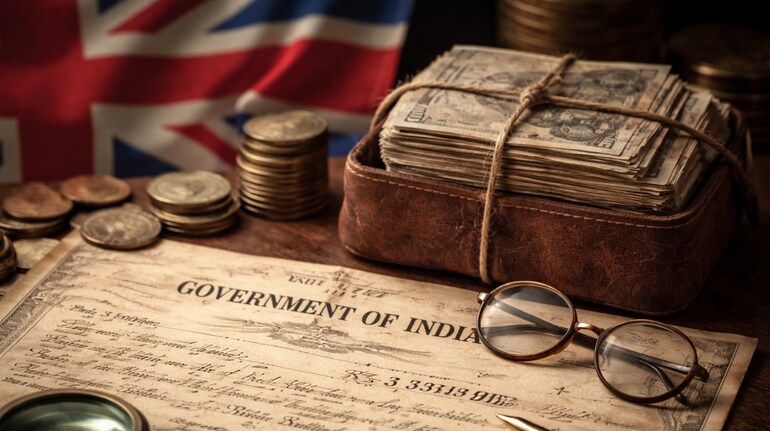
Could a debt from over a century ago still be owed by the British government? In Sehore, Madhya Pradesh, a family claims exactly that, saying a loan made 109 years ago during the First World War has never been repaid.
As reported by the Times of India, the document, recently rediscovered among family papers, records a substantial sum lent to the British administration at a time when India was contributing both men and money to the war effort. Now, the descendant of the original lender is considering legal options to recover the amount, along with interest accrued over more than a century.
The 63-year-old resident, Vivek Ruthia, says his grandfather, Seth Jumma Lal Ruthia, provided Rs 35,000 in 1917 to W S Davis, the political agent in the princely state of Bhopal, as part of the "Indian War Loan". Ruthia claims that the money was never returned and adds that, adjusted for interest, inflation, and currency changes, the amount would now be worth several crores of rupees.
Although no legal notice has been sent so far, Ruthia is consulting lawyers to find out if it is possible to make a claim against the current UK Government.
The certificate, dated 4 June 1917, was preserved by the family and states that Seth Jumma Lal, of the firm Seth Rama Kishan Jaskaran Ruthia, "subscribed Rs 35,000 to the Indian War Loan and thereby showed his loyalty to the Government and Empire." The document bears the signature of W S Davis as political agent in Bhopal.
Ruthia said he discovered the certificate while going through family documents. "My grandfather was into charity. This was a loan given to the British government during the war and it was never returned. My father never pursued it, but I am exploring legal options now. I will move to recover the money with interest as per statutes of present-day law," he said.
Seth Jumma Lal Ruthia died in 1937, almost twenty years after providing the loan. The British left India in 1947, and the family says that the money was never repaid or settled.
During that period, war loans were debt instruments issued by the government to collect funds from the public for military expenses in the First World War. People, traders, and organisations were invited to lend money to the government, usually at a fixed interest rate. In 1917, these loans offered 5.5 per cent interest. Political agents like W S Davis were British officials who handled relations with local rulers, supervised administration, and made sure the princely states stayed under British authority.
“It’s not just about money, it’s about justice and history. The Rs 35,000 from 1917 would be worth crores today with interest," Vivek said, as quoted by News18.
As per reports, W S Davis, who signed the certificate, contributed to literature in Bhopal. He translated Hayat-i-Qudsi: Life of the Nawab Gauhar Begum, a biography written by Sultan Jahan Begum, which was published in 1918.
The Ruthia family estimates that if the original loan had earned 5.5 per cent annual compound interest over 109 years (1917-2026), it would now be worth several crores of rupees. If the value is measured against gold prices, which have increased more than 3,000 times since 1917, it could exceed Rs 10 crore.
The legal path for the claim is still uncertain. But the discovery has brought the family’s century-old loan into the spotlight.
Discover the latest Business News, Sensex, and Nifty updates. Obtain Personal Finance insights, tax queries, and expert opinions on Moneycontrol or download the Moneycontrol App to stay updated!
Find the best of Al News in one place, specially curated for you every weekend.
Stay on top of the latest tech trends and biggest startup news.