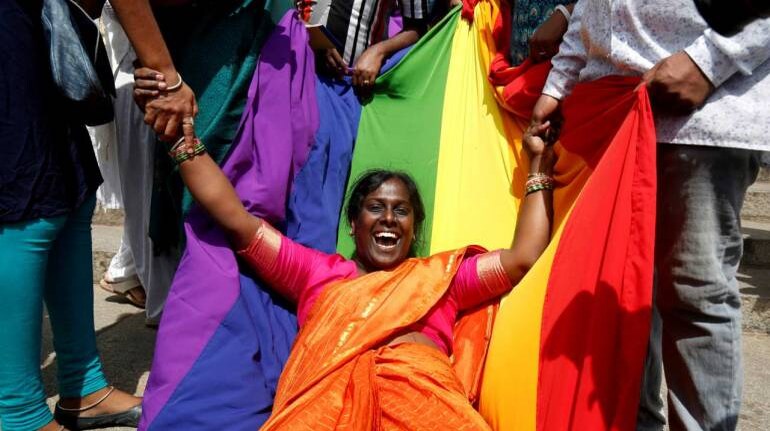
The Supreme Court delivered a historic judgment on September 6, decriminlising consensual sex in the LGBTQ community. However, it was held that bestiality will continue to be an offence under Section 377 of the Indian Penal Code (IPC). So technically, Section 377 has not been scrapped, it has only been read down.
Now, let’s take a look at the legal fineprint and how this landmark verdict will make a difference on the ground.
What does Section 377 of the Indian Penal Code entail?
Section 377 of the IPC, titled “unnatural offences”, criminalises an individual for engaging in “carnal intercourse which is against the order of nature”. The punishment could be a term ranging from 10 years to life imprisonment; or punitive fine.
It also adds a caveat in the form of an explanation which suggests that "penetration is sufficient to constitute carnal intercourse necessary to the offence described in the section".
The offence is cognizable, not bailable and not compoundable; which means that the police have the authority to arrest a suspect without a warrant; the arrested individual cannot pay the bail amount and be released without a hearing before a magistrate; and no compromise is allowed between the accused and a victim in order to avoid trial.
Also read | Section 377 persecutes sexual minorities in India: Humsafar Trust
Simply put, sodomy and bestiality are a crime under Section 377 of the IPC. According to Section 377, penile-anal, penile-oral or penile-animal penetration constitutes ‘carnal intercourse’ against the order of nature. The bone of contention, however, is the clause “against the order of nature”.
While the section generically criminalised carnal intercourse, it hasn’t touched upon whether it is between two “consenting” homosexuals or even heterosexuals; and what exactly is against the "order of nature", who decides the order of nature and whether the order of nature evolves with changing times or not. Hence, a clutch of petitions were filed to scrap the "draconian" section, which was written in 1861.
Under what circumstances can Section 377 still be invoked?
In the nearly 500-page judgment on the constitutionality of Section 377, the incumbent Chief Justice of India Dipak Misra and Justice AM Khanwilkar noted:
“If anyone, by which we mean both a man and a woman, engages in any kind of sexual activity with an animal, the said aspect of Section 377 is constitutional and it shall remain a penal offence under Section 377 IPC. Any act of the description covered under Section 377 IPC done between two individuals without the consent of any one of them would invite penal liability under Section 377 IPC.”
This means that bestiality continues to be a punishable offence. In addition, if two adults engage in “carnal intercourse against the order of nature”, without the consent of one of them, the concerned individual can be charged under Section 377, irrespective of his/her sexual orientation.
Slideshow | Section 377 verdict: India joins countries where protests led to decriminalisation of gay sex
Can Section 377 be used by a wife against her husband?
Section 377 can be invoked by a wife against her husband in case he indulges her in non-consensual carnal intercourse against the order of nature. That is to say, if a husband forces his wife to perform anal sex or oral sex, then the wife can invoke Section 377 against him.
It is important to note that while Section 375 of the IPC (general provision for rape) provides an exception for marital rape, Section 377 does not.
What will happen to pending cases under Section 377?
Justice Indu Malhotra, one of the five judges on the Supreme Court bench hearing the matter, noted:
“The declaration of the aforesaid reading down of Section 377 shall not, however, lead to the reopening of any concluded prosecutions, but can certainly be relied upon in all pending matters whether they are at the trial, appellate, or revisional stages.”
This implies that in the pending cases where sexual intercourse was between two consenting adults, irrespective of their sexual orientation, can now be quashed citing the Supreme Court verdict pronounced on September 6. Others will continue to be under trial.
Discover the latest Business News, Sensex, and Nifty updates. Obtain Personal Finance insights, tax queries, and expert opinions on Moneycontrol or download the Moneycontrol App to stay updated!

Find the best of Al News in one place, specially curated for you every weekend.
Stay on top of the latest tech trends and biggest startup news.