




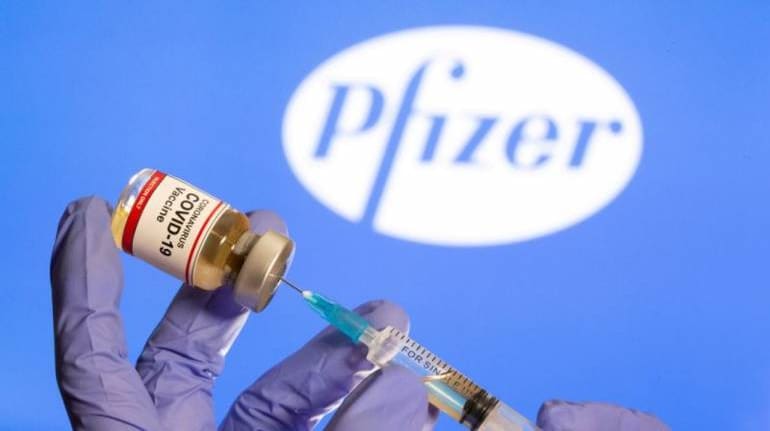
Pfizer is working on an updated jab in response to the Omicron variant that could be ready in 100 days, according to the head of American multinational pharmaceutical giant, who said that people may need to have annual Covid-19 vaccinations for many years to come.
Pfizer’s chief executive Dr Albert Bourla told the BBC that he is of the view that annual vaccinations would be needed to maintain a "very high level of protection” against the deadly disease that has claimed over five million lives across the world.
Bourla was speaking to the BBC before the emergence of the Omicron variant, first identified in South Africa and also before the announcement that the UK government had signed contracts to buy the 54 million additional Pfizer-BioNTech and 60 million Moderna doses for 2022 and 2023.
These deals include access to modified vaccines if needed to combat Omicron and future variants of concern, the Department of Health has said.
Dr Bourla said Pfizer had already made updated vaccines in response to the Beta, also first identified in South Africa, and Delta, first identified in India, variants but that they had not been needed.
The company is now working on an updated jab in response to the Omicron variant that could be ready in 100 days, the report added.
He said vaccines had helped save millions of lives during the pandemic, and without them, the "fundamental structure of our society would be threatened".
By the end of the year, Pfizer expects to have supplied three billion doses of its messenger ribonucleic-acid (mRNA) vaccine with four billion planned for next year.
There had been a global race to protect people, Dr Bourla said, but in 2022, countries would have "as many doses as they need”.
Having to be stored at -70C, the Pfizer vaccine has been tricky to deploy in countries with limited health services.
But within a month or so, Pfizer says it will roll out a new formulation of the vaccine that can be stored for three months in a fridge, which Dr Bourla said, would make a "huge difference" for sub-Saharan African countries. He also talked about vaccine hesitancy.
"For those that are just afraid, the only emotion of human beings stronger than fear is love,” he said.
"So I am always using this argument that the decision to get another vaccine is not going to influence only your health, it is going to affect the health of others and particularly the health of the people you love the most because they are the ones that you will interact with."
"So take the courage to overcome your fears and do the right thing.”
The total tally of COVID-19 cases and deaths globally now stands at 263,565,559 and 5,225,667 respectively.
Total vaccine doses administered globally are 8,041,107,778, according to Johns Hopkins University.
Discover the latest Business News, Sensex, and Nifty updates. Obtain Personal Finance insights, tax queries, and expert opinions on Moneycontrol or download the Moneycontrol App to stay updated!

Find the best of Al News in one place, specially curated for you every weekend.
Stay on top of the latest tech trends and biggest startup news.




