Srikumar Misra
The Finance Ministry has unveiled a series of relief measures meant to sustain and eventually revive the Indian economy, constituting the vast sum of Rs 20 lakh crore, or as the headlines love to say, a whopping 10 percent of our national GDP.
Whilst I commend the wealth of detail, and the variety of important subjects that have been covered in this relief plan, I must point out that it is difficult to understand the nuances of the plan, because it is simply too wide, full of long-term plans that may or may not yield the immediate benefit we need to see. In fact, in its wideness, the quantum of real support is subject to some questions. For example, a Barclays report suggested that the actual additional cost of the government's Rs 21 lakh (approx) crore stimulus package is not greater than Rs 2.5 lakh crore, roughly 1.2 percent of the Gross Domestic Product (GDP).
More importantly, in terms of the nature of this intervention, if you visualise a dual-axis approach of liquidity vs direct support on opposing ends of one axis, and short-term recovery vs policy strengthening on the other axis, the package squarely falls in the liquidity-policy quadrant, and misses out on balancing elements in all other three quadrants.
Implementation is crucial
In other words, we are at a crossroads. On one end, we have the promise of an ideal world, where our government helps us tide over a crisis. On the other end, is a very obscure understanding of what exactly will help get us to the endzone. The implementation of it all, is quite clouded. Let me illustrate this, by sharing my thoughts on two areas that I understand somewhat - the dairy / agri sector, and building a startup or the MSME space, two areas that also saw massive reforms in this package.
Let’s begin with the MSME package; a substantial package for small businesses, it ensures that none of them is excluded from benefits, that none of them has to unfairly compete against massive foreign resources or be crushed under the debt of sustaining business as usual during a crisis. Thirty percent of the package (Rs 6 lakh crore) were allocated to the MSME sector, which is fitting because MSMEs contribute to a third of the country’s GDP.
But here comes the main conundrum - implementation. A loan guarantee, subordinated debt and an equity corpus fund are welcome reforms indeed, but only when we know the strategy on their execution. According to a recent report by Goldman Sachs, it was predicted that India’s GDP will contract by an annualised 45 per cent in the second quarter from prior three months or the June quarter. Without an implementation plan in sight, it is unlikely that the government will be able to prevent a slow recovery. Without the administrative foresight to balance this plan it seems little more than an empty boost of confidence.
Policy blind spot: To the administration’s credit, there is a recognition of the issue of what really constitutes MSME today, especially the ‘medium’-sized sector. Though the cap was revised to Rs 100 crore of revenues, with a subsequent rejoinder by the pragmatic MSME minister that it would be further enhanced to Rs 200 crore, the fact remains that in the new reality of India, startups that have really done the hard work of investing in scale, brands, operations and assets and have reached a certain level of stability and success are actually today in the Rs 200-500 crore bracket. And that’s a positive sign. But this most vital segment that is impacting the economy and employment at scale -- is completely in a policy blind spot and none of the interventions in the package will help support it.
Further, MSMEs are the largest employers of labour, effectively employing over 120 million people in the country. These businesses are currently employing a sizable number of India’s workforce who are in desperate need of a bailout. Even as Rs 16000 crore has been delineated for worker welfare, there is little clarity on how labour laws and work ethics will be enforced in an environment where labor-intensive states like UP and MP are extending work hours, and making it tougher for workers to question management. The migrant crisis also brings about the question of the MSME sector’s accountability, and a more inclusive but less onerous labour law structure.
There is a lag in the fiscal stimulus the government is capable of providing at this crucial juncture. The end of the axis referred to earlier about direct support intervention is an area which is completely missed. Be it tax breaks or blue-collar wage protection, - the absence of a single direct support framework doesn’t help the sector at all, nor does it help put money in the hands of employees and workers, something that could also have helped spur or sustain the demand side.
We recognise that India is a resource-poor country and without real fiscal depth it wouldn’t be able to support a big-bang direct stimulus. But, there must be a focused impetus to grow the demand for consumption and manufacturing as is needed to resuscitate the economy. Up till now, we are only seeing supply focussed relief measures aimed at liquidity - and the economic logic of this might be skewed.
Liquidity reality: We saw much reiteration of the RBI’s interventions towards liquidity. At Rs 8 lakh crore, it accounted for over 40 percent of the total value of the economic package. However, there needs to be more clarity on what would be done to actionably encourage entities to borrow and banks and NBFCs to lend in a time of such uncertainty. Banks are risk-averse despite liquidity, and over-burdened MSMEs are skittish with the fear of bad loans.
Before the pandemic as well, loan growth was about 6.5 per cent consistently. Though RBI Governor Shaktikanta Das announced a 3.35 percent reverse repo rate to encourage a more assertive lending approach, it is predicted that banks will drop interest rates on deposits.
Again, mid-size enterprises are liable to get the shorter end of the olive branch - because they often bank with private banks and not SIDBI or NBFCs, and they are increasingly wary of their credit seekers these days. The RBI must incentivise, support and motivate private banks and other banks to empower the enterprises in their ambit, shelter from the storm. I speak from experience, our approach to several banks for higher working capital liquidity has just been met with uncertain and incoherent responses ultimately with an excuse that there is an informal freeze on any lending. This reality couldn’t be more opposed to the announced intent.
Without these considerations in mind, we are dangerously close to failing a sector that is going to play an increasingly important role in advancing India towards a $5 trillion economy.
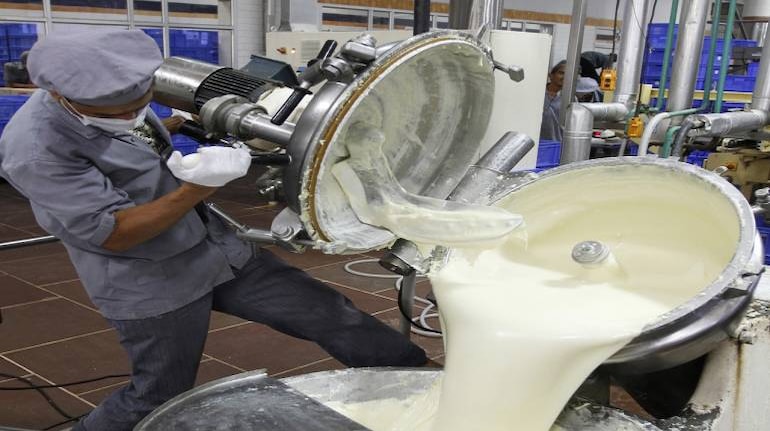
The need to moo inclusively: Now let’s look at the dairy sector, the $50 billion food category that comprises over 26 percent of the agricultural GDP of the country. Almost 70-75 percent of the dairy sector is in the hands of unorganised players, thus the farmers, unfortunately, suffer at the hands of middlemen. The organised players, consisting of cooperatives and private dairies, comprise only about 20-25 percent of the sector, (almost evenly split between cooperatives and private enterprises). Around 100 million farmers depend on dairy for a regular and sustainable source of income.
Over 45 percent of organised milk procurement is taken care of by private dairies, having invested in sourcing infrastructure to processing capacities, as well as complete sales, distribution and marketing efforts. Many of the private dairies have a deep interest in the well being of farmers as it creates a virtuous cycle. As India’s organised milk market is slated to reach Rs 80,000 crore by 2025, private dairies are meant to play a central role. And yet, they grow in isolation, without any particular incentives and support extended to them by the government. This is a sectoral blindspot that again hampers the economic progress of the country. And in the agri and dairy support package, the apprehension that this blindspot will get perpetuated further is real.
The government’s initiatives are built to sustain and nourish dairy cooperatives. An example of this is how the NDDB’s National Dairy Plan (NDP) envisaged an investment outlay of Rs 8000 crore. However, the NDP covers only cooperatives or producer companies, and not the private dairy sector’s development. This, in spite of the fact that capacities created by private dairies in the last 15 years equal that set up by cooperatives over 30 years. Unless the NDDB’s charter is changed urgently to cover private enterprise, and unless the Department of Animal Husbandry and Dairy of the Government of India takes radical steps, this foster treatment will continue. And so will policy implementation or specific COVID recovery stimulus packages.
There are other very serious implications for farmer incomes and dairy development in some regions, especially in eastern India owing to a lop-sided policy framework over decades, which has led to massive overproduction of milk in one region, leading to dumping in other regions. This culminates in severe socio-economic implications on issues ranging from farmer incomes, to rural under-development, capital flight from states and ultimately employment and regional economy. There isn’t anything in the government’s plan to address these policy anomalies. So, while the commendable efforts outlined in the package for dairy, such as the Rs 15,000 crore dairy infra fund are strong, the scenario of all of this again landing in preferred cooperatives’ coffers is real, thus again perpetuating this cycle of both regional biases and an unlevel playing field for private enterprise. Some of the agri interventions announced by the government are very reformative and deep, like disbanding the APMC - which will have a significant and real impact on farmers. We need similar reengineering in the dairy policy. The path to doubling farmer incomes will seem real then.
Srikumar Misra is the founder of Milk Mantra, an agri-foods startup.
Discover the latest Business News, Sensex, and Nifty updates. Obtain Personal Finance insights, tax queries, and expert opinions on Moneycontrol or download the Moneycontrol App to stay updated!
Find the best of Al News in one place, specially curated for you every weekend.
Stay on top of the latest tech trends and biggest startup news.