Billed as the biggest international gathering of the film industry, the Marché du Film was held from May 16 to 24 during the 76th Cannes film festival. A record 14,000 accredited participants from over 120 countries were present this year, surpassing the pre-pandemic record of 12,500 registered in 2019. The Cannes film market, which accorded India the first official Country of Honour status last year, introduced several new initiatives this year, including a Spotlight Asia programme aimed at strengthening co-productions between Asia and Europe.
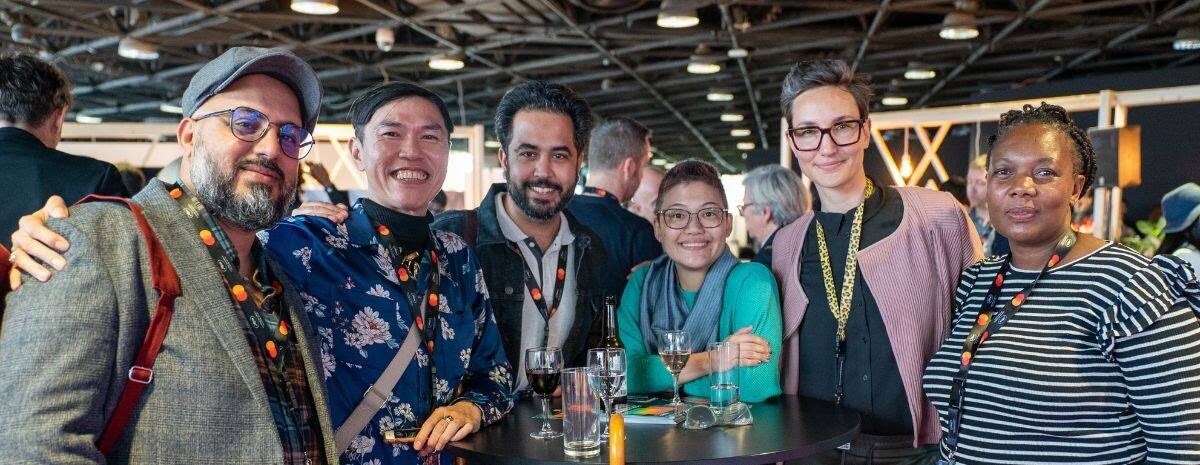 Marché du Film at the 76th Cannes Film Festival had a record 14,000 participants this year.
Among other events at the market every year are Producers Network, which brings together 400 producers from around the world, 'Goes to Cannes' series for works-in-progress selected by partner festivals like the Film Bazaar, Animation Day, Cannes Docs, Cannes XR, Cannes Next and impACT that focus on the future of entertainment industry. besides a popular Short Film Corner. Guillaume Esmiol, Marché du Film's new head, who succeeded its longtime Executive Director Jerome Paillard this year, believes in innovation-driven programmes to drive the growth of the global film industry. Esmiol, one of the speakers at the inauguration of the India Pavilion on the opening day of Marché du Film, spoke about the importance of the Cannes film market, which films are selling the most, the role of new technology in the entertainment industry and the emerging trends. Edited excerpts:
How did your appointment as head of Marché du Film happen and what were you bringing to the organisation in the post-pandemic era?
I did not arrive directly from the film industry. I was at (French mass media company) TF1 group for over a decade, in-charge of the innovation of the group. Marché du Film was looking for someone with innovation experience trying to reinvent the organisation, who was motivated by and passionate about the film industry, which was my case. So, I was not directly from the film industry. I arrived in 2020 after the online edition of Marché du Film, first as the deputy director. Then I had two years with (the then executive director) Jerome Paillard. We worked on the 2021 edition which was hybrid — half digital, half physical — which was very complicated for us. The real return, the first approximately normal return, was in 2022.
What about this year?
This year even more people were coming back. It was a huge market this year. It was more than expected because we have had more participants this year than before the COVID crisis. We have more than 14,000 participants this year. The previous record was 12,500 in 2019. It shows that a lot of people are willing to come back and Cannes is the strongest film market.
How was Marché's collaboration with the industry majors, the big studios in Hollywood this year?
I talked with them to understand what they were doing in Cannes. Since they are independent and so huge and well-known, they don't need extra promotion of the company. But when they come to Cannes it is interesting. First thing they do, of course, is promote their movies, especially when they are in the official selection or in one of the parallel selections. The second thing is that they are doing a lot of meetings because in Cannes (film festival) where the whole industry is present. They have meetings with talents, partners to distribute their movies or finance new projects or meetings to find new projects they want to finance themselves. The last is usually more confidential and they like to do that in their own apartments with people they contact themselves. They do a lot of business here. A lot of independent production companies and talent agencies present projects, what they call packages, to the studios to see if they are interested in financing the projects. Basically a package is a description of a new movie they do with the presentation of the director and, maybe, a part of the cast and some artistic ambitions describing the project. The producer in the studio can put money on the table and say, 'Yes, I want to finance it.' Like Netflix, for instance. Netflix could say, 'Yes, we will put the money through finance for the whole project for us to be able to stream it on our platform or release it in theatres.'
What was your aim in the first year as the head of Marché du Film, especially with your experience in innovation?
For my first year, I wanted to make sure that the sales companies and exhibitors are having the right services from us to make the best business possible. Some of them have booths/stands in the Palais de Festival to help them promote their movies. Some of them buy advertising and very important, of course, a lot of them are booking screenings to show their movies to distributors/buyers that are willing to find the right movie to acquire. It is a very important moment for them. So, we want to help the sales companies and buyers to do their business as much as possible. We also want to have the producers find the opportunities to finance their new movies, new projects, with co-productions for instance, with all kinds of partners, who could be distributors, sales agents and financiers. We want the films to get financing. Lastly, we want to bring innovation to the film industry. So, we have a lot of conferences, panel discussions, and demonstrations of new technology, such as Artificial Intelligence (AI), which is a big topic right now.
What is the nearest future for AI in Cinema?
It raises a lot of questions. I think the technology is impressive and it can go way beyond what we imagine. I know there are questions and debates about AI. Still I am a tech enthusiast and see it as an opportunity to create new things. I see it more as an impressive tool to look at closely because the possibilities are very, very strong.
When you look at the impact of technology on the entertainment industry, what are the major factors affecting changes right now?
During the COVID-19 pandemic a lot of people got used to doing business on digital. A lot of people thought it was the end of the market and people would do business online. But you see today we have more people than ever in the market. We should be careful about the shortcuts that we do sometimes when the technology arrives. Some people will tell you that AI can write a script. In the short term, maybe, they can help, do a lot of things, but I think sometimes the story is too easy to tell. There was this comparison that you are writing with the pen, does it mean that typing with a computer is bad. It's completely different. Today you are writing a story with your imagination and some inspiration you get from books and films. Maybe tomorrow you will get inspiration from AI because it is an additional tool and we shouldn't be afraid of it. I think the people who will try to make movies only with the help of technology are going to be making bad movies. We need to have a point of view to create real artwork. To answer your question, I am always careful about the craziness, sometimes, that the people are talking about when a new technology arrives, whether it is Metaverse, NFT or AI, then people get disappointed because it is not that great. Then the technology is more mature and it becomes great. We should look at the impact of technology in time.
Last year, India was the Country of Honour at Marché du Film. What was the experience from it?
India was the very first Country of Honour. We had never done that before. Mr Anurag Singh Thakur, the Minister of Information and Broadcasting, was there. It was very important. India had a lot of initiatives in Cannes. I remember the message that the Minister gave was that India is not just Bollywood or a cliché of movies, even though it's good, but India is more willing to connect with international cinema. It's also a place to attract international productions to come to produce in India. India has a lot of skills and a lot of tech companies that can help production in the country. And great locations, of course, and nice incentives. I think the message was strong and it makes a lot of sense.
How was the Indian participation this year?
The presence of India this year was strong. I guess there were not as many Indian professionals as last year because last year it was huge with India being the Country of Honour. But, still, the presence was strong and the Indian pavilion did a lot of activities. I was happy to be at the inauguration of the Indian pavilion. We also wanted to have a follow-up because if you want to have an impact on the international market, it is not a one shot thing, you need to work in time and do activities every year more and more. It should be coherent. You need to work on it year after year and you will get the results.
A decade ago zombie films were the highest-selling films in Marché du Film. What are the bestselling films today?
I won't say zombie films. We see some trends. Genre films have a lot of appeal. Animation is strong, too. It takes longer to produce, it is much more expensive and a different kind of risk. Also documentaries. They are niche and having a very good year. This year it was the Year of Documentaries in France. The symbolism is nice when you have two documentaries (Four Daughters by Kaouther Ben Hania and Youth [Spring] by Wang Bing), I think for the first time, in the official competition. It shows documentaries are a kind of cinema that has a lot of creativity and auteur cinema that is eligible for Cannes. We have a strong programme in Marché du Film called Cannes Docs. Documentaries is a kind of content that is working well in the streaming platforms.
Discover the latest Business News, Sensex, and Nifty updates. Obtain Personal Finance insights, tax queries, and expert opinions on Moneycontrol or download the Moneycontrol App to stay updated!
Find the best of Al News in one place, specially curated for you every weekend.
Stay on top of the latest tech trends and biggest startup news.