In 2019, a viral video of Meta CEO Mark Zuckerberg touting Facebook's power over its users did the rounds online.
Created by artists Bill Posters and Daniel Howe in collaboration with advertising company Canny, the video was meant to serve as a warning to how far video manipulation had advanced.
The fake video had Zuckerberg spouting a tyrannical spiel about how he controlled his users.
"Imagine this for a second: One man, with total control of billions of people's stolen data, all their secrets, their lives, their futures," said fake Zuckerberg in the video.
This was just one of the many examples of a technology known as deepfake, an AI-based manipulation of video and audio that can be used to create false narratives and induce divides.
On the flip side, deepfakes can be used to create content in entertainment mediums like video games, TV shows, films and more.
Also read | Anand Mahindra raises alarm over 'deceptive' deepfake technology. Watch
How are deepfakes made?The term "deepfake" is derived from the portmanteau of "deep learning" and "fake". The synthetic medium uses machine learning algorithms that are trained on existing data, which it can then manipulate to create disturbingly realistic audio and video.
Deepfakes use two algorithms in particular - generator and discriminator - that use vast data sets of images and video to create content. The generator is responsible for the initial pass, while the discriminator will determine how authentic it seems, modifying the output if necessary.
The more content the generator creates, the more it improves and the discriminator will get better at spotting mistakes and correcting them.
Deepfake audio and video are created in two ways either by manipulating a pre-existing piece of media or by swapping individuals and faces from one video to another, also referred to as face swap.
How are deepfakes used?As you might imagine, given the nature of generated content, it can be used to harm someone's reputation by making the person say or do things they never did.
It can also be used for extortion and blackmail or bullying. There are deepfakes that showcase nonconsensual porn aka revenge porn.
The problem is that deepfakes aren't considered illegal and don't fall within the purview of law enforcement unless they violate laws against child pornography or defamation and hate speech.
They can also spread political misinformation or even to turn the tides of an election by showcasing the opposition party in a negative light.
In April of this year, scammers used AI to clone the voice of a teenager so accurately that it managed to almost deceive a mother into paying a ransom for a fake kidnapping.
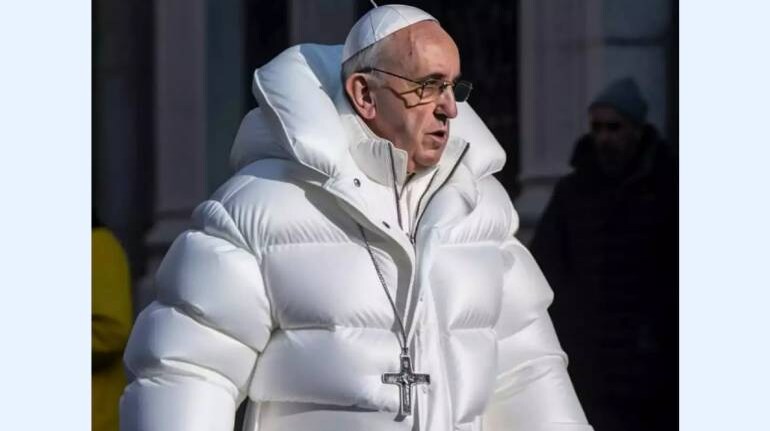
In May, a fake video of an explosion near the Pentagon went viral. More famous was the viral photograph of Pope Francis wearing a puffer jacket.
Despite the negative connotations associated with the technology, there are some benefits to the technology as well, especially in the entertainment medium.
Last year in December, Disney announced a Face Re-Aging Network (FRAN) that can make actors look younger or older.
Also read | Storyboard18 | How deep is your love for deepfakes? We ask marketers
How can you spot deepfakes?The first indicator you should look for to determine whether a video is fake is problems with skin or hair, or blurry details when zoomed in. The faces might appear soft and out of focus compared to the rest of the frame.
Lighting is also another problem area, since deepfakes carry over the light environment from the original source video, so anything that has been spliced in or added will look unnatural or removed from the lighting of the original scene.
Another problem for AIs is human eyes. Sometimes deepfakes have subjects that don't blink at all or have blurry details around the eyes. One more thing to watch out for is unnatural movement or facial expressions.
As deepfake technology evolves, it will get harder to detect fake content which is why many technology companies now offer solutions for deepfake detection.
Intel, for example, has a solution called FakeCatcher which the company says can detect deepfakes with 96 percent accuracy.
Microsoft has Video Authenticator that analyses photos or videos to give them a percentage chance on each frame in real-time.
Then there are projects like the DeFake Project, an initiative by the Global Cybersecurity Institute at RIT and School of Journalism and Mass Communications at UofSC.


Discover the latest Business News, Sensex, and Nifty updates. Obtain Personal Finance insights, tax queries, and expert opinions on Moneycontrol or download the Moneycontrol App to stay updated!
Find the best of Al News in one place, specially curated for you every weekend.
Stay on top of the latest tech trends and biggest startup news.