

co-presented by
ASSOCIATE SPONSORS
co-presented by


ASSOCIATE SPONSORS


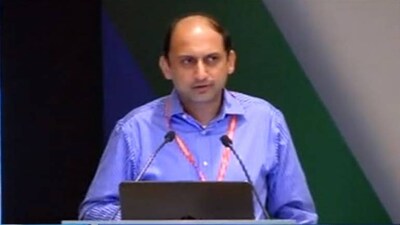
Acharya, formerly a deputy governor with the Reserve Bank of India, said India had slipped up on the fiscal deficit and inflation in recent years

In March, Acharya - formerly a deputy governor of the RBI - had said in a paper that India's core inflation was persistent and elevated due to the pricing power of its large firms and recommended they be broken up

India has to make a growth sacrifice to ensure financial stability in these times, says Viral Acharya, former Deputy Governor of RBI and Academic Advisor to Federal Reserve of New York and Philadelphia.

Tariff wars, COVID disruption and now the Russia-Ukraine war are pushing up global inflation to unexpected levels and threatening to derail growth. Dr. Viral Acharya talks about the threat of recession in the US, and possible risks for India

Indian banks are saddled with over $120 billion in bad debt, and in severely stressed conditions the bad-loan ratio could nearly double by March, according to Reserve Bank of India projections.

Time may be ripe to create a ‘bad bank’ as the net book value of NPAs have fallen sharply and another round of bad loan shock is round the corner in the backdrop of Covid-19, say experts

The RBI has by and large been successful in keeping inflation within the mandated 2-6 percent range. But the flexible inflation targeting policy has faced criticism recently on account of the high weighting given to food items in the inflation basket which have proven highly volatile.

Suggesting ways to change ownership structure of public sector banks, the paper said state-linked banks can be a first step in altering the ownership structure of some PSBs, where the government brings down its stakes to below 50 percent.
Acharya, who quit six months ahead of his term following major differences with the government on a range of issues including fiscal encroachment on RBI’s autonomy, recently released his book ‘Quest for Restoring Financial Stability in India’ published by Sage publications.
Citing the example of the South Asian crisis in 1997, Acharya said that a large number of public sector banks in the region had to be privatised post the crisis and in many cases were sold at fire sale prices to private equity investors from abroad.
Acharya said that the moratorium on loan repayments will help provide the temporary relief and hinted that the bankruptcy process is also a kind of debt restructuring itself.
Viral Acharya, the former RBI deputy governor, said that some of the diluted measures were important to ensure that the banking system does not become vulnerable to short-term pressures.

In his book Quest for Restoring Financial Stability in India, Viral Acharya said 'RBI lost its governor on the altar of financial stability'.

Patra will be looking after Monetary Policy Department, Financial Stability Unit, Financial Markets Operations Department, Financial Markets Regulation Department, Department of Economic & Policy Research, Department of Statistics & Information Management and Corporate Strategy & Budget Department.
Speaking at a panel discussion at Columbia University here on Friday on the 'Indian Economy: The Next Five Years', Acharya outlined a few "possible remedies" and recommendations for the Indian economy going forward.
Known as someone who calls a spade a spade, the fearless RBI deputy chose not to play second fiddle to the Governor and instead make his own mark

The Monetary Policy Department will now be under BP Kanungo, while Financial Stability Unit has been given to MKJain. NS Vishwanathan will oversee the Financial Markets Operations and Financial Markets Regulation departments.
Acharya is leaving the central bank on Tuesday, six months before the scheduled end of his term in office, citing personal reasons.
Other developments were India’s forex reserves touching a record high and the RBI launching a customer complaint portal
Acharya told Moneycontrol that he decided to leave six months early due to 'unavoidable personal reasons'.
Viral Acharya, 45 years, became the youngest deputy governor to serve RBI when he joined the central bank in January 2017.

The rift between RBI and the government came out in the open in 2014 with differences over composition of the MPC.
The outgoing Deputy Governor warned that public sector borrowing is close to the levels seen during the ‘taper tantrum’

It is important to note that the core inflation is still above the 5 percent mark and a significant demand boost would have pushed it up further.

Sustained higher core inflation and a revival in food inflation could curtail the ability of the central bank to cut rates.


